


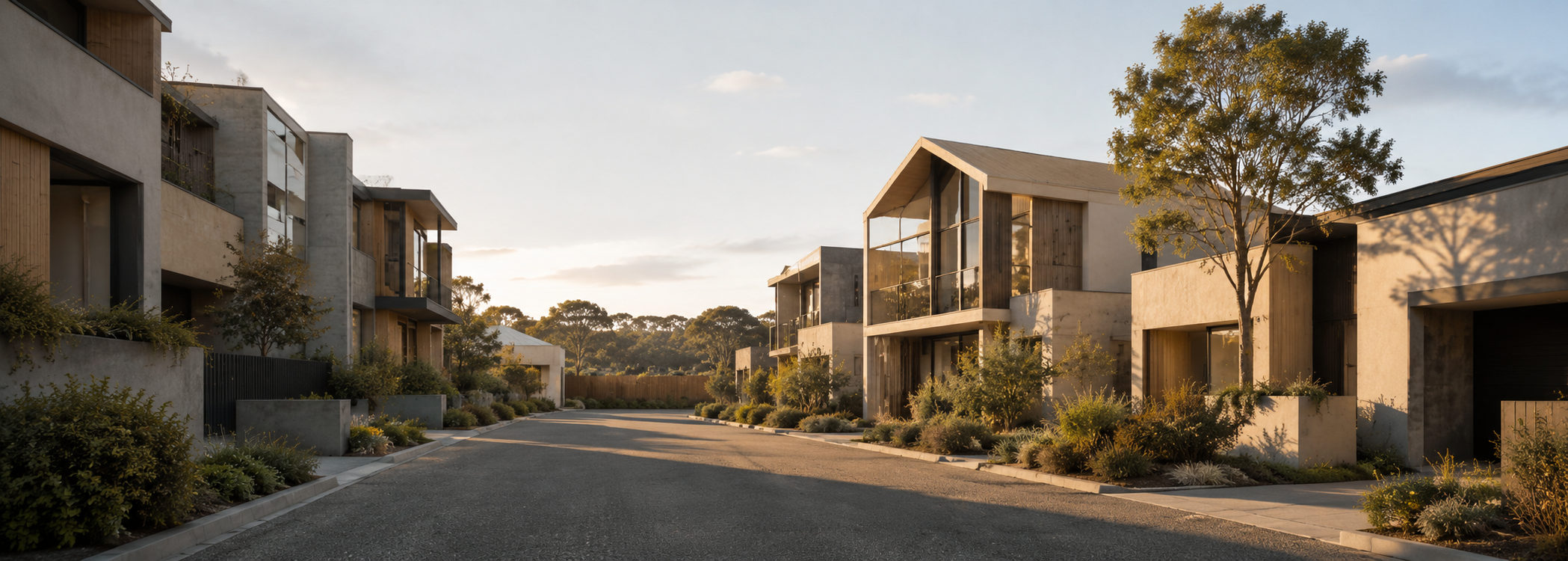
Home Performance
Why Building Fabric Matters
Building fabric is the quiet part of home performance. It is the roof, walls, windows, floors, insulation and construction details that determine how much the home is exposed to outdoor heat, cold and changing weather.
Building fabric in brief
Building fabric refers to the physical parts of the home that separate indoor conditions from outdoor conditions. In NatHERS, building fabric matters because it affects heating and cooling demand, thermal comfort and the star rating. A home with better fabric usually needs less correction from mechanical systems because the building itself is doing more of the thermal work.
What building fabric means
Building fabric includes the roof, ceiling, walls, floors, windows, doors, glazing, insulation, shading and construction details that form the physical envelope of the home.
It determines how easily heat can enter, escape or move through the home. A weak building fabric can allow unwanted heat gain in summer, heat loss in winter, draughts, uneven temperatures and greater reliance on heating and cooling.
A strong building fabric helps the home stay more stable, making comfort easier to maintain across the day, night and seasons.
Why NatHERS cares about fabric
NatHERS estimates how much heating and cooling energy a home may need to maintain comfortable indoor conditions in its local climate. That estimate depends heavily on the home’s building fabric.
If the home has poor insulation, large unshaded glazing, difficult roof heat gain or exposed floors, the model may show higher heating or cooling demand. If the building fabric is well resolved, the home may need less energy to stay comfortable.
For a broader explanation, see our guide to what a NatHERS star rating means.
The practical point
Building fabric sets the baseline for comfort.
Heating and cooling systems can help, but the fabric determines how much work those systems need to do.
The roof and ceiling are major thermal boundaries
The roof and ceiling can have a major influence on thermal performance because they are exposed to sun, sky temperature and outdoor conditions. In many homes, roof heat gain can place significant pressure on summer comfort.
Ceiling insulation, roof colour, roof space conditions, raked ceilings and roof construction can all affect how much heat moves into or out of the home. These details need to be clear in the documentation and suitable for the climate.
For more detail, see our guide to ceiling insulation and NatHERS outcomes.
Walls and insulation shape stability
Walls are another important part of the building fabric. Wall construction, insulation values, external cladding, internal linings and thermal bridging can all affect heat transfer.
Good wall insulation can help reduce heat loss in cooler weather and heat gain in warmer weather. However, walls do not work alone. Their impact depends on roof performance, glazing, shading, floors and the overall form of the home.
For more detail, see our guide to how insulation affects NatHERS ratings.
Building fabric includes:
• Roof and ceiling construction
• Wall systems and insulation
• Windows, doors, frames and glazing
• Floors, slabs, suspended floors and exposed floors
• Shading, eaves, awnings and external solar control
• Air leakage control, junctions and construction detailing
Windows are part of the fabric, not just the view
Windows often have a strong effect on NatHERS outcomes because they influence solar gain, heat loss, daylight and comfort near the glass. A window is not only an architectural opening. It is a thermal part of the envelope.
Window size, orientation, frame type, glazing performance and shading need to be considered together. Large areas of glass can support daylight and views, but they can also create overheating or heat loss if not resolved carefully.
For more detail, see our guide to how window design affects NatHERS ratings.
Floors affect comfort from below
Floors can affect comfort and rating outcomes, especially where the floor is exposed to outdoor air, located above a garage, built as a suspended floor or designed as a slab on ground.
Floor construction affects heat transfer, thermal mass and the way the home responds to changing conditions. Floor coverings, insulation and exposure all need to be understood in the assessment.
For more detail, see our guide to floor construction and thermal performance.
Common misunderstanding
Building fabric is sometimes treated as a list of products.
In practice, it is a system: the way roof, walls, windows, floors, insulation, shading and details work together.
Shading is part of fabric performance
Shading affects how much solar heat reaches the glazing and enters the home. External shading can be especially important because it can reduce unwanted heat before it passes through the glass.
Effective shading depends on orientation, window size, climate and season. Eaves, awnings, screens and other shading elements should be designed as part of the thermal strategy, not added as decoration after the rating is complete.
For more detail, see our guide to shading and solar heat gain.
Air leakage can weaken good fabric
Even when insulation and glazing are well specified, uncontrolled air leakage can weaken the performance of the home. Gaps, junctions and poorly sealed penetrations can allow unwanted air movement between inside and outside.
A home still needs healthy ventilation, but uncontrolled leakage is different from planned air movement. Better fabric performance depends on both insulation and the quality of the construction details that support it.
For more detail, see our guide to air leakage and home performance.
Why fabric matters before systems
Efficient heating and cooling systems are important, but they work best in a home with good building fabric. If the home gains heat too quickly, loses heat too easily or has strong draughts, systems need to work harder to maintain comfort.
Better fabric reduces demand before equipment responds. This is one of the reasons building fabric remains central to NatHERS and to future home energy performance more broadly.
For the wider context, see our guide to the future of home energy performance in Australia.
How building fabric connects to compliance
Building fabric is a major part of residential energy compliance because it affects the home’s thermal star rating. For many new homes, this may connect with 7 Star Rating, Whole of Home and state based pathways such as BASIX in NSW.
The NatHERS assessment may create commitments around insulation, glazing, shading, roof colour and construction details. These need to align with the final drawings and the home that is actually built.
A clear building fabric strategy can make compliance more straightforward and reduce the risk of late changes.
Design considerations for Australian homes
Australian homes need building fabric that responds to climate. A hot humid home, cool climate home, coastal home and inland home may need different combinations of insulation, shading, glazing, roof colour, ventilation and thermal mass.
The best fabric strategy is not always the most expensive one. It is the one that responds to the actual site, orientation, room use and climate zone.
A well resolved building fabric gives the home a stronger foundation for comfort, compliance and long term performance.
Working with Certified Energy
Certified Energy provides NatHERS assessments for new homes, townhouses and multi residential projects across Australia. Our team can model the home and help identify how the building fabric is influencing thermal performance.
Where needed, we can help project teams understand the effect of insulation, glazing, shading, roof colour, floor construction, thermal mass, air leakage assumptions and climate zone. We can also help connect NatHERS with related requirements such as NatHERS, BASIX, 7 Star Rating and Whole of Home.
For the broader assessment framework, visit our NatHERS Knowledge Hub.
FAQ
Why does building fabric matter in NatHERS?
Building fabric matters in NatHERS because it affects how heat enters, leaves and moves through the home. Roofs, ceilings, walls, windows, floors, insulation and shading all influence heating and cooling demand.
What is building fabric in a home?
Building fabric refers to the physical parts of the home that separate indoor and outdoor conditions, including the roof, ceiling, walls, floors, windows, doors, insulation, glazing and shading.
Can better building fabric improve comfort?
Yes. Better building fabric can reduce heat gain, heat loss, draughts and temperature swings, helping the home feel more stable and comfortable with less heating and cooling.
Is building fabric only about insulation?
No. Insulation is important, but building fabric also includes windows, glazing, shading, roof colour, floors, walls, doors, air leakage control and construction detailing.
Does building fabric matter if the home has efficient systems?
Yes. Efficient systems work best when the building fabric reduces heating and cooling demand. Poor fabric can make even efficient systems work harder to maintain comfort.