

The NatHERS Home Energy Rating Certificate for existing homes is designed to explain how an established dwelling performs, how energy is used and where targeted upgrades may improve comfort and efficiency.
Unlike a new-home NatHERS certificate, which supports proposed construction and compliance, an existing-home certificate reflects the assessed condition of a completed dwelling. It considers the building shell, installed systems, onsite energy features and practical improvement opportunities.
This makes the certificate useful for homeowners, buyers, advisers and program teams who need a clearer performance language for Australia’s existing housing stock.
In Brief
What Does the Home Energy Rating Certificate Show?
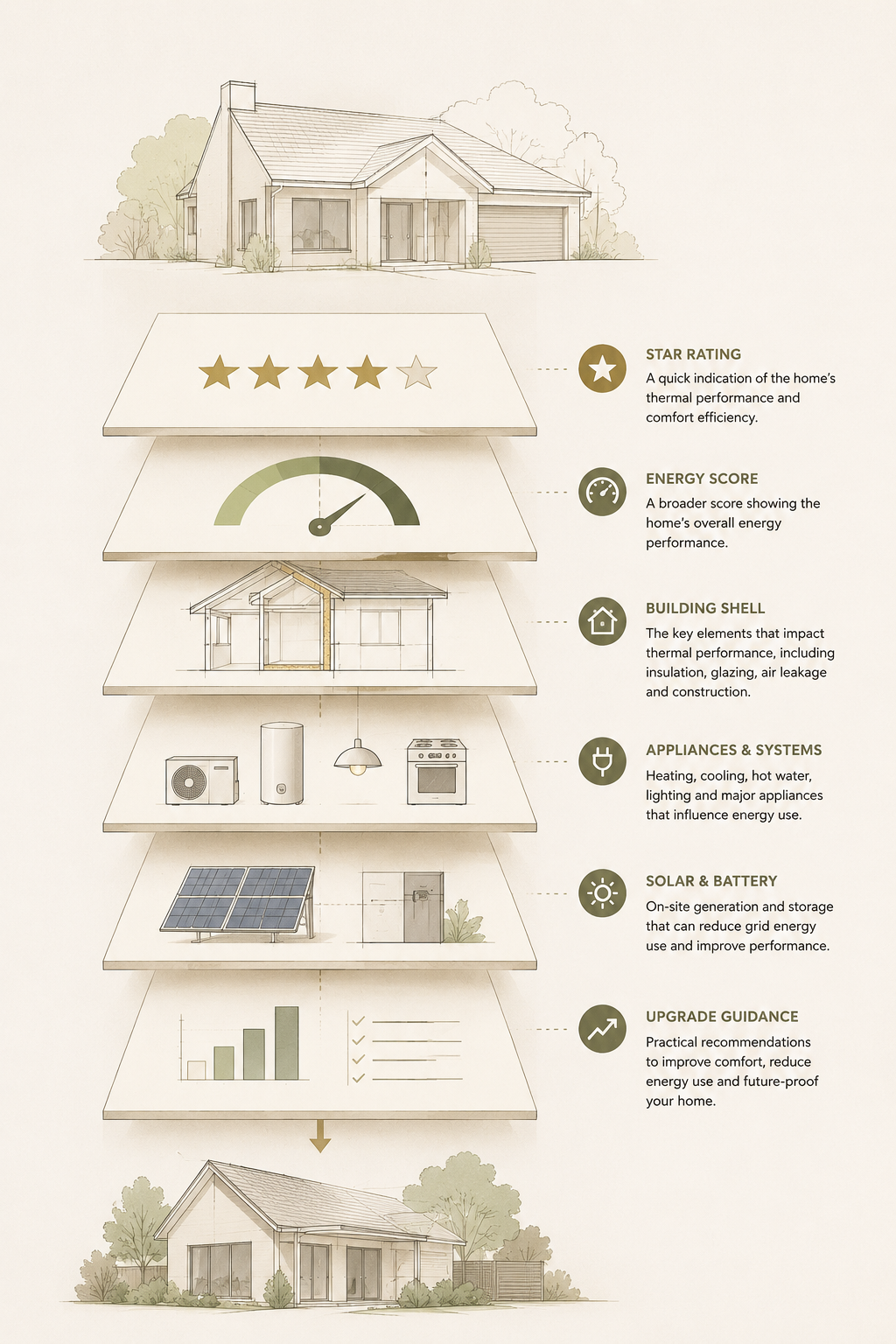
A Home Energy Rating Certificate can show the home’s thermal star rating, broader energy score, building shell performance, appliance and system energy use, solar or battery information where relevant, and practical upgrade guidance. The purpose is not only to assign a rating, but to help explain why the home performs the way it does. A Home Energy Rating Certificate is the formal document produced after an existing home energy assessment.
Knowledge Navigation
How to Read the Certificate
Performance Snapshot
Star Rating and Score
How comfort efficiency and broader energy performance are shown.
Building Fabric
Building Shell
How insulation, glazing, air leakage and construction influence comfort.
Household Energy
Appliances and Systems
How installed systems affect the home’s overall energy use.
Improvement Pathway
Upgrade Guidance
How the certificate can support future upgrade planning.
What Is a Home Energy Rating Certificate?
A Home Energy Rating Certificate is the formal output of an existing home energy assessment. It summarises the performance of a completed dwelling using information collected about the building, its installed systems and relevant onsite energy features.
For existing homes, this is important because performance is rarely simple. A dwelling may include original construction, staged renovations, mixed insulation, varied glazing, older heating or cooling systems and later additions such as solar panels or battery storage.
The certificate helps organise these elements into a clearer performance record.
Star Rating and Home Energy Score
The certificate can include both a thermal star rating and a broader home energy score. These outputs explain different aspects of performance.
| Certificate Element | What It Describes | Why It Matters |
|---|---|---|
| Star rating | The home’s thermal performance and comfort efficiency. | It helps show how much heating or cooling the home is likely to need. |
| Home energy score | A broader view of household energy performance. | It can include the influence of appliances, systems, solar and battery storage. |
This distinction is useful because a home’s comfort performance and its broader household energy performance are related, but they are not the same thing.
Building Shell Performance
The building shell is the part of the home that influences how much heating or cooling is needed to remain comfortable. It includes the physical construction of the dwelling.
The certificate may reflect factors such as:
- roof and ceiling insulation
- wall and floor construction
- window type and glazing performance
- shading and orientation
- air leakage and draught sealing
- thermal zoning and layout
In an established dwelling, these conditions can vary across the home. A rating helps make those hidden performance differences more visible.
Appliances and Household Energy Systems
The certificate can also look beyond the building shell. Heating, cooling, hot water, lighting and major appliances can strongly influence total household energy use.
This matters because two homes with similar thermal performance can still have different energy outcomes depending on the systems installed.
Relevant systems may include:
- space heating and cooling
- hot-water systems
- lighting
- cooking appliances
- plug-in appliance assumptions
- pool or spa equipment where relevant
An efficient building shell reduces demand, but the installed systems still shape the final energy-performance picture.
Onsite Energy
Solar, Batteries and Future Readiness
Where relevant, solar generation and battery storage can form part of the certificate context. This helps explain not only how much energy the home uses, but whether the home can produce, store or offset energy over time.
As electrification, energy upgrades and future disclosure frameworks become more important, this broader view can help homeowners understand how the property is positioned for future improvement.
Upgrade Guidance
One of the most useful parts of the Home Energy Rating Certificate is the upgrade guidance. Rather than leaving homeowners with a rating alone, the certificate can help identify areas where performance may be improved.
Possible upgrade areas may include:
- ceiling, wall or floor insulation
- draught sealing
- window improvements or shading
- heating and cooling efficiency
- hot-water system changes
- lighting and appliance upgrades
- solar or battery systems
The right pathway depends on the dwelling, its climate zone, the owner’s budget and the purpose of the assessment.
Assessment Boundary
Is This the Same as a New-Home NatHERS Certificate?
No. A new-home NatHERS certificate is used for proposed residential construction and compliance pathways. It is based on plans, specifications and selected building systems before construction.
A Home Energy Rating Certificate for existing homes is focused on understanding the assessed condition of an established dwelling. Both sit within the broader NatHERS ecosystem, but they serve different stages of the building lifecycle.
Why This Matters for Existing Homes
Most Australian homes already exist. Many were built before today’s energy performance expectations, and many have been altered gradually over time.
A Home Energy Rating Certificate gives those homes a clearer performance language. It can support renovation planning, future disclosure readiness, upgrade decisions and a better understanding of comfort and energy use.
The certificate is not only a rating document. It is a practical way to understand how the home performs now and where improvement may begin.
Frequently Asked Questions
Home Energy Rating Certificate FAQs
What does a Home Energy Rating Certificate show?
It can show the home’s star rating, broader energy score, building shell performance, major appliances, solar or battery information where relevant, and practical upgrade guidance.
Is a Home Energy Rating only about comfort?
No. Comfort and thermal performance are important, but the certificate can also include household systems such as heating, cooling, hot water, lighting and appliances.
Can the certificate help with renovations?
Yes. Upgrade guidance can help homeowners understand which improvements may support better comfort, lower energy use and stronger long-term performance.
Is this for new homes or existing homes?
This article refers to Home Energy Rating Certificates for existing homes. New homes use separate NatHERS assessment and certification pathways for compliance.
Related Knowledge
Continue Exploring Home Energy Ratings
Assessment note: A Home Energy Rating Certificate reflects the assessed condition of the dwelling at the time of assessment. Renovations, new glazing, insulation changes, solar installation, battery storage or replacement energy systems may affect how accurately an earlier certificate represents the home.
Last reviewed: July 2026.
Existing Home Energy Assessment
Want to Understand How an Existing Home Performs?
Certified Energy can support Home Energy Rating assessments for existing homes, portfolios and program pathways where an accredited assessment is required.
Request a Home Energy Rating Review →