

How to improve your NABERS rating
Improving a NABERS rating is not about one major change.
It is about understanding how a building performs
and making targeted adjustments where it matters most.
Small improvements, applied consistently, can significantly shift overall performance.
Start with real performance data
Before improving anything, you need clarity.
A NABERS rating is based on how a building actually operates
so the first step is understanding current energy use and system behaviour.
Clear data reveals where inefficiencies exist
and where effort should be focused
Optimise building systems
Building systems are often the biggest opportunity.
HVAC operation
setpoints
scheduling
equipment efficiency
When these are aligned and properly tuned,
energy use can be reduced without affecting comfort
Many buildings operate with systems running longer or harder than needed
simply because they have never been optimised
Improve how the building is used
Performance is not only driven by systems
but also by how a building is used
Occupancy patterns
tenant behaviour
equipment use
All influence the final outcome
Small changes in operation and awareness
can have a measurable impact on performance
Reduce unnecessary energy demand
Lower demand leads to better performance.
This can come from:
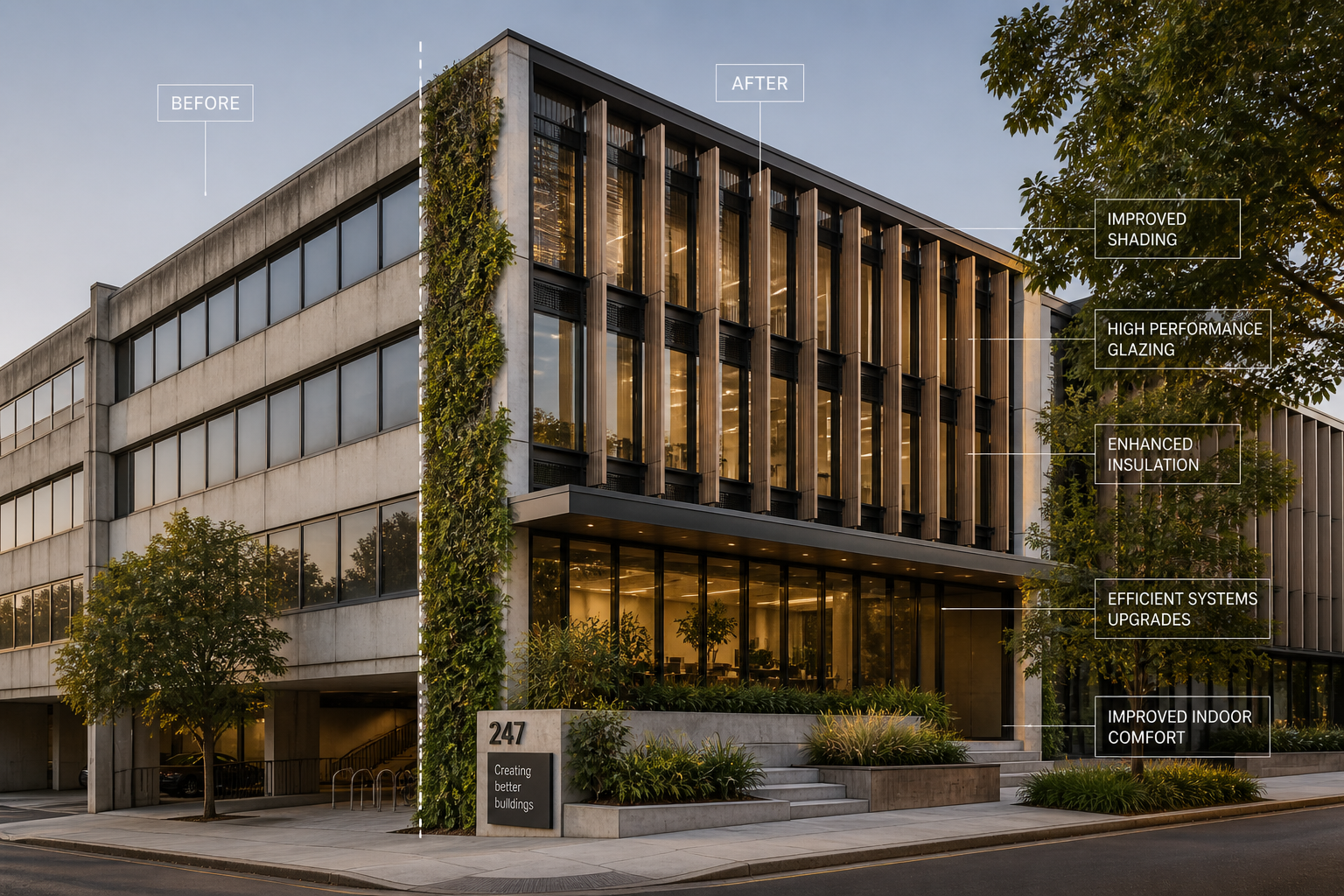
better shading
improved insulation
efficient lighting
reducing heat loads
Even simple measures can reduce the reliance on mechanical systems
Monitor and adjust over time
A NABERS rating reflects ongoing performance
This means improvement is not a one time action
but a continuous process
Regular review allows systems to be adjusted
before inefficiencies become embedded
Address performance early
The earlier performance is considered, the easier it is to improve
In new projects, this means guiding design decisions early
In existing buildings, it means identifying issues before they escalate
Early insight reduces the need for costly changes later
What this means for your building
Improving a NABERS rating is about clarity and alignment
When systems, design and operation work together
performance follows
The goal is not only a higher rating
but a building that performs better in reality
A clear next step
If you are unsure where your building currently stands
a clear assessment is the first step toward improvement
From there, decisions become simpler
and outcomes more predictable