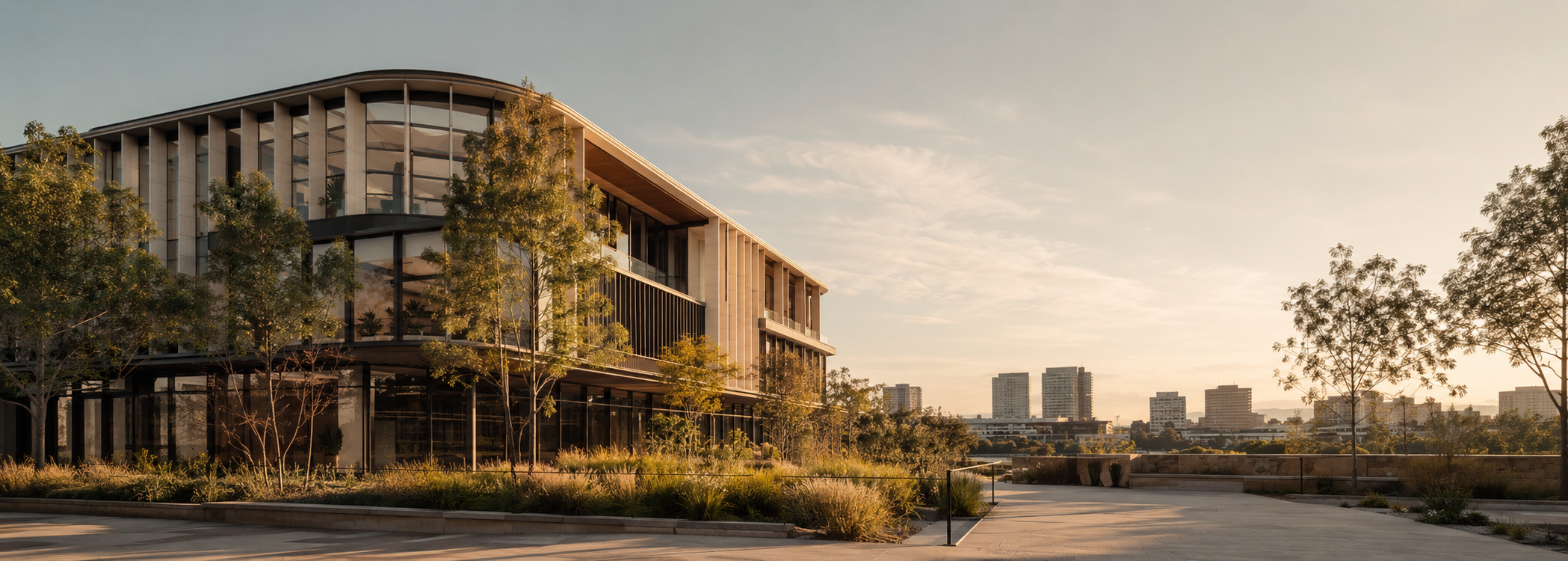
Contemporary high-performance commercial building designed around environmental leadership, occupant wellbeing and international sustainability standards.

Commercial Performance · International Rating Systems

LEED

LEED is one of the world's leading sustainable building certification systems, helping commercial projects demonstrate environmental performance, healthier indoor environments and internationally recognised sustainability outcomes.

Learn how LEED certification works, where it is used in Australia and how it compares with other commercial building rating systems for developers, architects, consultants and project teams.

Discuss Your Project Pathway
 

In Brief

What Is LEED?

LEED, or Leadership in Energy and Environmental Design, is one of the world's leading sustainable building certification systems. Developed by the U.S. Green Building Council, LEED provides a structured framework for assessing environmental performance across energy, water, materials, indoor environmental quality, site planning and broader sustainability outcomes.

LEED certification may be pursued for new buildings, major renovations, commercial interiors and existing building operations. Projects must satisfy mandatory prerequisites and pursue optional credits that contribute towards Certified, Silver, Gold or Platinum certification. LEED certification is voluntary and operates independently from Australia's mandatory building regulations.

In Australia, LEED may be considered where international recognition, global portfolio alignment or consistent sustainability outcomes across multiple countries are important. It complements rather than replaces Australian compliance requirements and should be distinguished from Green Star certification, which has been developed specifically for the Australian market.

What Does LEED Assess?

Energy and water performance, materials, indoor environmental quality, sustainable sites and broader environmental outcomes.

How Is Certification Achieved?

Projects meet mandatory prerequisites and pursue optional credits, with the final points determining the certification level achieved.

Where Does LEED Fit?

LEED supports internationally recognised sustainability objectives while complementing Australian compliance and local rating systems.

LEED Foundations

What Is LEED?

LEED, which stands for Leadership in Energy and Environmental Design, is one of the world's leading sustainable building certification systems. Developed by the U.S. Green Building Council, LEED provides an internationally recognised framework for assessing and certifying the environmental performance of buildings, interiors and operational assets.

Rather than evaluating a single aspect of sustainability, LEED certification considers multiple areas of building performance within one coordinated framework. Depending on the applicable rating system, these may include energy efficiency, carbon emissions, water conservation, materials, waste management, sustainable sites, indoor environmental quality, resilience and ecological outcomes. Projects seeking Australian certification pathways may also consider how LEED relates to Green Star certification, although the two frameworks have different objectives and assessment methods.

LEED can be applied throughout different stages of a building's lifecycle, including new developments, major renovations, commercial interiors and existing building operations. The appropriate certification pathway depends on the project scope, asset type and the level of control held by the project owner or applicant.

Broad Building Performance

LEED brings together environmental performance, resource efficiency, occupant wellbeing and long term sustainability within a single certification framework.

Multiple Project Pathways

Different LEED rating systems support new construction, commercial interiors, existing buildings and major renovations.

International Recognition

LEED provides a globally recognised sustainability certification that supports multinational organisations and international property portfolios.

LEED Does Not Replace Australian Compliance

LEED certification is voluntary and operates independently from Australia's mandatory building regulations. Commercial projects must still comply with the National Construction Code and may require services such as Section J compliance or JV3 performance modelling, depending on the project's compliance pathway.


Certification Pathway

How LEED Certification Works

LEED certification begins by selecting the rating system that best reflects the project scope. New construction, commercial interiors, major renovations and existing building operations each follow different certification pathways because the project team controls different aspects of design, construction and operational performance.

After the appropriate pathway is selected, the project team establishes the target certification level, confirms all mandatory prerequisites and develops a credit strategy. Achieving many credits relies on technical analysis, documentation and coordination, which may include studies such as daylight modelling, thermal comfort modelling, Life Cycle Assessment or other project specific evidence depending on the selected credits.

Step 01

Select the Rating System

Identify the LEED rating system that aligns with the project type, building lifecycle stage and certification objectives.

Step 02

Establish the Target

Determine the desired certification level and confirm it is achievable within the project brief, budget and delivery program.

Step 03

Confirm Prerequisites

Review every mandatory prerequisite before pursuing optional credits, as these requirements cannot be substituted by additional points.

Step 04

Develop the Credit Strategy

Select credits that best support the project's sustainability objectives, design approach and commercial priorities.

Step 05

Coordinate and Document

Prepare calculations, drawings, product documentation, modelling reports and supporting evidence required for certification review.

Step 06

Submit for Review

Submit the completed documentation for independent assessment and respond to any review comments before certification is awarded.

Prerequisites, Credits and Points

Every LEED certification pathway includes mandatory prerequisites that must be achieved before a project can be certified. Credits are generally optional and allow project teams to pursue sustainability outcomes aligned with their objectives. The total number of points achieved determines the final certification level.

40–49

Certified

50–59

Silver

60–79

Gold

80+

Platinum

Point thresholds vary by certification level, while individual rating systems may include additional eligibility and documentation requirements.

Rating Systems

LEED Rating Systems and Project Types

LEED is not a single assessment applied in the same way to every project. Different LEED rating systems are available for whole buildings, interior projects and existing building operations, allowing the certification pathway to reflect the project boundary, lifecycle stage and areas controlled by the applicant.

Selecting the appropriate rating system is an important early decision because it determines which prerequisites, credits, technical studies and forms of evidence apply. The pathway should therefore be confirmed before detailed design decisions, consultant scopes and certification responsibilities become fixed.

LEED BD+C

Building Design and Construction

LEED Building Design and Construction applies to new buildings and major renovations where the project team has substantial control over the whole building design and construction process.

It may be used for offices, education facilities, healthcare buildings, hospitality projects, warehouses, data centres and other commercial or institutional developments seeking whole-building certification.

LEED ID+C

Interior Design and Construction

LEED Interior Design and Construction is intended for interior projects where the applicant controls the fitout but may not control the entire base building, external envelope or central services.

This pathway may suit commercial workplaces, retail interiors and hospitality fitouts, particularly where an organisation applies consistent sustainability requirements across an international property portfolio.

LEED O+M

Operations and Maintenance

LEED Operations and Maintenance applies to existing buildings and focuses on the environmental and operational performance achieved after construction.

Measured performance, operational policies, maintenance procedures, resource consumption and ongoing management practices become more important than design-stage commitments alone.

Choosing the Appropriate LEED Pathway

The correct pathway depends on the project boundary, the stage of the building lifecycle and the extent of control held by the owner, tenant or project team. A commercial interior fitout should not automatically be assessed as a whole new building, while an existing operational asset requires measured performance data and management evidence that differ from the documentation used during design and construction.

Project Boundary

Determine whether certification covers the whole building, an interior tenancy or the ongoing operation of an existing asset.

Level of Control

Confirm which building systems, materials, spaces, services and operational decisions are controlled by the applicant.

Lifecycle Stage

Align the LEED rating system with new construction, renovation, fitout or operational performance.

Wider LEED Applications

The wider LEED framework also includes applications for residential projects, neighbourhood development, cities, communities and zero performance recognition. For Australian commercial projects, the most relevant pathways are commonly those addressing whole-building design and construction, commercial interiors and existing building operations.


Current Framework

Understanding LEED v5

LEED v5 is the latest generation of the LEED sustainable building certification system for commercial projects. It is available across Building Design and Construction, Interior Design and Construction and Operations and Maintenance, providing a consistent framework that responds to today's environmental, social and economic priorities.

Compared with earlier versions, LEED v5 places greater emphasis on whole life carbon, resilience, occupant wellbeing and measurable building performance. It also strengthens the connection between design decisions, operational outcomes and long term environmental impact, encouraging closer collaboration across the project team.

Impact Area 01

Decarbonisation

LEED v5 places greater emphasis on reducing operational and embodied carbon emissions. This includes building energy performance, refrigerants, materials, construction impacts and other emission sources across the building lifecycle. Credits commonly align with services such as Embodied Carbon Reporting and Life Cycle Assessment.

Impact Area 02

Quality of Life

Occupant health, comfort and resilience play a larger role within LEED v5. Indoor environmental quality, daylight access, thermal comfort and healthier workplaces are considered alongside environmental outcomes, often supported by technical studies such as Daylight Modelling and Thermal Comfort Modelling.

Impact Area 03

Ecological Conservation and Restoration

LEED v5 expands its focus on protecting ecosystems, biodiversity, water resources and responsible site development, recognising that sustainable buildings should minimise environmental harm while supporting long term ecological resilience.

A More Integrated View of Building Performance

LEED v5 represents more than an update to individual credits. It reflects a broader shift towards integrated building performance, recognising the relationship between carbon, energy, materials, water, ecology, occupant wellbeing and operational outcomes throughout the building lifecycle.

This approach encourages architects, engineers, sustainability consultants, contractors and facility managers to coordinate decisions earlier in the project. Building performance is increasingly considered as one connected system rather than a collection of separate sustainability initiatives.

Whole Life Carbon

Operational energy, embodied carbon and lifecycle impacts are evaluated together to support long term decarbonisation.

Performance Based Outcomes

Greater emphasis is placed on measurable building performance, commissioning and operational verification.

Climate Resilience

Projects are encouraged to consider future climate risks alongside occupant wellbeing and long term building adaptability.

International Context

LEED and International Sustainable Building Leadership

LEED certification provides a globally recognised framework for measuring and communicating sustainable building performance. For organisations operating across multiple countries, it offers a consistent approach to sustainability that can be applied across different asset types while supporting internationally recognised environmental objectives.

This international consistency is particularly valuable for multinational property owners, institutional investors and global tenants that wish to align design standards, sustainability targets and operational expectations across their portfolios. Rather than creating separate internal frameworks for every jurisdiction, organisations can use LEED as a common language while still complying with local regulations.

For Australian projects, LEED generally complements rather than replaces local sustainability frameworks. Depending on project objectives, teams may also consider Green Star certification, NABERS or WELL Building Standard, each of which serves a different purpose within the commercial sustainability landscape.

Global Property Portfolios

Multinational organisations often use LEED certification to establish a consistent sustainability framework across offices, campuses, retail centres, industrial facilities and commercial assets located in different countries.

International Investors and Tenants

Global investors, institutional owners and international tenants may specify LEED certification because it provides a familiar benchmark that supports portfolio governance and ESG reporting across multiple markets.

Cross Border Comparability

Using a recognised international framework makes it easier to compare sustainability outcomes, communicate project ambitions and benchmark assets across different regions and jurisdictions.

When International Recognition Matters

LEED is often selected when project stakeholders extend beyond the local market. While many Australian developments are well served by local certification frameworks, international recognition may become an important requirement where overseas investment, multinational organisations or global reporting obligations influence project decisions.

The development forms part of a multinational property portfolio.

International investors or tenants require a globally recognised certification pathway.

Corporate sustainability reporting needs to remain consistent across multiple countries.

Stakeholders seek an internationally recognised sustainability certification in addition to local compliance.

Framework Context

How LEED Relates to Green Star

LEED and Green Star are voluntary sustainable building certification systems that assess environmental performance across several areas of building design, construction and operation. Although their sustainability objectives overlap, they were developed for different markets, use separate assessment frameworks and are administered by different organisations.

International Framework

LEED

Developed by the U.S. Green Building Council, LEED provides an internationally recognised certification framework that may support multinational organisations, global property portfolios and projects with international stakeholder requirements.

Australian Framework

Green Star

Administered by the Green Building Council of Australia, Green Star has been developed for the Australian property sector and reflects local sustainability priorities, market expectations and industry conditions.

Consideration LEED Green Star
Primary context International projects and property portfolios Australian buildings, developments and communities
Administered by U.S. Green Building Council Green Building Council of Australia
Common reason for selection International recognition and portfolio alignment Australian market relevance and local sustainability leadership
Regulatory status Voluntary certification Voluntary certification

Choosing the Appropriate Framework

The appropriate certification pathway depends on the project location, stakeholder requirements, asset strategy and intended form of market recognition. Green Star is often well aligned with Australian property sector expectations, while LEED may be relevant where international investors, tenants or corporate standards require a globally recognised framework.

Project teams may review both systems during early planning, but the final decision should be based on the certification outcomes required rather than assuming one framework is inherently more rigorous or appropriate than the other.


Building Performance

Energy, Water, Materials and Indoor Environmental Quality

LEED certification brings several areas of sustainable building performance into one coordinated rating framework. Energy, water, materials and indoor environmental quality are not treated as isolated technical exercises, but as connected parts of the wider building design, construction and operational strategy.

The exact prerequisites, credits and evidence requirements depend on the selected LEED rating system and project type. Successful certification generally requires early coordination between architectural design, building services, material selection, construction processes, commissioning and long term operational planning.

Performance Area 01

Energy and Carbon

Energy performance can influence the building envelope, heating and cooling systems, lighting, controls, commissioning, metering and renewable energy strategy. Modelling may be required to demonstrate how the proposed building performs against the applicable LEED baseline.

Within current LEED frameworks, energy efficiency is considered as part of a broader decarbonisation strategy that may also address operational carbon, embodied impacts, refrigerants and transport related emissions.

Performance Area 02

Water Performance

Water strategies may address efficient fixtures, landscape irrigation demand, cooling tower consumption, process water, alternative water sources and metering across internal and external building systems.

The strongest approach considers water demand early enough to influence hydraulic design, landscape planning, equipment selection, specifications and long term operational management.

Performance Area 03

Materials and Lifecycle Performance

Material related strategies may consider lifecycle impacts, responsible sourcing, environmental product information, material ingredients, construction waste and the environmental consequences of product selection.

A Life Cycle Assessment or Embodied Carbon Report may support this work, while remaining a distinct technical process within the broader LEED certification strategy.

Performance Area 04

Indoor Environmental Quality

Indoor environmental quality may include ventilation, pollutant control, thermal conditions, daylight, acoustic performance and emissions from selected products, finishes and furnishings.

These considerations can support healthier and more comfortable interiors while remaining part of LEED’s broader sustainability framework. Technical evidence may include Daylight Modelling, Thermal Comfort Modelling or airflow analysis where required.

Performance Categories Influence One Another

Building performance decisions rarely remain within one category. Façade design may affect energy demand, daylight availability and thermal comfort. Material choices may influence embodied carbon, indoor air quality and construction waste. Water systems may affect both resource consumption and operational energy.

LEED coordination is therefore most effective when the project team considers the interaction between prerequisites and credits rather than pursuing each requirement independently. This can reduce duplicated work, identify trade offs earlier and help the certification strategy support a more coherent building outcome.

Model Early

Energy, daylight, airflow and comfort analysis can identify design risks before major architectural and building services decisions become fixed.

Specify Clearly

Product, material, system and documentation requirements should be incorporated into the project specifications before procurement begins.

Verify Performance

Commissioning, metering, testing and operational planning help translate design intent into reliable and documented building performance.


Commercial Performance

LEED and Commercial Building Performance

LEED certification is most effective when it influences a commercial project from the beginning rather than being treated primarily as a documentation exercise after major design decisions have already been made.

For commercial buildings, the LEED strategy can shape façade design, building services, material selection, water systems, indoor environmental quality, commissioning and operational readiness. The certification process is therefore closely connected to how the project team defines, coordinates, documents and verifies building performance.

Design Stage

Performance Begins with the Brief

The intended LEED rating, performance priorities, credit targets and consultant responsibilities should be established early enough to influence architectural, engineering and procurement decisions.

Delivery Stage

Documentation Must Follow the Design

Drawings, schedules, specifications, contractor requirements and procurement documentation need to reflect the intended LEED outcomes so that design commitments are maintained through construction.

Operational Stage

Design Intent Must Become Performance

Commissioning, controls, metering, handover, facilities management and occupant use all influence whether the completed commercial building performs as intended.

Commercial Performance Is a Coordinated Outcome

A high performing commercial building is not created through one consultant, one technology or one LEED credit. Performance emerges from the interaction between the building envelope, services, controls, materials, construction quality, commissioning, operational management and the way spaces are occupied.

LEED provides a structured framework for coordinating these areas, but the quality of the final outcome still depends on clear project decisions, accurate documentation and timely technical analysis. Energy, daylight, thermal comfort and ventilation performance should be tested while the design can still respond.

Areas Commonly Influenced by a LEED Strategy

Site and Transport Planning

Location, site conditions, transport access and the relationship between the development and its wider urban or ecological context.

Façade and Envelope Design

Glazing, shading, insulation, thermal bridging and air leakage can affect energy demand, daylight access and thermal comfort.

Building Services

Mechanical, electrical, hydraulic, lighting and control strategies influence resource consumption, occupant comfort and operational reliability.

Materials and Procurement

Material transparency, lifecycle impacts, responsible sourcing and construction requirements need to be reflected in specifications and procurement.

Indoor Environmental Quality

Ventilation, daylight, thermal conditions, acoustic performance and low emitting products can shape occupant health, comfort and experience.

Commissioning and Handover

Testing, tuning, training, manuals and operational readiness help close the gap between documented design intent and actual building use.

Australian Project Context

LEED Certification for Australian Projects

LEED certification is voluntary in Australia and does not replace the National Construction Code, state planning requirements, local authority conditions or other statutory compliance obligations.

It may nevertheless be relevant where a commercial, institutional or workplace project requires international sustainability recognition, alignment with a global property framework or consistency across a multinational portfolio.

The appropriate certification pathway should be selected according to the project brief, stakeholder expectations, Australian market context and the form of performance, reporting or recognition being sought.

When LEED May Be Relevant in Australia

International Tenant Requirements

A global tenant may require its Australian workplace, tenancy or facility to follow the same certification standard used across its wider property portfolio.

Overseas Ownership or Investment

International owners, investors or fund managers may be familiar with LEED or may apply established certification policies across assets in several countries.

Global Portfolio Alignment

LEED may provide a common sustainability framework where buildings in different jurisdictions need to be assessed, reported and communicated consistently.

Project Brief Requirements

LEED certification may be written into the project brief by the client, tenant, investor, funder or parent organisation before the local consultant team is appointed.

International Market Recognition

The intended audience for the development may extend beyond Australia and require a certification framework recognised by international stakeholders.

Consistent Workplace Standards

An Australian commercial interior may follow the same sustainability and workplace standards used for offices in other countries.

Local Requirements

Australian Compliance Still Applies

A LEED target does not remove the need to satisfy the National Construction Code, planning controls, accessibility requirements or applicable state and local authority conditions.

Local compliance and international certification should therefore be coordinated as related but separate project workstreams. Depending on the building, this may include dedicated Section J or JV3 assessment alongside the LEED process.

Rating Selection

LEED Is Not Always the Default Choice

For many Australian projects, Green Star, NABERS or WELL may align more directly with local market expectations or a particular sustainability, operational or wellbeing objective.

LEED becomes most compelling where international alignment is a genuine project requirement rather than a general sustainability aspiration.

Selecting the Right Framework for an Australian Project

The decision should begin with the outcomes expected by the owner, investor, tenant and project team. International recognition, Australian market leadership, measured operational performance and occupant wellbeing are different objectives and may point towards different rating systems.

In some cases, more than one framework may be appropriate because each serves a distinct purpose. The value of that approach should be tested against project complexity, certification cost, documentation effort, stakeholder value and long term management requirements.

Project Delivery

LEED Design Team Coordination and Documentation

LEED certification is a coordinated project delivery process that typically requires input from the client, architect, engineers, sustainability consultants, contractors, commissioning specialists, product suppliers and operational teams.

The certification pathway becomes more reliable when responsibilities are assigned early, evidence requirements are understood and the selected prerequisites and credits are carried through drawings, specifications, procurement, construction, commissioning and handover.

Typical LEED Project Contributors

Client and Building Owner

Establishes the project objectives, intended LEED certification level, budget and long term asset priorities.

Architect

Coordinates design decisions affecting site planning, the building envelope, spatial planning, materials and indoor environmental quality.

Services Engineers

Develop mechanical, electrical, hydraulic, lighting, controls and metering strategies that support the selected LEED pathway.

Sustainability Consultant

Coordinates the credit strategy, tracks responsibilities, reviews project risks and supports evidence preparation across disciplines.

Contractor and Suppliers

Provide construction records, waste data, product evidence, procurement information, installation records and declarations.

Commissioning and Facilities Teams

Verify systems, support testing and tuning and prepare the completed building for effective operation after handover.

Early Coordination

Establish the LEED Strategy Before Design Is Fixed

The project team should confirm the applicable rating system, intended certification level, mandatory prerequisites, targeted credits and consultant responsibilities during briefing or early design.

Late coordination can make some credits more difficult, expensive or impossible to achieve because the relevant design, specification or procurement decisions have already been made.

Responsibility Matrix

Assign Ownership for Every Requirement

Each prerequisite and targeted credit should have an identified lead consultant, supporting contributors, required evidence, review points and delivery date.

A clear responsibility matrix helps prevent requirements from being assumed by several disciplines but completed by none.

Typical LEED Certification Documentation

Drawings and Schedules

Architectural, landscape, services and fitout documentation showing the relevant design strategies and project scope.

Technical Calculations

Energy, water, daylight, thermal comfort, lifecycle or other project specific modelling and analysis.

Specifications

Performance requirements, material criteria, testing provisions, commissioning obligations and contractor responsibilities.

Product Evidence

Environmental product declarations, emissions data, sourcing information, product ingredients and manufacturer documentation.

Construction Records

Waste reports, site records, procurement evidence, photographs, substitution reviews and installation confirmations.

Commissioning and Handover Records

Testing reports, systems manuals, training records, issue logs and evidence of operational readiness.

Documentation Should Demonstrate a Real Project Outcome

LEED documentation is not separate from the building. It should demonstrate that the intended strategies are incorporated into the design, included in procurement documents, delivered during construction, verified through testing and prepared for operation.

Strong document control helps the team respond to design changes, value management, product substitutions and construction stage decisions without losing sight of the certification target.


Future Direction

The Future of LEED and Sustainable Building Performance

Sustainable building performance is moving beyond isolated efficiency measures towards a more integrated understanding of carbon, resilience, health, materials, ecology and long term operational outcomes.

LEED reflects this direction by connecting design decisions with whole life impacts and placing greater emphasis on whether buildings can support lower emissions, healthier indoor environments and more resilient performance over time.

For project teams, this means sustainability can no longer be treated as a collection of separate credits. Energy, materials, water, indoor environmental quality, commissioning and operation increasingly need to be understood as interconnected parts of one building system.

Future Priority 01

Whole Life Carbon

Operational energy, embodied carbon, refrigerants, transport and construction impacts are increasingly considered together rather than as unrelated sources of emissions.

Future Priority 02

Performance in Use

Design intent is becoming more closely connected to commissioning, metering, operational data, facilities management and the way completed buildings perform in use.

Future Priority 03

Health and Resilience

Buildings are increasingly expected to support occupant health and comfort while responding to climate risks, changing operating conditions and long term adaptability.

Future Priority 04

Ecological Responsibility

Site, water, biodiversity and landscape decisions are being considered more carefully within the wider environmental consequences of development.

From Individual Credits to an Integrated Building Strategy

Strong future focused projects will not pursue sustainability categories independently. Façade design will be considered alongside energy demand, daylight and thermal comfort. Material decisions will be tested against embodied carbon, durability, circularity and indoor air quality. Water systems will be considered in relation to resource demand, operational energy and climate resilience.

This integrated approach can make LEED certification more meaningful because the rating pathway begins to reflect a coherent building performance strategy rather than a collection of disconnected documentation tasks.

What This Means for Project Teams

Earlier Decisions

LEED objectives need to influence briefing, site planning, massing, consultant scopes and project budgets from the beginning.

Deeper Coordination

Architects, engineers, material specialists, contractors, commissioning agents and facilities teams need to understand how their decisions interact.

Better Evidence

Modelling, product information, commissioning records and operational data are becoming more important to credible building performance claims.

Long Term Thinking

Certification strategies increasingly need to account for durability, adaptation, operation, maintenance and future asset performance.


Frequently Asked Questions

LEED Certification FAQs

What does LEED stand for?

LEED stands for Leadership in Energy and Environmental Design. It is an internationally recognised green building rating system developed by the U.S. Green Building Council for assessing sustainable buildings, interiors, operations and communities.

What is LEED certification?

LEED certification is an independent assessment of a project against the requirements of an applicable LEED rating system. Projects must satisfy mandatory prerequisites and may earn points through optional credits before receiving a final certification level.

Is LEED used in Australia?

Yes. Australian buildings, commercial interiors and property portfolios may pursue LEED certification, particularly where international recognition, consistency across global assets or the requirements of an overseas owner, investor or tenant make the framework relevant.

Is LEED mandatory in Australia?

No. LEED is a voluntary certification framework in Australia. National Construction Code requirements, planning controls, accessibility provisions, energy efficiency obligations and other local compliance requirements must still be addressed separately.

What are the LEED certification levels?

The LEED certification levels are Certified, Silver, Gold and Platinum. The final level depends on the number of points achieved after all applicable prerequisites, credit requirements and review conditions have been satisfied.

What is LEED v5?

LEED v5 is a newer generation of the LEED framework for commercial buildings. It places increased emphasis on decarbonisation, quality of life, resilience and ecological conservation across building design, construction, interiors and operations.

Is LEED the same as Green Star?

No. LEED and Green Star are both comprehensive green building rating systems, but they are administered by different organisations and respond to different market contexts. Green Star is widely used in Australia, while LEED is commonly selected where international recognition or global portfolio alignment is important.

Is LEED the same as WELL?

No. WELL focuses more directly on human health, wellbeing and occupant experience. LEED addresses a broader range of environmental and building performance areas, including energy, water, materials, sites and indoor environmental quality.

Is LEED the same as NABERS?

No. LEED provides a broad sustainability certification framework for design, construction and operations. NABERS measures aspects of actual operational performance in Australian buildings using energy, water, waste or indoor environment data.

What types of projects can use LEED?

Depending on the applicable rating system, LEED may be used for new buildings, major renovations, commercial interiors, existing building operations and selected residential, neighbourhood or community scale developments.

How early should LEED be considered?

LEED should ideally be considered during project briefing or early design. Early planning provides more opportunity to select the appropriate rating pathway, assign responsibilities and align design decisions, consultant scopes, specifications and procurement requirements with the certification strategy.

Does a LEED Accredited Professional certify the building?

No. A LEED professional credential demonstrates an individual’s knowledge of the rating system and certification process. The building or project is reviewed and certified separately through the official LEED certification pathway.

Project Review

Clarify Whether LEED Certification Is the Right Pathway for Your Project

Send the available project brief, plans and sustainability requirements for an initial review. Certified Energy can help determine whether LEED certification is appropriate and how the framework may support international recognition, portfolio alignment and performance objectives across energy, water, materials and indoor environmental quality.

The most suitable pathway depends on the project type, location, development objectives, certification target and stakeholder requirements. Early review can also clarify how LEED may be coordinated with Australian compliance obligations, Green Star, WELL, NABERS and the wider building performance strategy.

Last reviewed: July 2026. This page is maintained by Certified Energy as part of its LEED Knowledge Hub.