

Part 3 — The Built Environment as a Living System
When people think about buildings, the focus often falls on structure, materials, and appearance. Yet the influence of the built environment extends far beyond the walls of any individual building.
The way homes, streets, and neighbourhoods are designed quietly shapes how communities function.
A well designed environment supports daily life in ways that often go unnoticed. Streets feel comfortable to walk along. Homes remain stable and pleasant across changing seasons. Public spaces invite interaction rather than discouraging it.
When design works well, people rarely stop to think about it. They simply experience the result as comfort and ease.
When it does not, the opposite becomes visible very quickly.
THE BUILT ENVIRONMENT AS A SYSTEM
Buildings rarely exist in isolation. Each one forms part of a larger pattern within a neighbourhood and within the broader landscape.
Orientation affects sunlight and energy demand.
Street layout influences airflow and urban heat.
The placement of trees and shading structures alters microclimates within communities.
These relationships mean that every design decision contributes to a wider system.
From a building performance perspective this becomes clear over time. Individual homes may perform well or poorly, but the overall design of neighbourhoods can amplify or reduce those outcomes.
When communities are designed thoughtfully, buildings work together with the environment rather than competing against it.
In Australia, this systems approach is increasingly reflected in established frameworks such as Green Star Communities and Green Star Homes. These frameworks consider not only the performance of individual buildings, but also how entire neighbourhoods respond to climate, energy use, and liveability.
Internationally, approaches such as Passive House further demonstrate how careful attention to building performance can significantly reduce energy demand while improving comfort.
Together, these approaches point to a consistent idea. The built environment functions best when it is understood as a connected system rather than a collection of isolated structures.
COMFORT AS A FOUNDATION FOR COMMUNITY LIFE
One of the most overlooked aspects of sustainable housing is comfort.
Comfort is not simply about temperature. It also includes natural light, fresh air, and the sense that a space supports daily life rather than resisting it.
When homes maintain stable indoor conditions, people spend less energy adjusting their environment. Heating systems are used less frequently. Cooling systems become supplementary rather than essential.
Over time this stability contributes to something broader than energy efficiency.
It supports wellbeing.
Homes that remain comfortable throughout the year create environments where families can focus on daily life rather than managing the building itself.
At a community level, this consistency shapes how people experience their surroundings. Streets feel more inviting. Public spaces become more usable. Daily life flows with greater ease.
THE ROLE OF DESIGN IN LONG TERM RESILIENCE
Australia’s climate presents a unique set of challenges for the built environment. Hot summers, cooler winters in southern regions, and increasing variability in weather patterns all influence how buildings perform.
Design therefore becomes a long term investment in resilience.
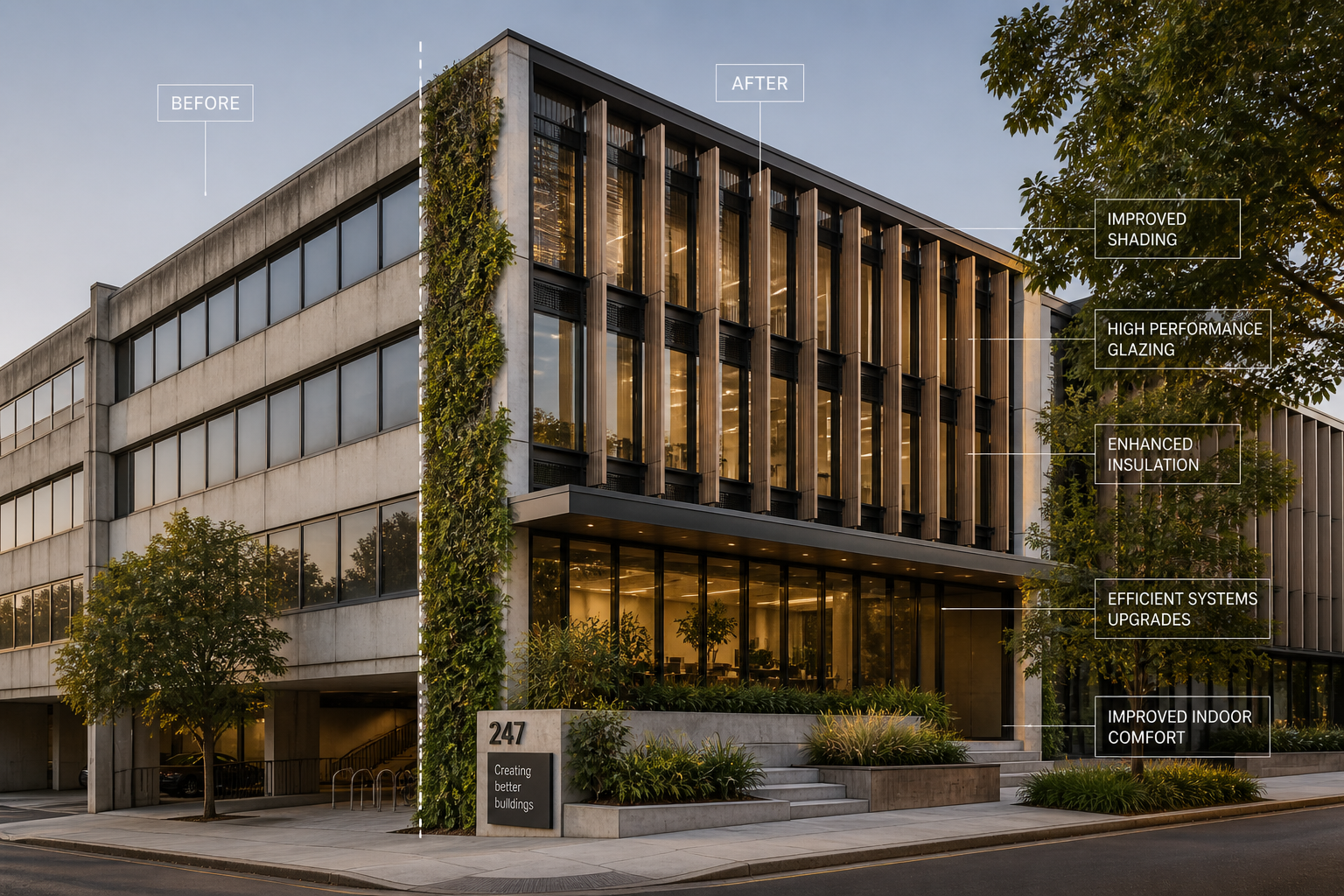
Thoughtful orientation allows buildings to capture winter sunlight. Shading and ventilation reduce overheating during warmer months. Insulation stabilises internal temperatures throughout changing conditions.
These are not simply technical considerations. They determine how comfortably communities will live within their environment over the coming decades.
When these principles are applied consistently, the result is a built environment that supports people quietly and reliably.
SUSTAINABILITY BEYOND TECHNOLOGY
In discussions about sustainable development, the focus often shifts quickly toward technology.
Solar panels
Battery systems
Advanced mechanical solutions
These tools play an important role, yet the foundation of sustainable design usually lies elsewhere.
It begins with understanding how buildings interact with the climate around them.
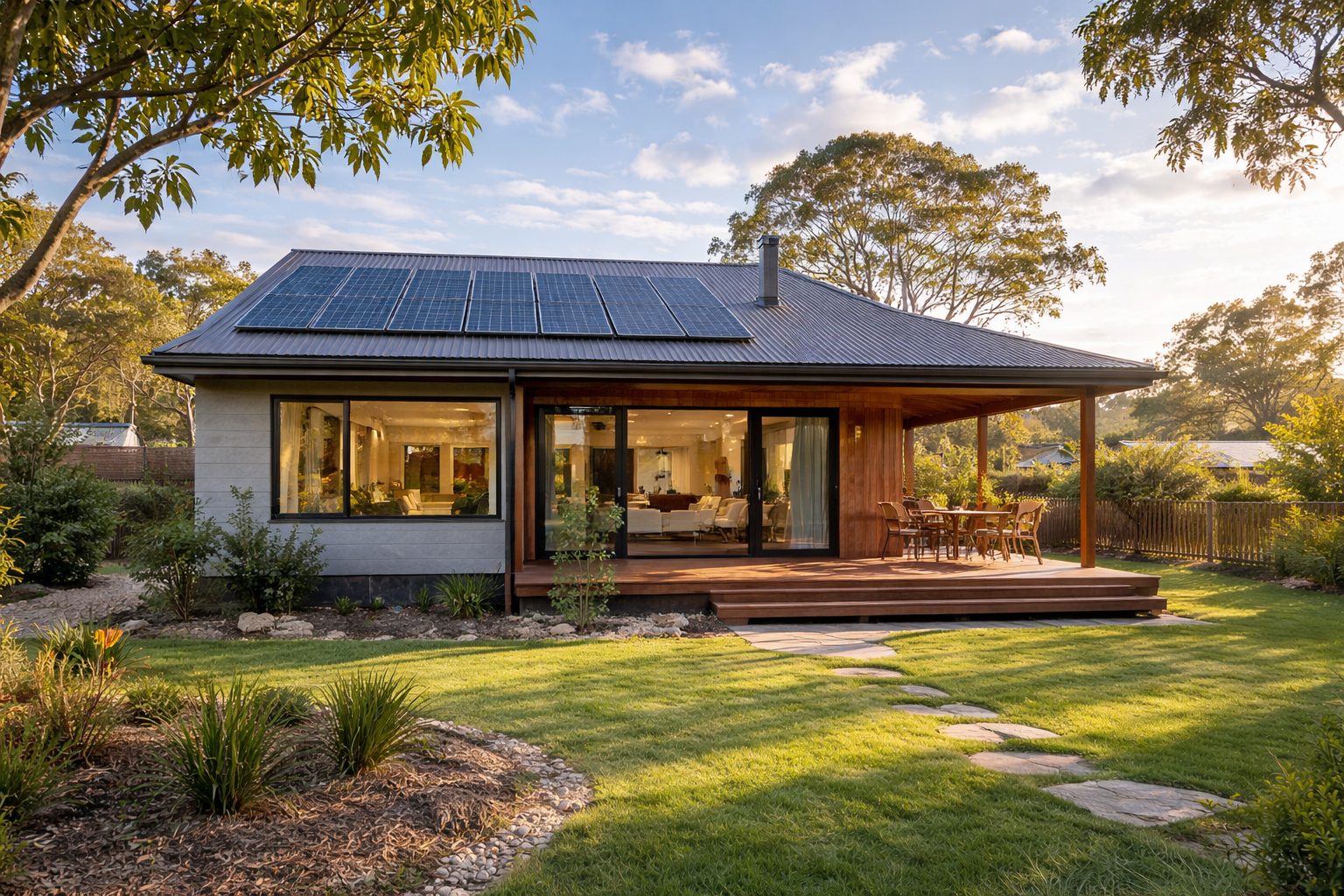
A home that is oriented correctly, insulated effectively, and designed for natural airflow requires far less intervention from technology. Energy systems then become supportive additions rather than essential compensations.
This principle is reflected across leading building approaches, where passive performance is prioritised before mechanical systems are introduced.
This approach often produces the most stable and enduring outcomes.
COMMUNITIES THAT WORK WITH THEIR ENVIRONMENT
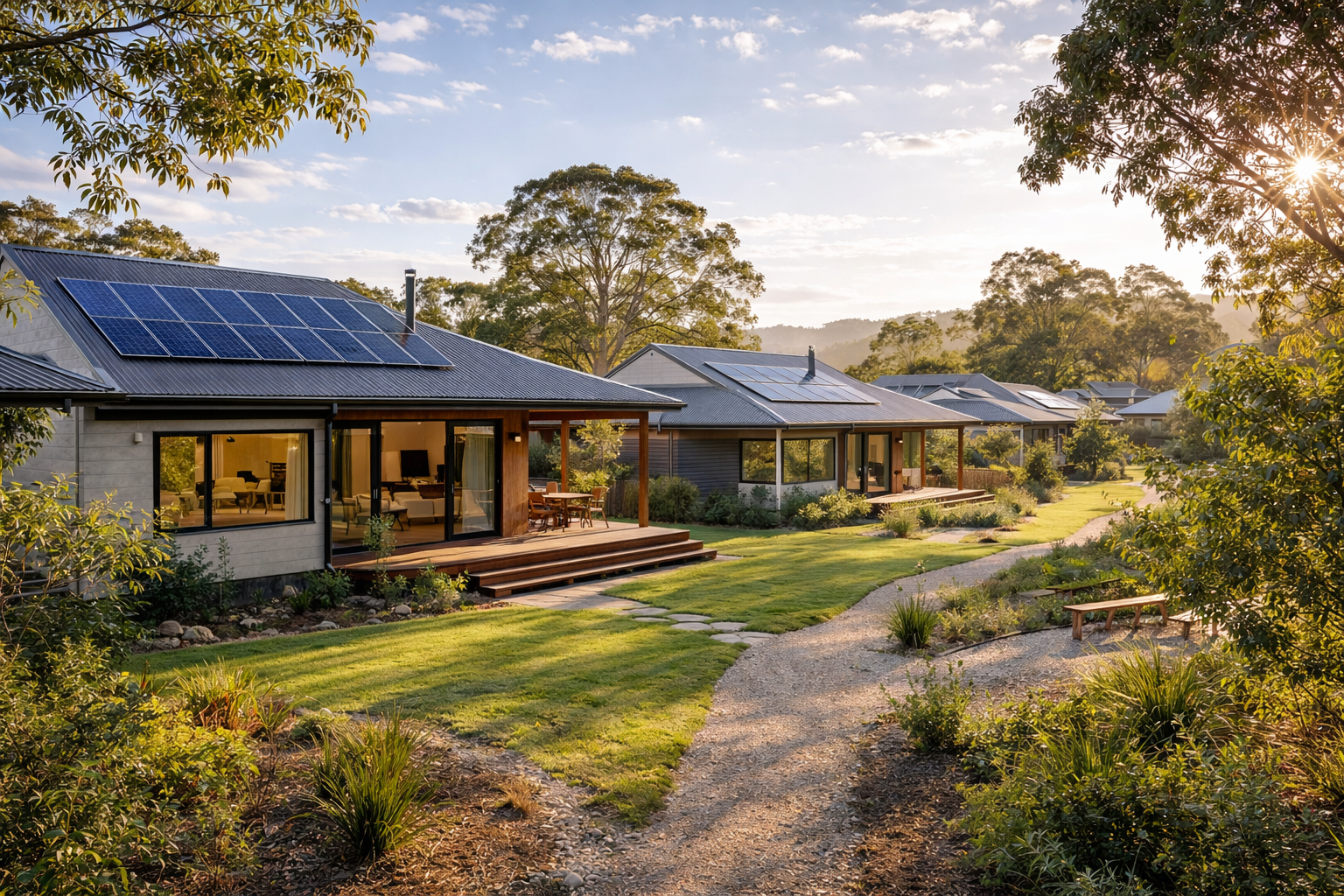
Across Australia there are many examples of neighbourhoods where thoughtful design has created environments that feel balanced and comfortable.
Homes positioned to benefit from sunlight.
Streets designed to encourage airflow and shade.
Green spaces integrated naturally within residential areas.
In these environments sustainability becomes something that feels natural rather than imposed.
Residents experience lower energy demand, more comfortable homes, and neighbourhoods that remain pleasant across changing seasons.
These outcomes are rarely the result of a single innovation. They emerge from a consistent awareness of how buildings, people, and climate interact.
LOOKING FORWARD
As Australia continues to expand its housing supply, the design of new communities will shape how future generations live within the built environment.
Every home constructed today becomes part of a long term landscape that influences comfort, energy use, and community life.
When design decisions are made thoughtfully, buildings support the people who live within them while also strengthening the systems that sustain modern society.
In that sense, the true value of sustainable design may not lie in individual technologies or isolated innovations.
It lies in the quiet alignment between people, the buildings they inhabit, and the environment that surrounds them.