

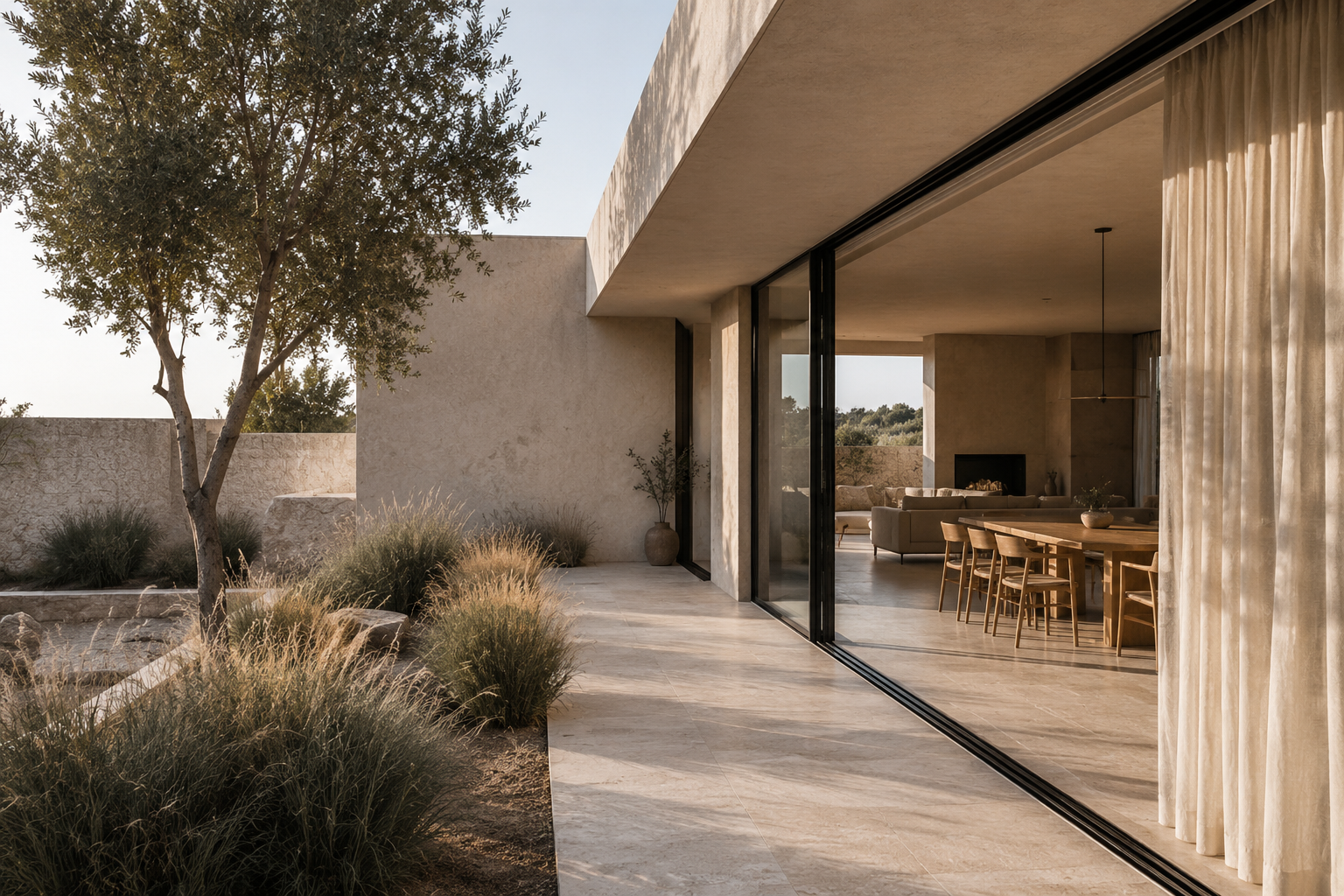
Residential energy compliance requirements continue to evolve across Australia as building standards respond to changing expectations around thermal comfort, energy efficiency and long-term building performance.
While Deemed-to-Satisfy (DTS) pathways remain a central part of residential NCC compliance, increasing focus is being placed on how homes perform in real conditions over time.
This includes growing attention toward:
- thermal envelope quality
- glazing performance
- airtightness
- condensation management
- passive solar response
- overall residential energy use
As a result, residential compliance pathways are gradually shifting beyond minimum construction provisions alone and toward broader performance-focused design thinking.
The NCC Is Continuing to Evolve
The National Construction Code (NCC) has progressively increased residential energy efficiency expectations over recent code cycles.
Recent updates have placed stronger emphasis on:
- higher thermal performance standards
- improved building envelope continuity
- residential comfort outcomes
- glazing performance
- energy efficiency targets
- climate-responsive construction
This reflects a broader industry movement toward homes that perform more consistently across different climate conditions while reducing long-term operational energy demand.
For residential projects using DTS pathways, remaining aligned with current NCC provisions is becoming increasingly important during both design and documentation stages.
Thermal Performance Is Becoming More Central
Thermal performance is no longer viewed purely as a compliance checkbox.
Across the residential sector, it is increasingly influencing:
- architectural design decisions
- glazing strategies
- orientation planning
- material selection
- shading systems
- ventilation response
- construction detailing
As homes become more thermally efficient, the quality of the overall building envelope becomes more important than isolated individual components.
This is gradually encouraging a more integrated approach between architecture, sustainability and residential compliance documentation.
Explore residential thermal performance requirements →
Building Envelope Performance Is Receiving Greater Attention
Future residential compliance standards are likely to place stronger emphasis on overall building envelope quality.
This includes:
- insulation continuity
- thermal bridging reduction
- air leakage control
- glazing specification
- moisture and condensation management
- roof and wall system integration
Rather than evaluating components independently, future pathways may increasingly assess how the entire building envelope performs together as a connected system.
This shift already appears across many higher-performance residential projects throughout Australia.
Passive Design Is Becoming More Important
Passive design principles are also becoming more influential within residential compliance conversations.
Orientation, shading, natural ventilation and thermal mass can significantly affect how efficiently a home responds to seasonal climate conditions.
When passive design strategies are incorporated early in the architectural process, projects may achieve:
- stronger thermal comfort outcomes
- reduced heating and cooling demand
- improved energy efficiency
- more resilient long-term building performance
This approach aligns closely with broader industry movement toward climate-responsive residential architecture.
Performance-Based Pathways Are Expanding
Although DTS pathways remain appropriate for many residential projects, performance-based approaches are becoming more common within architecturally complex or high-performance homes.
This may include:
- NatHERS modelling
- VURB methodologies
- alternative verification pathways
- comparative thermal analysis
Performance-based pathways can provide greater flexibility where projects do not align comfortably with standard DTS assumptions.
This is particularly relevant for:
- large glazing areas
- unusual orientation
- complex geometry
- custom architectural homes
- high-performance envelope systems
Explore residential performance-based compliance pathways →
NatHERS and VURB Are Influencing Future Compliance Direction
NatHERS and VURB methodologies are increasingly shaping discussion around future residential performance assessment.
While DTS pathways rely primarily on predefined construction provisions, performance-based approaches focus more directly on how the proposed home is expected to behave thermally under realistic operating conditions.
This reflects broader movement across the industry toward:
- measurable thermal outcomes
- occupant comfort
- operational efficiency
- climate responsiveness
- whole-building performance thinking
As residential compliance systems continue evolving, these methodologies are likely to become increasingly influential within Australian housing design.
Residential Energy Compliance Is Becoming More Integrated
Historically, energy compliance documentation often operated separately from architectural design thinking.
That separation is gradually reducing.
Residential compliance considerations are increasingly influencing:
- early-stage concept design
- glazing ratios
- façade response
- orientation planning
- roof form
- shading strategies
- material specification
This creates opportunities for more integrated and better-performing residential outcomes when sustainability considerations are introduced earlier within the design process.
Future Residential Standards Will Likely Focus on Long-Term Performance
Future building standards are expected to continue moving toward:
- improved thermal stability
- reduced operational energy demand
- better occupant comfort
- greater climate resilience
- more efficient building envelopes
Rather than focusing solely on minimum compliance thresholds, residential performance expectations are gradually shifting toward how homes function over their full lifecycle.
This reflects a broader transition occurring throughout Australian residential construction toward more durable, efficient and climate-responsive housing outcomes.
Frequently Asked Questions
Are residential energy standards changing in Australia?
Yes. Residential energy efficiency requirements continue evolving through NCC updates, increased thermal performance expectations and growing focus on long-term building efficiency and occupant comfort.
What future changes may affect residential compliance?
Future standards may place greater emphasis on:
- building envelope performance
- glazing efficiency
- airtightness
- condensation management
- passive solar response
- performance-based assessment pathways
Is DTS compliance still relevant?
Yes. DTS pathways remain an important and widely used residential compliance method. However, some projects increasingly use performance-based approaches where greater design flexibility or higher-performance outcomes are required.
What is driving higher residential thermal performance expectations?
Several factors contribute, including:
- energy efficiency goals
- occupant comfort expectations
- climate conditions
- operational energy reduction
- evolving NCC standards
- improved understanding of building science
Will NatHERS become more important in the future?
NatHERS modelling continues gaining importance within Australian residential performance assessment, particularly for projects seeking more detailed thermal analysis or performance-based compliance flexibility.