


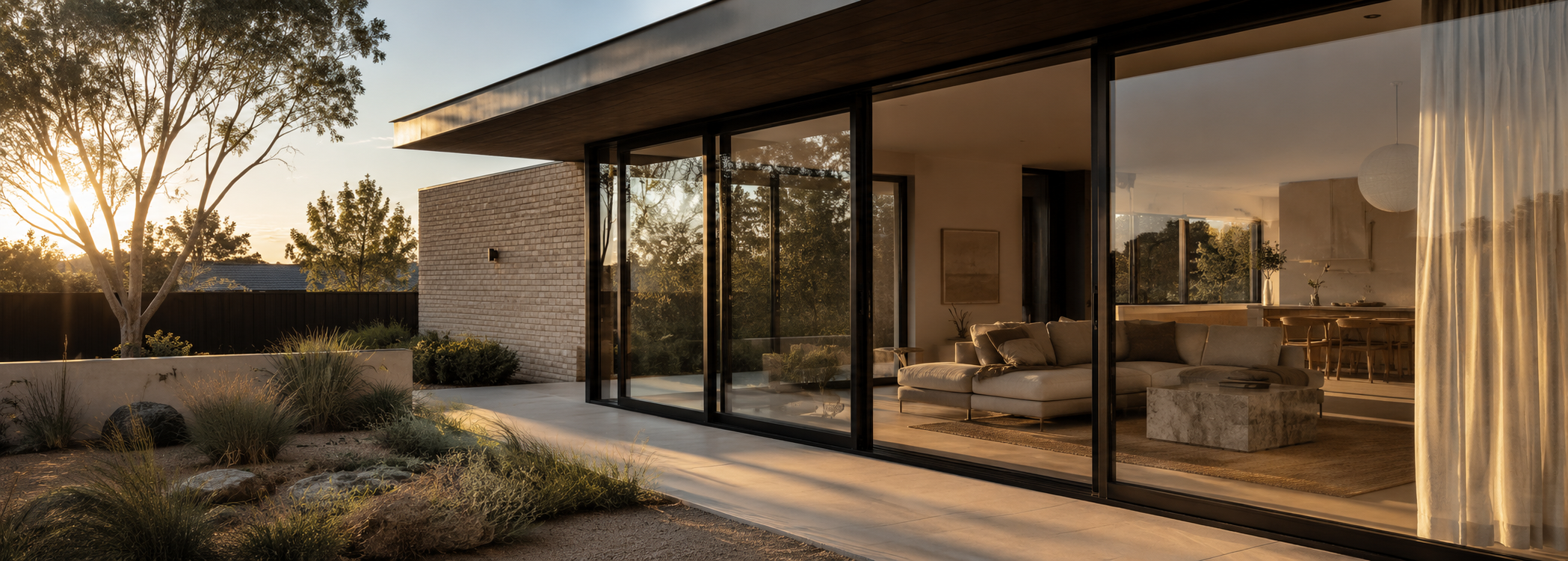
Building orientation can have a major effect on BASIX and NatHERS results because it changes how the dwelling receives sun, shade, heat and breezes throughout the year. The same house design can perform differently depending on whether its living areas, windows and roof form face north, south, east or west.
Orientation matters because BASIX and NatHERS are not only checking products. They are assessing how the home is likely to perform in its climate. A well-oriented design can use winter sun, control summer heat, improve daylight and reduce unnecessary heating and cooling demand. A poorly oriented design may need stronger glazing, insulation, shading or system commitments to reach the same outcome.
Short answer
Orientation affects BASIX and NatHERS because it influences solar access, heat gain, heat loss, shading, glazing performance and heating and cooling loads. North-facing living areas and well-controlled glazing can support thermal comfort, while poorly shaded east, west or northwest-facing windows can make cooling loads harder to manage.
Why orientation matters in BASIX
BASIX covers water, energy use and thermal performance for NSW residential development. Orientation affects the thermal performance section because it changes how the home responds to sun and shade. NSW Planning explains that orientation and siting should balance solar access for winter warming, where required, while avoiding overheating in summer.
In practice, this means the building layout, window placement and shading strategy should work together. A home with strong passive design may need less artificial heating and cooling. A home with poor orientation may still pass, but it may need higher performance glazing, better insulation, more careful shading or other design changes to meet the required thermal comfort outcome.
How NatHERS uses orientation
NatHERS modelling estimates the heating and cooling needs of a dwelling based on design, orientation, construction materials and local climate. Orientation affects how much sun reaches each part of the building and how windows contribute to heat gain or heat loss throughout the year.
This is why an assessor needs accurate plans, a correct north point and reliable window information. If the orientation is wrong, the model may not reflect the true solar exposure of the dwelling. This can affect the heating and cooling loads and may also affect the BASIX thermal comfort result where NatHERS is used as the simulation method.
True North matters in BASIX
BASIX window orientation sectors are based on True North. NSW Planning explains that the azimuth of a window or glazed door is the angle of a line drawn perpendicular to its face, and that users should use the azimuth range and north point to work out the correct orientation sector. Magnetic North is not an acceptable approximation of True North.
This matters because a window entered into the wrong orientation sector may be assessed incorrectly. For example, a window that is actually exposed to difficult afternoon sun should not be treated as though it faces a more favourable direction. Accurate orientation helps the assessor understand real heat gain, shading and thermal comfort risk.
North-facing living areas can help performance
In many Australian climates, north-facing living areas can support good passive solar design because they can receive useful winter sun and can often be shaded more effectively in summer. When designed well, north-facing glazing can bring warmth and daylight into the home while eaves, awnings or other shading help control summer overheating.
Good orientation does not mean every home must look the same. Site shape, views, slope, neighbouring buildings, privacy and planning controls all affect the final design. However, if the home can place main living areas and appropriate glazing toward the north, the BASIX and NatHERS outcome may be easier to manage.
Why east and west-facing glazing can be harder
East and west-facing windows can be harder to manage because low angle sun can enter the home more directly in the morning and afternoon. West-facing glazing is often especially challenging because afternoon sun can add heat late in the day, when the building and outdoor air may already be warm.
NSW Planning notes that reducing the area of windows facing west, east and northwest can help reduce cooling load. This does not mean these windows must always be avoided. It means their size, glass performance and shading strategy should be reviewed carefully before the design is locked in.
How shading works with orientation
Shading is closely linked to orientation because different window directions receive sun at different times and angles. Horizontal eaves may work well for some north-facing windows, while east and west-facing windows may need different shading strategies because of lower morning and afternoon sun angles.
NSW Planning explains that shading design needs to balance heat, light and glare by controlling direct sunlight on windows and thermal mass. Good shading does not simply block all sunlight. It aims to reduce unwanted summer heat while allowing useful winter solar access where appropriate.
Orientation and thermal mass
Thermal mass can help stabilise internal temperatures, but it needs to be positioned and shaded correctly. NSW Planning explains that thermal mass is most effective when located in northern living spaces, adjacent to north-facing windows, with shading designed to allow winter solar access but limit direct sunlight in summer to avoid overheating.
This is another reason orientation should be considered early. Thermal mass, glazing and shading work as a system. If thermal mass is poorly located or exposed to too much summer sun, it may not support comfort in the way the design intended.
Orientation and ventilation
Orientation can also affect how well a home captures breezes and manages natural ventilation. NSW Planning notes that ventilation is important for thermal comfort, air quality and moisture control, and that managing breezes can involve operable windows, windows on both sides of the dwelling and window layout that captures cooling breezes in summer.
A design that considers wind direction, window placement and internal layout may support better comfort with less reliance on mechanical cooling. However, ventilation should be controlled rather than accidental. The aim is to capture useful breezes while reducing unwanted air leakage and cold winter drafts.
Can poor orientation be fixed?
Poor orientation cannot always be fully fixed, but it can often be managed. A difficult site may still achieve BASIX and NatHERS requirements if the design uses better glazing, stronger insulation, appropriate shading, careful window placement, improved ventilation and realistic system assumptions.
The key is to identify orientation risks early. If the project has large west-facing glazing, limited solar access, heavy overshadowing or restricted window placement, those issues should be reviewed before the approval set is finalised. It is usually easier to adjust design decisions during concept or documentation than after the BASIX Certificate has already been prepared.
What documents help assess orientation?
To assess orientation properly, the assessor needs clear plans that show the building layout, north point, window positions and surrounding context. If the north point is unclear or inaccurate, the orientation of windows and rooms may be entered incorrectly.
Useful documents and details include:
- Site plan with a clear True North point.
- Floor plans showing room layout and living areas.
- Elevations showing window and glazed door locations.
- Window schedule, if available.
- Shading details, including eaves, awnings, pergolas, balconies and louvres.
- Overshadowing information from neighbouring buildings or site features.
- Sections showing roof form, ceiling heights and shading relationships.
- Any known constraints that limit orientation, glazing or shading choices.
How Certified Energy can help
Certified Energy prepares BASIX Certificates and NatHERS assessments for NSW residential projects. Our team can review your plans, orientation, glazing, shading and thermal comfort pathway before the BASIX Certificate is finalised.
This is especially useful for custom homes, renovations, secondary dwellings, dual occupancies, townhouses and multi dwelling developments where site orientation and window placement can significantly affect the final assessment result.
Need help reviewing orientation for BASIX?
Send your site plan and architectural drawings to Certified Energy and our team can review how orientation may affect BASIX and NatHERS outcomes.
Request a ReviewRelated resources
- Complete Guide to BASIX Certificates in NSW
- BASIX Certificate Service
- NatHERS Assessments
- How Glazing Affects BASIX Compliance
- BASIX and the 7 Star NatHERS Standard
Frequently asked questions
How does orientation affect BASIX?
Orientation affects BASIX because it changes how much sun reaches windows, walls and internal spaces. This can influence heating loads, cooling loads, shading requirements and thermal comfort outcomes. Good orientation can help balance winter solar access with summer overheating control.
Does NatHERS use building orientation?
Yes. NatHERS modelling considers the orientation of the dwelling, window placement, climate, construction materials, glazing, shading and other design inputs to estimate heating and cooling needs.
Does BASIX use True North or Magnetic North?
BASIX orientation sectors are based on True North. The NSW Planning Portal states that Magnetic North is not an acceptable approximation of True North for BASIX window orientation sectors.
Can poor orientation make BASIX harder to pass?
Yes. Poor orientation can make BASIX and NatHERS outcomes harder to achieve, especially where large windows face difficult directions, shading is limited or the design gains too much summer heat and not enough useful winter solar access.