


21 min read

How to Reduce Condensation Risk Through Building Envelope Design

By Team CE on Oct 16, 2026, 4:21:28 PM

Condensation risk within a building envelope is often influenced by the relationship between temperature, moisture movement, material properties and the arrangement of construction layers. Where an assessment identifies potentially adverse moisture conditions, the next question is how the proposed design can respond.

There is no single construction detail or membrane arrangement that resolves every condensation concern. A design response needs to address the moisture mechanism involved, the location of the risk and the environmental conditions under which it occurs.

For architects and project teams, reducing condensation risk is therefore a process of identifying the concern, considering appropriate construction changes and checking whether those changes improve the relevant moisture performance without creating unintended consequences elsewhere.

Effective condensation risk reduction begins with understanding why moisture conditions develop, not with selecting a product before the problem is defined.


Topics: Design & Planning Intelligence Moisture & Condensation Risk Analysis Building Physics
20 min read

Comparing Wall and Roof Assemblies for Condensation Risk

By Team CE on Oct 16, 2026, 4:17:41 PM

Two wall or roof assemblies may deliver similar thermal performance while responding differently to moisture. Changes in insulation, membranes, cladding, material properties and construction layers can influence how moisture moves through an assembly, where it is stored and whether it can subsequently dry.

For architects and project teams considering alternative construction systems, comparing condensation risk requires more than checking insulation values or identifying whether a vapour-control membrane is present. The complete arrangement must be considered in relation to the building's climate, indoor conditions and expected exposure.

A useful comparison examines alternatives under consistent, relevant assumptions. This allows differences in modelled moisture behaviour to be considered alongside other project requirements without assuming that one construction approach will perform best in every situation.

Comparing assemblies is not about finding one universally better wall or roof. It is about understanding how specific construction choices influence moisture performance under defined conditions.

Topics: Design & Planning Intelligence Moisture & Condensation Risk Analysis Building Physics
19 min read

How to Interpret Hygrothermal Modelling Results

By Team CE on Oct 16, 2026, 4:11:42 PM

Hygrothermal modelling can provide detailed information about how temperature and moisture conditions change within a building envelope over time. The resulting graphs, moisture profiles and performance indicators can help project teams understand whether a proposed construction may experience moisture accumulation, prolonged elevated humidity or periods of drying.

However, interpreting these results requires more than identifying the highest relative humidity value or checking whether a graph rises above a particular line. Different materials respond to moisture differently, and the significance of a result depends on the location, duration and environmental conditions represented by the model.

For architects, developers and building designers, the value of hygrothermal modelling lies in understanding what the findings mean for a proposed wall or roof assembly and which design questions remain unresolved.

A hygrothermal result is not simply a pass or fail number. It is evidence that must be interpreted in the context of the construction, exposure conditions and assessment criteria.

Topics: Design & Planning Intelligence Moisture & Condensation Risk Analysis Building Physics
21 min read

Dew Point Calculations vs Hygrothermal Modelling

By Team CE on Oct 16, 2026, 4:05:45 PM

Condensation risk can be investigated using different assessment methods, from straightforward dew point calculations to more detailed hygrothermal modelling. Each method provides a different level of information about the relationship between temperature, moisture and building envelope performance.

A dew point calculation can help establish whether a surface temperature may allow condensation under defined air conditions. Hygrothermal modelling can examine how heat and moisture conditions change within a construction assembly over time, including moisture storage and drying behaviour where these mechanisms are represented by the selected model.

The appropriate method depends on the question being investigated. A more complex model is not automatically necessary for every project, while a simple calculation may be insufficient where moisture behaviour is influenced by changing environmental conditions, material properties or concealed construction layers.

The most useful condensation assessment is not necessarily the most complex. It is the one that addresses the relevant moisture risk with appropriate assumptions and limitations.

Topics: Design & Planning Intelligence Moisture & Condensation Risk Analysis Building Physics
17 min read

Condensation Risk in High-Humidity Buildings

By Team CE on Oct 16, 2026, 4:01:27 PM

Buildings with elevated internal humidity can experience moisture conditions that differ substantially from those found in conventional residential and commercial spaces. Indoor swimming pools, aquatic centres, hydrotherapy facilities and other specialised environments may maintain higher water vapour levels for extended periods.

These conditions can influence how moisture interacts with walls, roofs, glazing and concealed building envelope interfaces. Where humid indoor air encounters sufficiently cool surfaces, condensation may develop. Elevated relative humidity within construction layers may also become relevant even when liquid water is not visible.

Managing condensation risk in high-humidity buildings requires an understanding of the intended indoor environment, the external climate and the moisture behaviour of the complete building envelope.

In high-humidity buildings, the internal environment is a central part of building envelope moisture performance.

Topics: Design & Planning Intelligence Moisture & Condensation Risk Analysis Building Physics
16 min read

Condensation Risk in Mechanically Cooled Buildings

By Team CE on Oct 16, 2026, 3:53:48 PM

Mechanical cooling changes the temperature conditions experienced by a building envelope. While air conditioning is commonly considered in relation to indoor comfort and energy demand, it can also influence moisture behaviour within walls, roofs and façades.

In warm and humid conditions, the exterior environment may contain more water vapour than the conditioned interior. Depending on the construction and operating conditions, this can create moisture transport towards cooler internal regions of the building envelope.

The resulting condensation risk depends on the relationship between surface temperature, moisture availability, material properties and the duration of exposure. Understanding these interactions is particularly important where a building is cooled for extended periods or where external humidity remains elevated.

In mechanically cooled buildings, the location of cooler surfaces can change where moisture-sensitive conditions develop within the building envelope.

Topics: Design & Planning Intelligence Moisture & Condensation Risk Analysis Building Physics
16 min read

Condensation Risk in Existing Buildings and Energy Retrofits

By Team CE on Oct 16, 2026, 3:50:47 PM

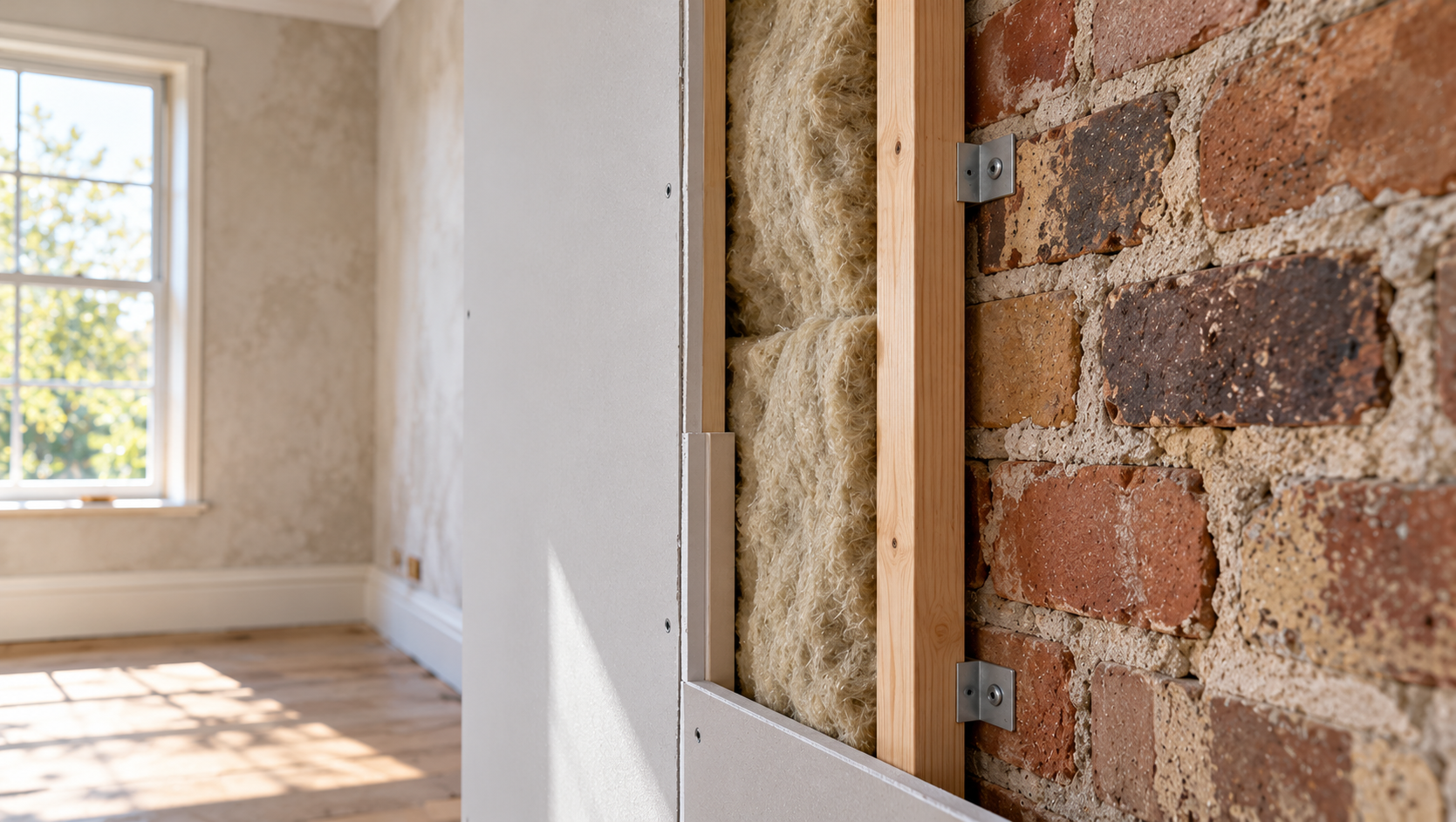
Improving the energy performance of an existing building can reduce heating and cooling demand, improve thermal comfort and support longer-term building performance. However, changes to insulation, airtightness and building operation can also alter how moisture moves through the existing construction.

Unlike a new building, an existing property may contain materials, cavities and moisture pathways that are not fully documented. The original construction may also have developed a particular balance between moisture entry, storage and drying over many years.

When energy upgrades change that balance, previously acceptable moisture conditions may change. Understanding the existing assembly before introducing new layers is therefore an important part of evaluating retrofit condensation risk.

An energy retrofit changes more than thermal performance. It can also change the moisture conditions experienced by the original building fabric.

Topics: Design & Planning Intelligence Moisture & Condensation Risk Analysis Building Physics
17 min read

Condensation Risk in Steel-Framed Building Envelopes

By Team CE on Oct 16, 2026, 3:46:55 PM

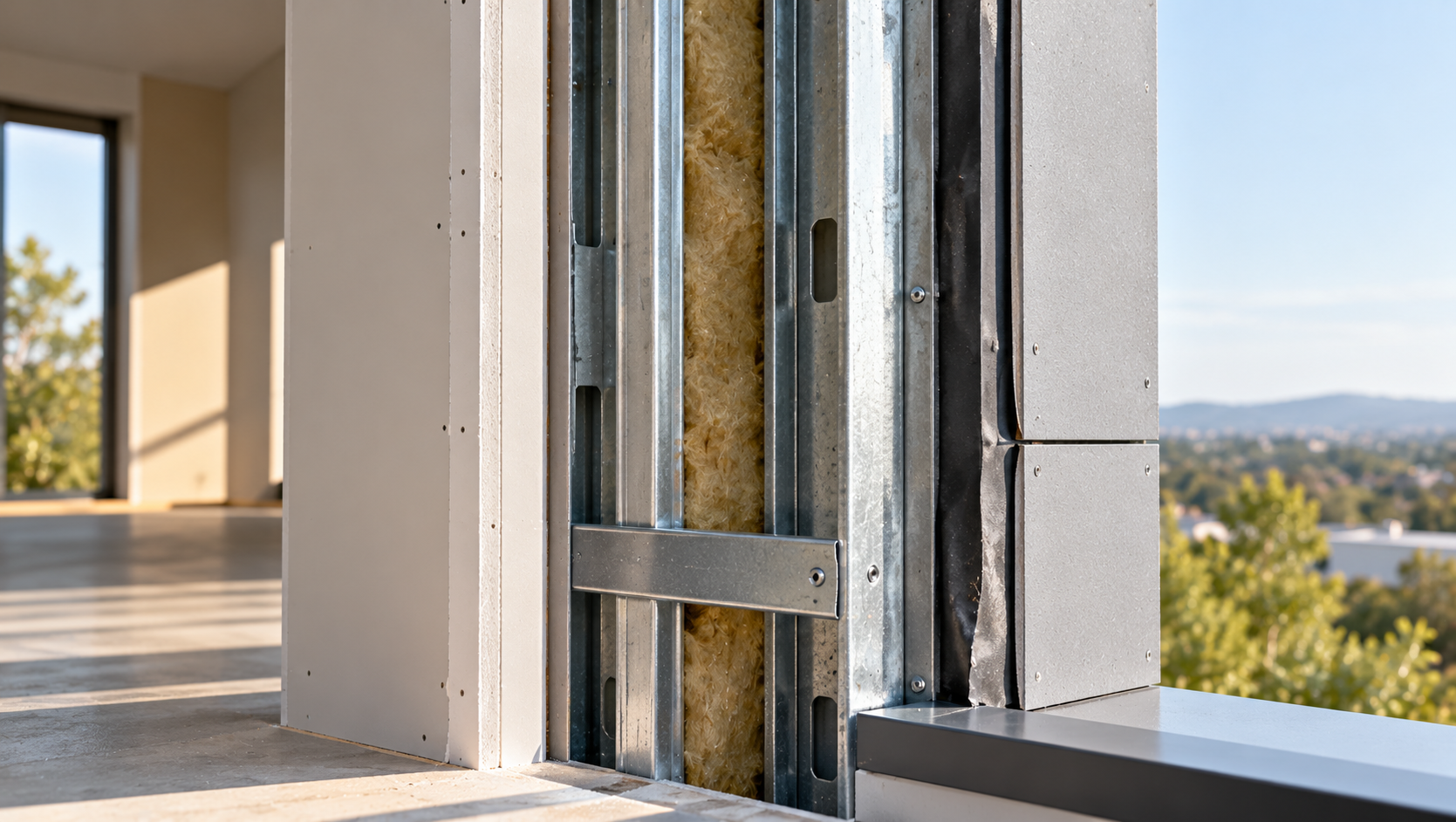
Steel framing is used in a wide range of Australian residential and commercial buildings. Its strength, dimensional stability and suitability for prefabricated construction make it a practical structural solution. However, the thermal behaviour of steel can also influence moisture conditions within walls, roofs and other building envelope assemblies.

Because steel conducts heat readily, framing members can create local temperature differences between adjacent construction materials. Under certain indoor and outdoor conditions, these temperature differences may contribute to elevated relative humidity or condensation at concealed interfaces.

Understanding condensation risk in steel-framed construction therefore requires consideration of more than the steel member itself. Insulation continuity, material arrangement, moisture transport, environmental conditions and the sensitivity of neighbouring materials all influence the outcome.

In steel-framed envelopes, condensation risk is often determined by the conditions created around the framing, rather than by the framing material alone.

Topics: Design & Planning Intelligence Moisture & Condensation Risk Analysis Building Physics
17 min read

Moisture Accumulation and Mould Growth Risk in Building Materials

By Team CE on Oct 16, 2026, 3:42:54 PM

Moisture within a building assembly does not affect every material in the same way. Some materials can tolerate periods of elevated humidity with relatively limited consequences, while others may provide conditions that support mould growth when moisture exposure persists.

The distinction is important because mould growth risk cannot be understood from the presence of moisture alone. Temperature, relative humidity, exposure duration, material sensitivity and the history of previous moisture conditions can all influence the potential for biological growth.

For architects, designers and project teams, understanding these relationships helps explain why a concealed construction interface may warrant attention even when no visible condensation is present.

Mould growth risk depends not simply on whether a material becomes damp, but on the conditions it experiences and how long those conditions persist.

Topics: Design & Planning Intelligence Moisture & Condensation Risk Analysis Building Physics
16 min read

Drying Potential in Wall and Roof Assemblies: Why Moisture Recovery Matters

By Team CE on Oct 16, 2026, 3:37:44 PM

A wall or roof assembly does not necessarily remain dry throughout its service life. Changing environmental conditions, construction moisture and other moisture sources can create periods when materials absorb or retain water.

The important question is not always whether moisture can enter the assembly. It is also whether that moisture can leave when conditions become more favourable.

This ability to release moisture is described as drying potential. It is an important consideration in building envelope design because two assemblies exposed to similar moisture conditions may recover very differently depending on their materials, layer arrangement and environmental exposure.

A moisture-resilient assembly is not defined simply by whether it becomes wet. Its ability to recover between moisture events can be equally important.

Topics: Design & Planning Intelligence Moisture & Condensation Risk Analysis Building Physics