

Improving the energy performance of an existing building can reduce heating and cooling demand, improve thermal comfort and support longer-term building performance. However, changes to insulation, airtightness and building operation can also alter how moisture moves through the existing construction.
Unlike a new building, an existing property may contain materials, cavities and moisture pathways that are not fully documented. The original construction may also have developed a particular balance between moisture entry, storage and drying over many years.
When energy upgrades change that balance, previously acceptable moisture conditions may change. Understanding the existing assembly before introducing new layers is therefore an important part of evaluating retrofit condensation risk.
An energy retrofit changes more than thermal performance. It can also change the moisture conditions experienced by the original building fabric.
In Brief
Why Can Energy Retrofits Change Condensation Risk?
Energy retrofits can change the temperature distribution, moisture transport pathways and drying conditions within an existing building envelope.
Adding insulation may alter the temperature of original masonry, timber or sheathing. Improving airtightness can reduce uncontrolled airflow while also changing ventilation conditions. New membranes, coatings or linings may affect the ability of existing materials to release moisture.
These changes do not automatically create condensation problems. Their effects depend on the original construction, the proposed upgrade, environmental conditions and the presence of existing moisture sources.
The central assessment question is whether the upgraded assembly can manage relevant moisture exposure without unacceptable accumulation or deterioration.
Technical and NCC note: Requirements for alterations, additions and energy upgrades depend on the applicable NCC edition, jurisdiction, building classification, scope of work and approval pathway. Not every retrofit requires a formal hygrothermal assessment. This article discusses building-physics considerations and does not replace investigation of existing water ingress, waterproofing defects, rising damp or other moisture sources unrelated to condensation.
Why Are Existing Buildings Different From New Construction?
New building envelopes can be assessed using defined construction specifications, material properties and intended environmental conditions.
Existing buildings often present a more complex starting point.
The original construction may contain:
- undocumented wall or roof layers;
- materials with uncertain vapour properties;
- previous alterations or repairs;
- concealed cavities or ventilation pathways;
- existing moisture within masonry, timber or other materials;
- weathering and deterioration affecting the original envelope; and
- construction details that differ from current building practices.
These conditions can influence how the building responds to an energy upgrade.
A retrofit assessment should therefore begin with an appropriate understanding of the existing building fabric rather than assuming the original assembly matches a contemporary standard construction.
How Can Adding Insulation Change Moisture Conditions?
Insulation changes the distribution of heat through a building assembly.
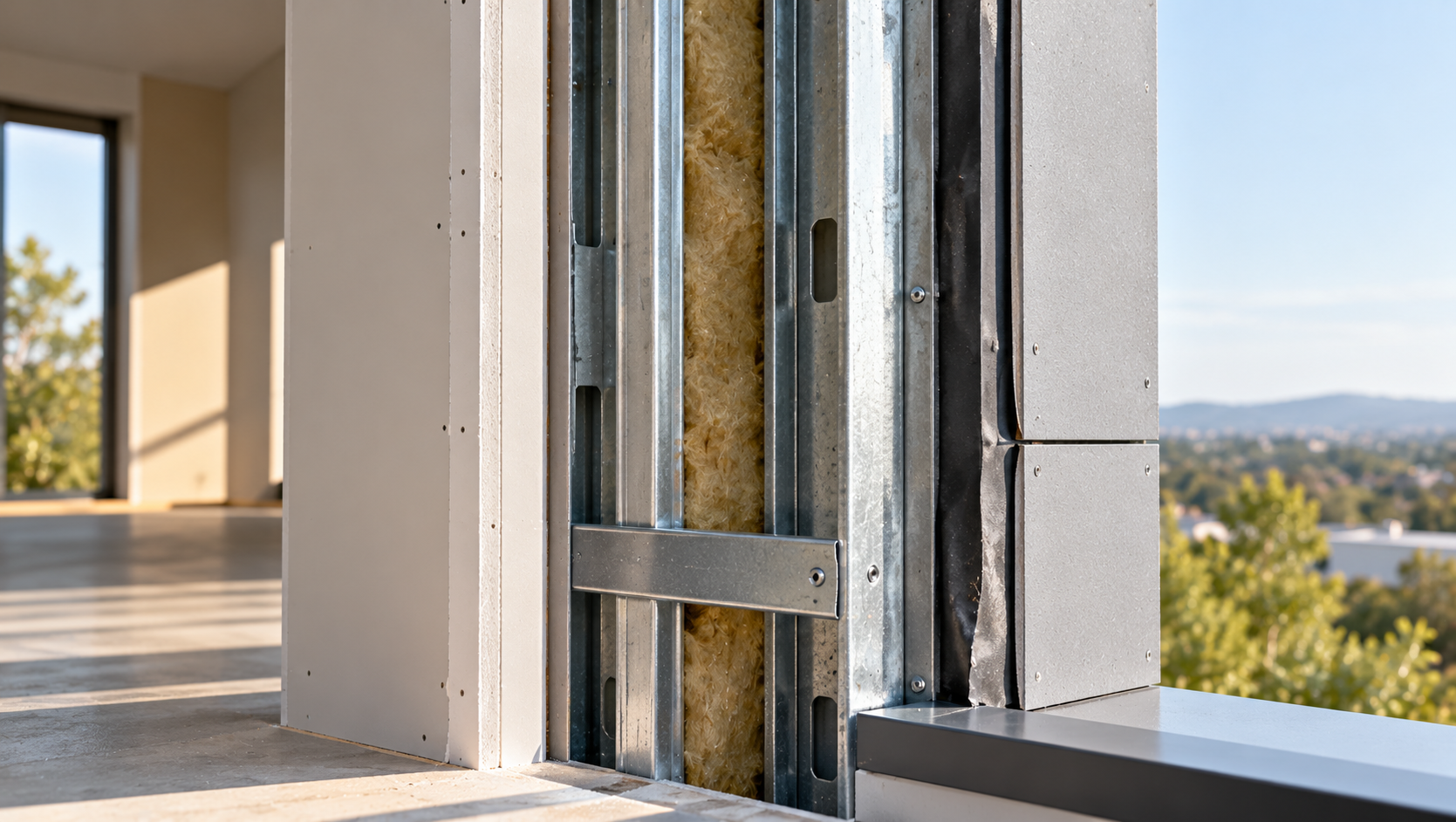
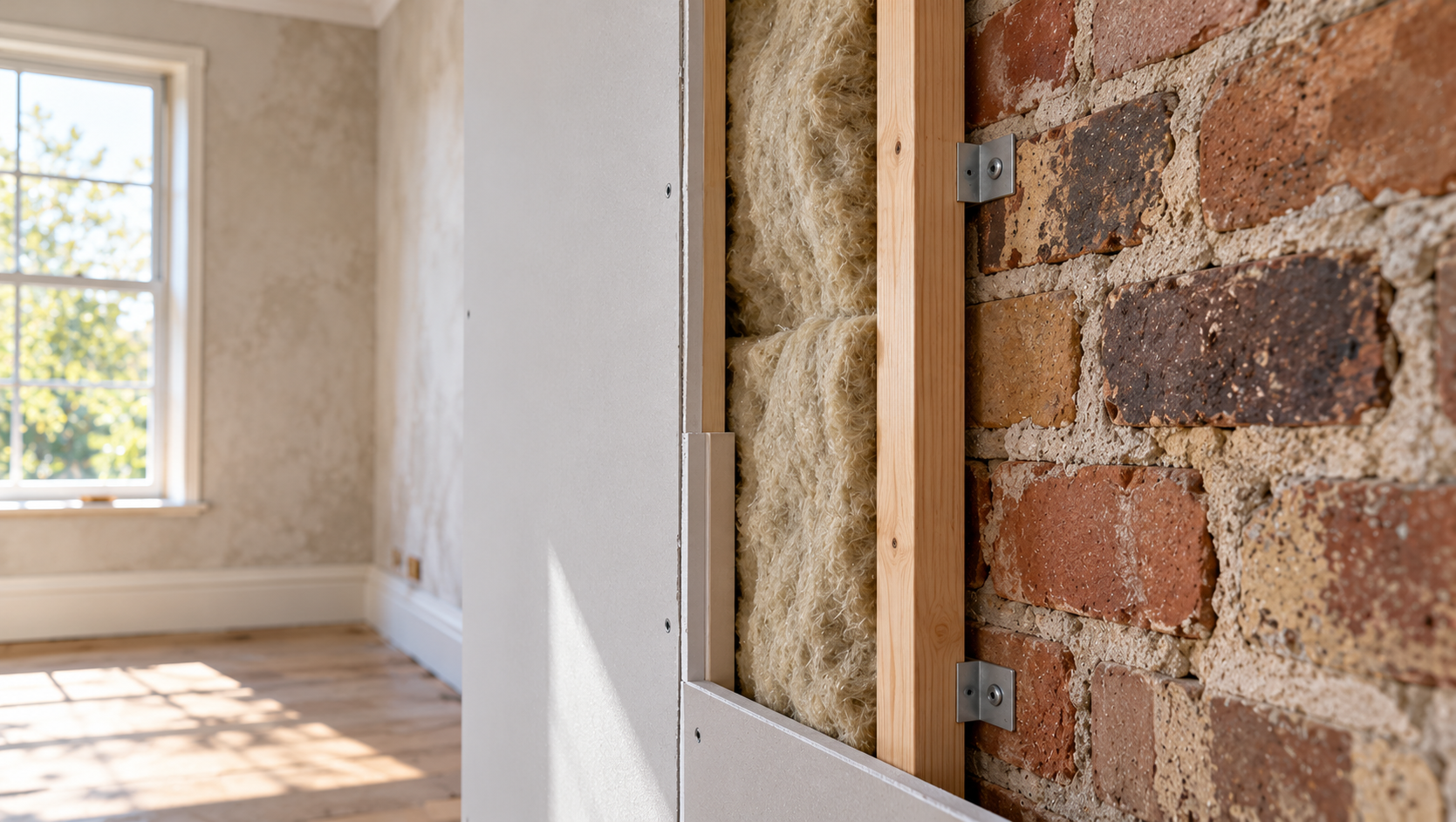
In an existing wall, adding insulation to the interior may reduce heat flow from the occupied space into the original construction. During colder conditions, parts of the original wall may consequently remain cooler than before the retrofit.
If sufficient moisture is present, these altered temperatures can influence local relative humidity, condensation potential and drying behaviour.
External insulation can produce a different temperature response by changing the thermal conditions of the original wall. However, its moisture performance still depends on the complete construction and the properties of the new layers.
Neither internal nor external insulation should be treated as universally moisture-safe or moisture-problematic.
The relevant question is how the proposed insulation changes the conditions experienced by the existing materials under the project's climate and operating conditions.
Internal vs External Insulation: What Changes in an Existing Wall?
The position of new insulation can influence the temperature and drying behaviour of the original construction.
| Retrofit approach | Potential moisture consideration |
|---|---|
| Internal insulation | May change temperatures within the original wall and affect inward drying pathways. |
| External insulation | May alter the original wall's temperature conditions and outward drying behaviour. |
| Cavity insulation | May change cavity temperature, airflow and moisture storage depending on the original construction. |
| Roof or ceiling insulation | May alter roof-space temperatures and moisture conditions depending on insulation location and ventilation arrangements. |
The table describes potential changes, not predicted outcomes for a particular building.
For a more detailed explanation of insulation positioning in wall assemblies, see How Insulation Placement Affects Condensation Risk in Australian Walls.
Can Improving Airtightness Change Condensation Risk?
Improving airtightness can reduce unintended airflow through the building envelope.
This can be beneficial because air leakage may transport water vapour into concealed construction spaces under certain conditions.
However, an airtightness retrofit may also change the building's overall ventilation characteristics if the original building relied partly on uncontrolled air infiltration.
Without appropriate ventilation, indoor humidity conditions may change, depending on occupancy, moisture generation and building operation.
The relationship is therefore not as simple as assuming that reducing air leakage always increases or always decreases condensation risk.
Air-control continuity, ventilation provision and moisture-sensitive interfaces should be considered together.
For the distinction between air leakage and vapour diffusion, see Vapour Diffusion vs Air Leakage: How Moisture Enters Building Assemblies.
Why Should Existing Moisture Be Investigated Before a Retrofit?
An existing building may already contain moisture from sources unrelated to condensation.
These may include:
- rainwater penetration through defective cladding or flashings;
- plumbing leaks;
- ground moisture or rising damp where relevant;
- previous water damage;
- construction materials that have not adequately dried; and
- persistent moisture associated with existing building defects.
Introducing new insulation, membranes or finishes without understanding these conditions may restrict drying or conceal ongoing problems.
A condensation risk model does not automatically diagnose the source of existing dampness.
Where water ingress or other defects are suspected, appropriate building investigation and rectification should be considered separately from the proposed energy upgrade.
The existing moisture condition is an important part of the retrofit starting point, not simply a consequence to be considered after the new construction is installed.
How Can New Membranes and Finishes Affect Drying Potential?
Existing walls and roofs may have established drying pathways through their original materials and finishes.
Adding a membrane, coating, lining or insulation system can change those pathways.
For example, a new low-permeability layer may reduce vapour diffusion through part of the assembly. Depending on its position, this may limit moisture entry from one direction while also restricting drying in that direction.
The effect is particularly relevant where original materials contain moisture or where future wetting remains possible.
A vapour-permeable layer does not automatically guarantee adequate drying. The behaviour of the complete construction and the relevant environmental conditions must be considered.
For further explanation, see Drying Potential in Wall and Roof Assemblies.
Why Can Older Masonry Buildings Require Particular Care?
Older masonry construction may differ substantially from contemporary insulated wall systems.
Brick, stone, mortar and associated finishes can absorb, store and release moisture through mechanisms that depend on their material properties and exposure conditions.
Where internal insulation is added, the original masonry may experience altered temperatures and drying opportunities.
Existing rain exposure, material condition and the moisture behaviour of the original wall can therefore become important considerations.
The presence of moisture storage capacity should not automatically be interpreted as a defect. However, the ability to store moisture does not establish that an upgraded assembly will perform acceptably.
Retrofit design should account for the actual masonry construction rather than assuming that all solid masonry walls behave in the same way.
Can Roof and Ceiling Upgrades Change Moisture Conditions?
Roof and ceiling retrofits can change the thermal and moisture conditions within existing roof spaces.
Adding ceiling insulation may reduce heat transfer between occupied rooms and the roof space. Depending on the original arrangement, this can change temperatures above the insulation.
Changes to ceiling airtightness, roof ventilation, underlay or insulation location may also influence moisture movement and drying.
The outcome depends on whether the roof space is ventilated, how the original construction is arranged and the environmental conditions experienced by the assembly.
A retrofit should not assume that adding insulation alone resolves all condensation-related considerations.
For broader roof assembly guidance, see Condensation Risk in Roof and Ceiling Assemblies.
Can Changes to Heating and Cooling Affect Retrofit Condensation Risk?
Energy upgrades are often accompanied by changes to heating, cooling or ventilation systems.
These changes can influence indoor temperature and relative humidity, which in turn affect the moisture conditions acting on the building envelope.
For example, increased mechanical cooling in a warm and humid climate may change the temperature distribution within an existing wall and the direction of relevant vapour pressure differences.
Changes to ventilation or moisture removal may also affect indoor humidity.
The resulting moisture behaviour depends on the building's actual operation rather than simply the presence of new equipment.
A retrofit assessment should therefore consider the intended post-upgrade indoor conditions, particularly where they differ substantially from historical operation.
Why Compare Moisture Behaviour Before and After an Energy Upgrade?
A useful retrofit assessment may consider both the existing construction and the proposed upgraded arrangement.
This helps identify whether the proposed work changes temperatures, moisture storage, vapour movement or drying opportunities at relevant interfaces.
The comparison should use appropriately defined assumptions and recognise uncertainty in the existing building.
Questions may include:
- Does the retrofit change the temperature of the original construction?
- Are new moisture-sensitive interfaces introduced?
- Does the upgraded assembly have different drying pathways?
- Could existing moisture remain trapped for longer?
- Will post-retrofit indoor humidity differ from historical conditions?
- Are the original materials and construction layers sufficiently understood?
- Could repeated seasonal exposure lead to moisture accumulation?
Where detailed modelling is appropriate, the analysis should reflect the available information and the specific risk being investigated.
A comparison does not automatically establish the actual historical moisture performance of an existing building, particularly where concealed construction conditions are uncertain.
When May Hygrothermal Assessment Be Useful for an Existing Building?
Detailed moisture assessment may be useful where a proposed retrofit creates uncertainty about concealed moisture conditions or changes the drying behaviour of existing materials.
Transient hygrothermal modelling can investigate the potential response of a defined construction under selected environmental conditions.
For existing buildings, the reliability of the assessment depends significantly on the quality of information about the original construction.
Unknown material properties, concealed cavities, undocumented repairs and uncertain initial moisture conditions may require additional investigation or sensitivity analysis.
The modelling scope should identify which moisture mechanisms are represented and which are outside the assessment.
For example, standard hygrothermal modelling should not be assumed to represent an ongoing plumbing leak, defective flashing or unintended air leakage unless these mechanisms are specifically addressed.
The purpose is to support a defined design decision, not to replace the investigation of the existing building's physical condition.
Existing Building Retrofit: Moisture Review Checklist
Before finalising a proposed energy upgrade, the following questions can help identify whether further moisture investigation is appropriate.
- Is the original wall or roof construction understood?
- Are drawings, photographs or previous alteration records available?
- Have relevant existing moisture problems been investigated?
- Are there signs of water ingress, deterioration or persistent dampness?
- What new insulation, membranes, linings or finishes are proposed?
- Will the upgrade change temperatures within the original construction?
- Could existing drying pathways become restricted?
- Are air-control and ventilation changes being considered together?
- Will heating, cooling or indoor humidity conditions change?
- Are moisture-sensitive materials present at concealed interfaces?
- Are relevant existing material properties known?
- Would further investigation or modelling help resolve a specific risk?
- Have applicable approval and NCC requirements been confirmed?
Frequently Asked Questions
Existing Building and Retrofit Condensation FAQs
Can adding insulation to an existing building cause condensation?
Adding insulation can change temperatures and moisture conditions within an existing wall or roof. Whether condensation develops depends on insulation location, original construction, moisture availability and environmental conditions. Insulation does not automatically cause condensation.
Is internal insulation riskier than external insulation?
The two approaches can produce different temperature and drying conditions. Neither is universally suitable or unsuitable. Their moisture performance depends on the existing assembly, climate, materials and proposed construction details.
Does improving airtightness increase moisture problems?
Not necessarily. Improved airtightness can reduce moisture transport through unintended airflow. However, changes to uncontrolled infiltration should be considered alongside appropriate ventilation and indoor humidity management.
Should existing dampness be repaired before installing insulation?
Existing dampness should be appropriately investigated before introducing layers that may conceal moisture or alter drying. Water ingress, plumbing defects and other moisture sources require their own investigation and rectification as appropriate.
Can hygrothermal modelling assess an existing building retrofit?
Yes, where sufficient construction and material information is available and the method suits the risk being investigated. Uncertainty about original layers, moisture conditions and previous alterations should be recognised in the assessment.
Is condensation risk assessment mandatory for every energy retrofit?
No universal requirement applies to every energy retrofit. Applicable NCC provisions, jurisdictional requirements and approval conditions depend on the building and scope of work. Project-specific assessment may nevertheless be useful where moisture performance is uncertain.
Related Knowledge
Related Moisture and Retrofit Guidance
Moisture & Condensation Risk Analysis
Explore how building assemblies, environmental conditions and moisture transport influence condensation risk.
Insulation Placement and Condensation Risk
Understand how insulation location can influence temperature and moisture conditions within wall assemblies.
Drying Potential in Wall and Roof Assemblies
Review moisture recovery, inward and outward drying, and the significance of repeated moisture exposure.
Information Needed for a Condensation Risk Assessment
Understand the drawings, material information and environmental inputs relevant to a defined assessment.
Moisture & Condensation Risk Analysis
Understand Moisture Risk Before Changing an Existing Building Envelope
Where an energy retrofit introduces new insulation, membranes or changes to the existing building envelope, Certified Energy can assist with project-specific moisture and condensation risk analysis. A defined assessment scope can help identify how proposed upgrades may influence concealed moisture conditions and drying behaviour.
Explore Moisture & Condensation Risk Analysis