


Team CE

Team CE

Articles written by the Certified Energy technical team covering NatHERS, BASIX and building performance in Australia.

Recent posts by Team CE

15 min read

Section J DTS vs JV3: Which Pathway Suits Your Project?

By Team CE on Nov 14, 2024 5:30:00 PM

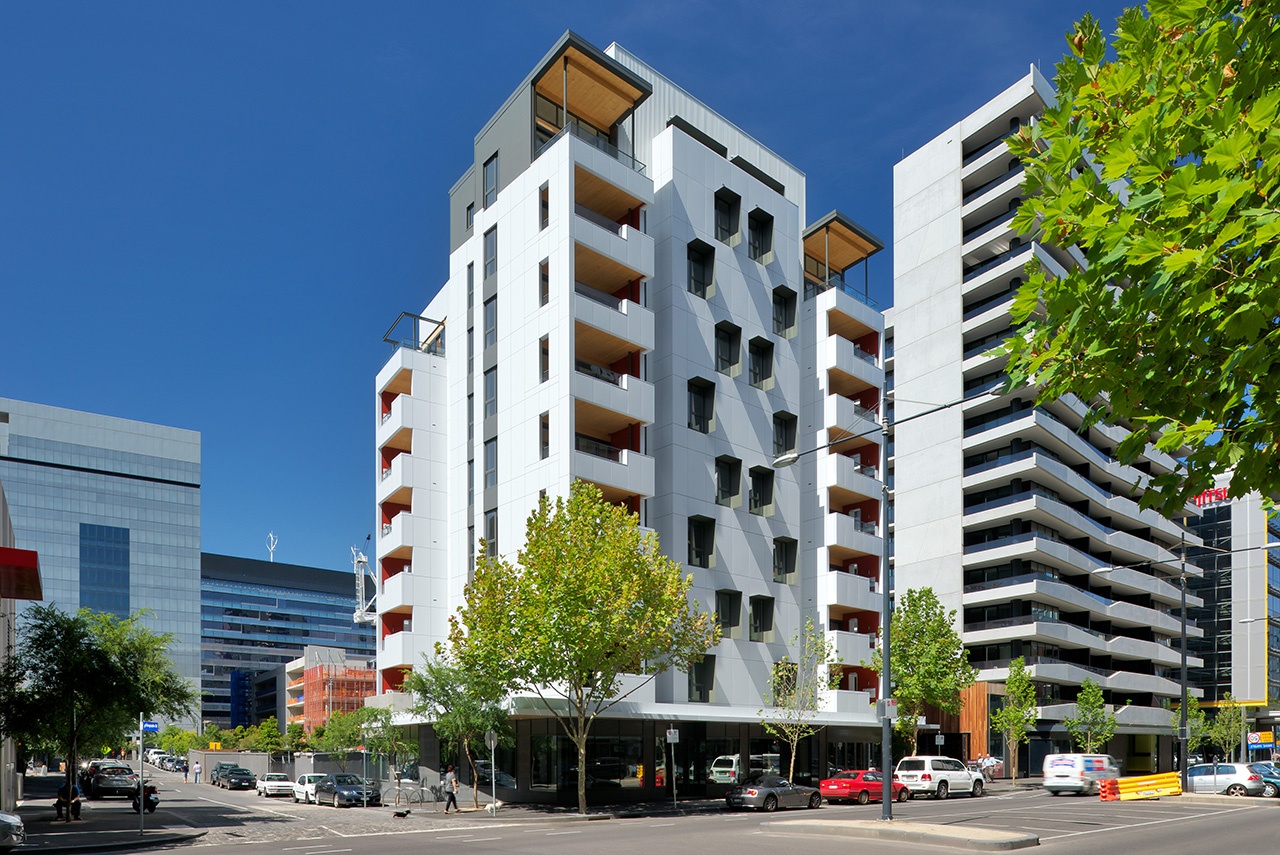
Choosing between a Section J Deemed-to-Satisfy assessment and JV3 modelling can influence the façade, glazing, insulation, services coordination and approval strategy of a commercial building.

The decision is often described as “Section J versus JV3”. Technically, that is not quite the correct comparison.

Section J establishes energy-efficiency requirements for relevant projects assessed under NCC Volume One. A Deemed-to-Satisfy Solution and a JV3-supported Performance Solution are different ways of demonstrating that the applicable requirements have been addressed.

Should the project follow the applicable Section J Deemed-to-Satisfy provisions, or would a JV3 performance pathway provide a more suitable response?

Topics: Deemed to Satisfy Section J JV3 Commercial
15 min read

Beginners Guide to Thermal Performance Assessments

By Team CE on Oct 31, 2024 2:41:51 PM

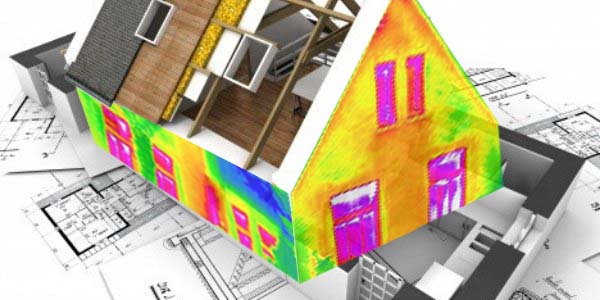
This article is a beginners guide to Thermal Performance Assessments. So if you need to know "What is Thermal Performance?" specifically the thermal performance of buildings, than you've come to the right place. Lets begin

Topics: NatHERS Thermal Comfort Thermal Performance
3 min read

VIAs and Integration with Other Assessments

By Team CE on Apr 20, 2023 11:45:17 AM

Visual Impact Assessments (VIA) are an essential component of environmental assessments and are used to evaluate the potential visual impact of proposed projects on the surrounding environment and community. However, VIAs alone are not enough to fully evaluate the potential environmental impact of a project. That's why the integration of VIAs with other environmental assessments is crucial to ensuring a comprehensive evaluation of a project's potential impact.

Topics: ESD Architecture Climate Alterations & Additions viewshed visual impact assessment
2 min read

Should All Commercial Projects Have A WUFI Model Created?

By Team CE on Mar 7, 2023 2:26:36 PM

What is a WUFI Model?

Topics: Architecture Star Rating Sustainability Energy Insulation Materials Residential Commercial
3 min read

How to Manage Rising Building Costs with JV3

By Team CE on Mar 7, 2023 12:57:05 PM

A JV3 Report is an alternative assessment method for non-residential buildings which uses a reference building to compare the overall assumed energy consumption of new buildings with respect to their location and climate. Whereas, alternatively a Section J Report offers a simpler assessment and is more suitable for less complex projects. 

Topics: Section J JV3 Commercial
4 min read

Passive Commercial Projects - A trend for a greener future

By Team CE on Feb 28, 2023 9:35:06 AM

What is a Passive House?

Topics: ESD Architecture Sustainability Passive House Commercial
2 min read

How to Manage Rising Building Costs for new builds and renovations

By Team CE on Feb 21, 2023 3:39:43 PM

Why Are Building Costs Rising?

Topics: ESD Glazing Architecture Sustainability Changes Energy Efficiency Insulation Green Star Rating Residential Alterations & Additions
24 min read

Passive House Retrofit Australia | EnerPHit Guide

By Team CE on Feb 6, 2023 12:47:37 PM

Existing Building Performance Guide

A Passive House retrofit applies the principles, modelling and quality-assurance methods of the Passive House framework to an existing building. Where formal retrofit certification is pursued, the relevant standard is commonly EnerPHit.


Existing homes present conditions that do not arise in the same way on new buildings. Orientation, structural junctions, floor levels, roof geometry, boundaries, heritage fabric and concealed construction may already be fixed before the retrofit begins.

EnerPHit accounts for these constraints while retaining a defined pathway for energy demand, envelope performance, airtightness, ventilation, documentation and construction verification. It should not be used as a general label for any renovation that adds insulation or improves windows.

This guide focuses specifically on the retrofit pathway. For the wider standard, five principles, Australian climate application and PHPP framework, see the Passive House in Australia Knowledge Hub.

Topics: Passive House Residential Sustainability Frameworks
5 min read

The Thermal Balance Challenge - How Efficient is Your Design?

By Team CE on Jan 31, 2023 3:29:47 PM


Topics: ESD Architecture Certification Update NatHERS Star Rating
27 min read

Does Double Glazing Help You Get a 7 Star Rating?

By Team CE on Jul 18, 2022 12:53:32 PM

NatHERS Window Performance Guide

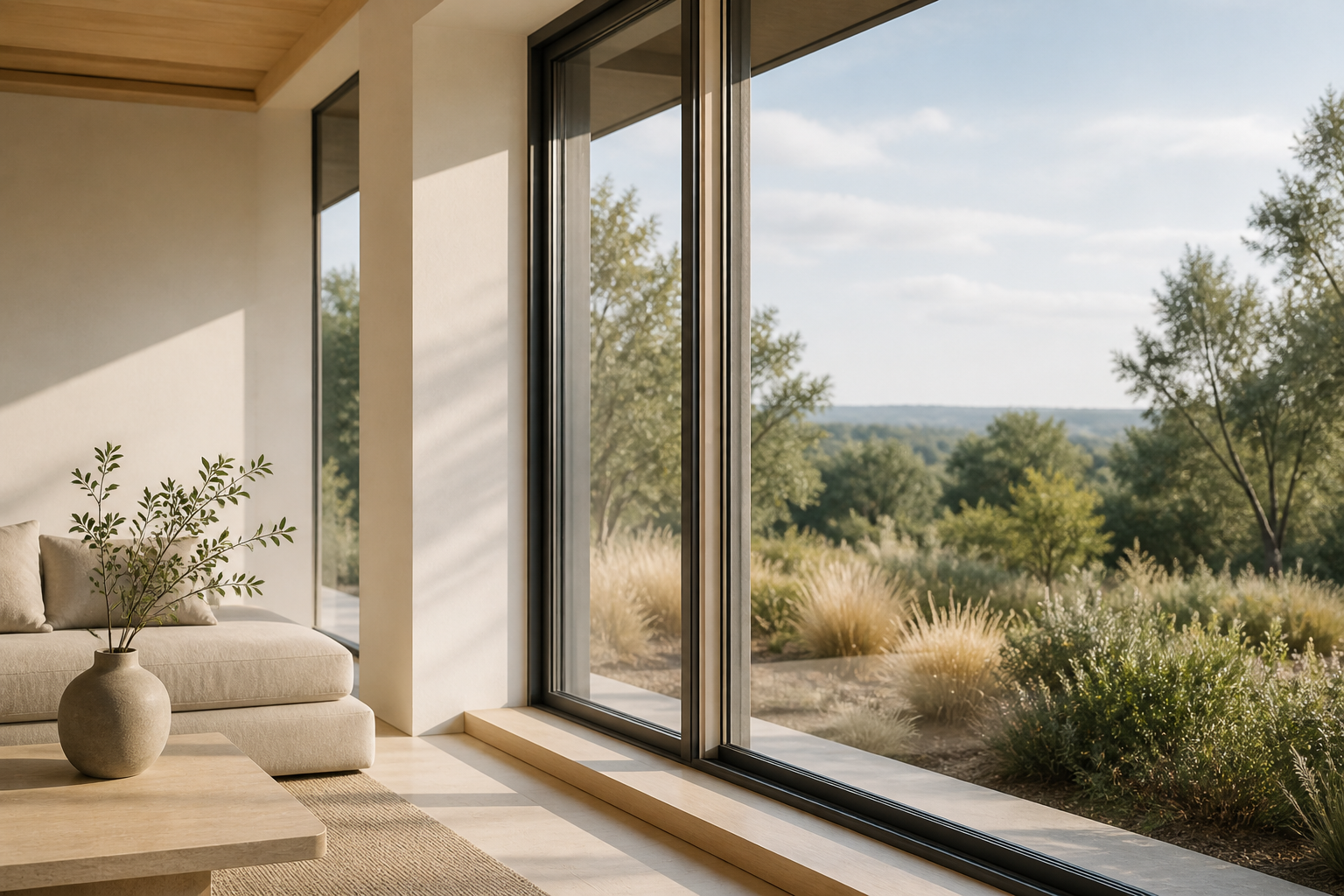
Double glazing can improve a NatHERS result, but the effect depends on the complete window system, local climate, orientation, solar exposure, window area and the wider dwelling design.


Double glazing is frequently presented as a direct route to a higher NatHERS star rating. It can be an effective improvement, particularly where heat transfer through the windows is limiting the dwelling’s thermal performance. It is not, however, a guaranteed or identical solution for every project.

NatHERS does not assess the number of glass panes in isolation. The model uses the thermal properties of the complete window system, including the glass, frame, seals and other relevant components. Window size, location, orientation and shading also influence how that system performs within the dwelling.

This guide focuses specifically on when double glazing may improve the model, what the window performance values mean and which information should be coordinated with the assessor and supplier.

For the broader relationship between climate, orientation, shading, insulation and building form, see How to Design a 7 Star NatHERS Home.

Topics: Double Glazing 7 Star Homes Residential Energy Performance