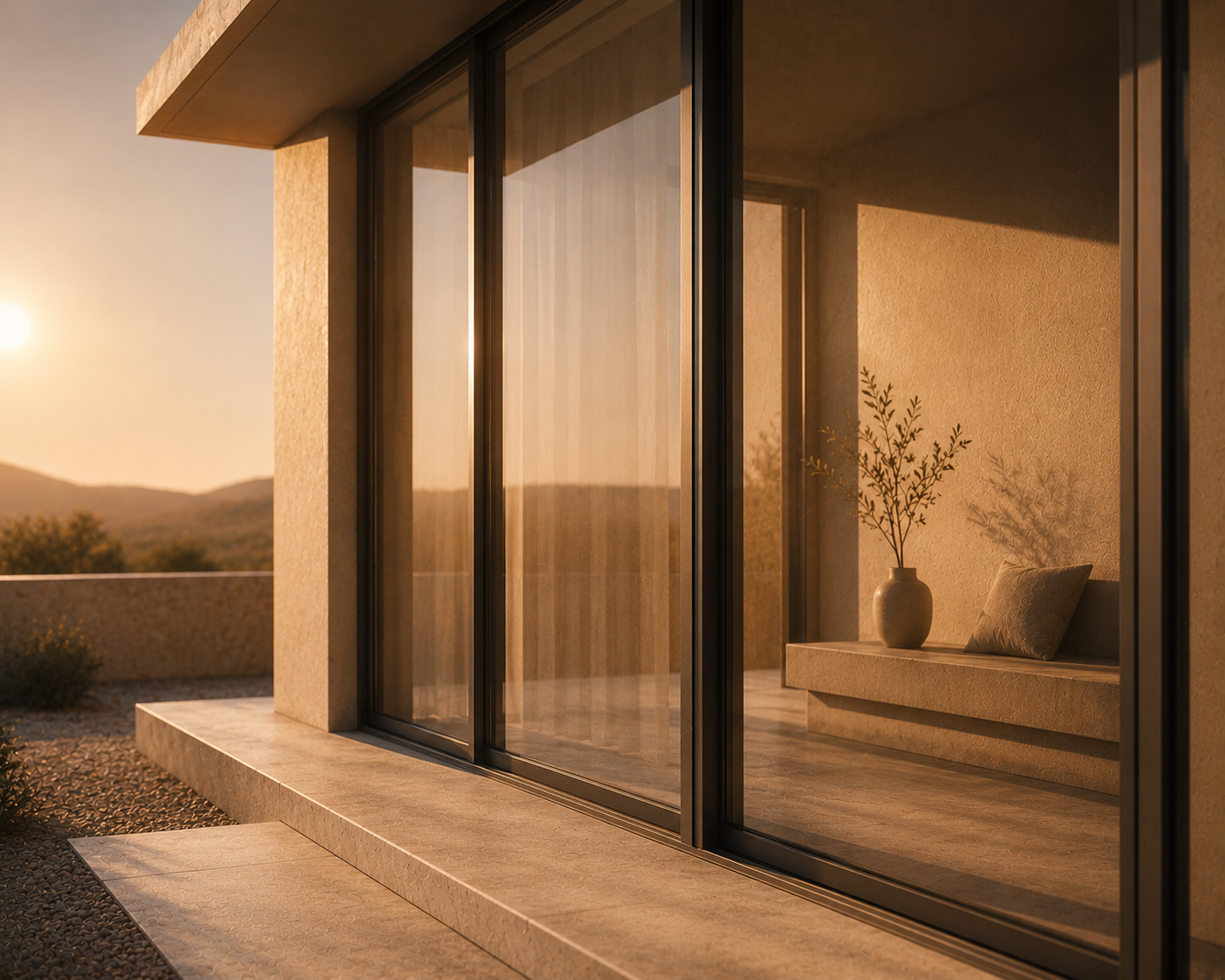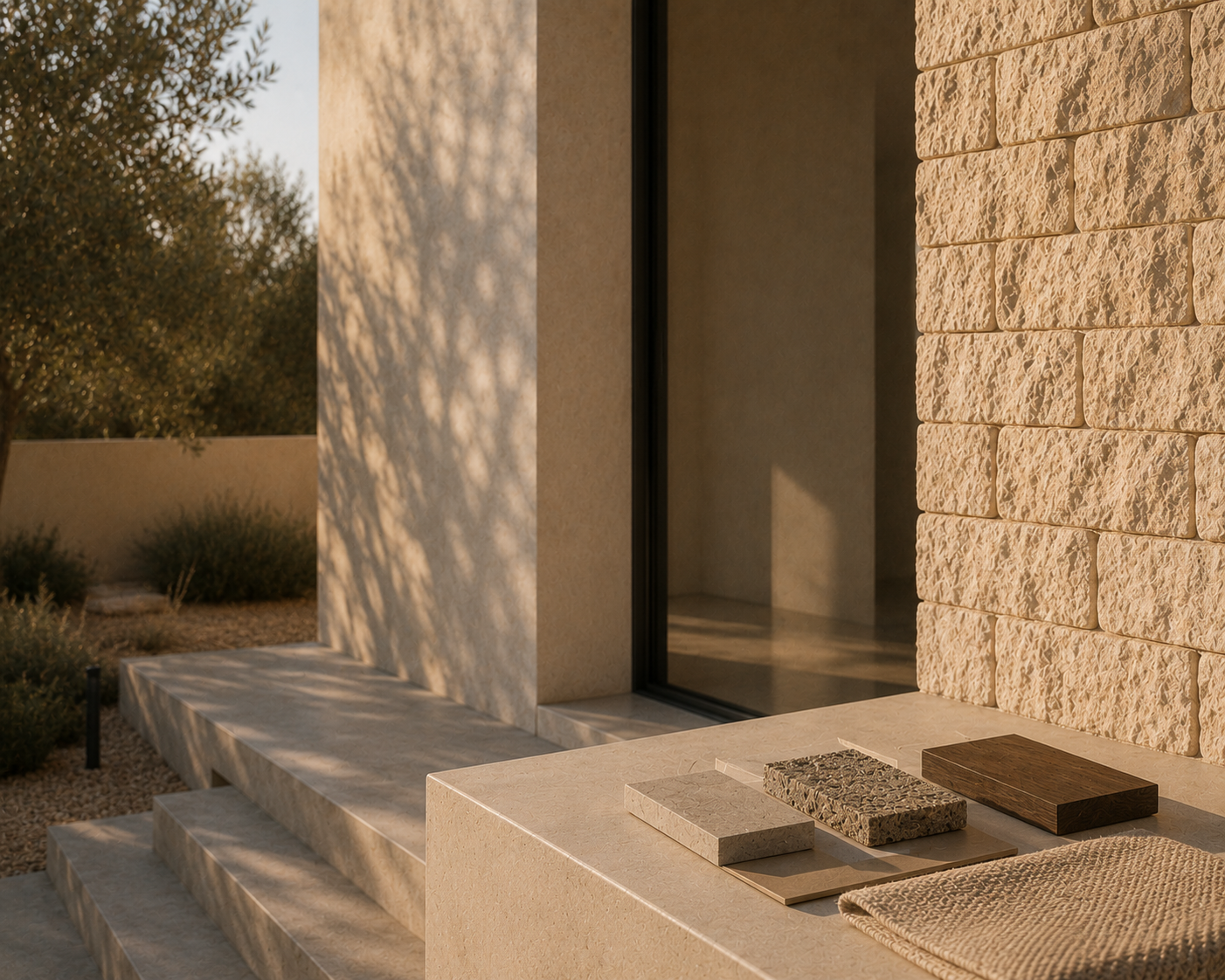


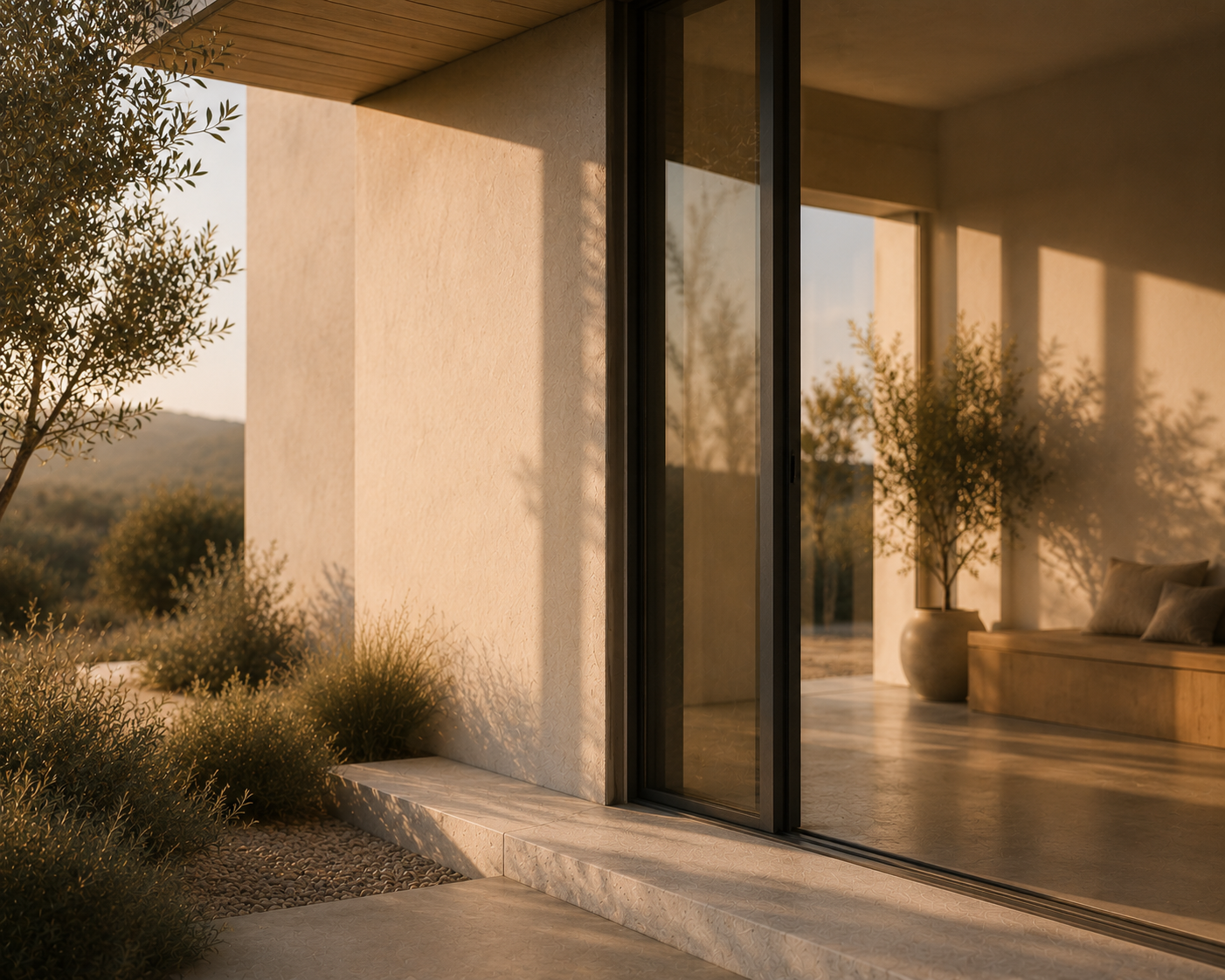
Passive design uses the building’s orientation, form, windows, shading, insulation, ventilation and construction to respond to the local climate before mechanical heating and cooling systems are considered.
Within BASIX and NatHERS, these decisions influence the modelled heating and cooling demand of a residential design. A well-coordinated passive response can improve thermal performance, reduce pressure on later specifications and make the final commitments easier to deliver.
Passive design is not a checklist of universally beneficial features. Each measure affects the others, and the appropriate balance depends on the climate, site, dwelling form and way the home is expected to operate.
In Brief
What Is Passive Design?
Passive design is a climate-responsive approach that uses the building itself to manage heat, sunlight and air movement. Orientation, glazing, shading, insulation, thermal mass, ventilation and building form are coordinated so the dwelling requires less artificial heating and cooling. Within BASIX and NatHERS, these principles influence the modelled thermal loads, but no single feature guarantees a passing result. The complete design must be assessed for its location and dwelling type.
Knowledge Navigation
How Passive Design Works as a System
Assessment
Passive Design and BASIX
How early design decisions influence heating and cooling results.
Design System
The Core Principles
Orientation, windows, shading, fabric, air movement and thermal mass.
Performance Balance
Heating Versus Cooling
Why an improvement to one seasonal result can affect the other.
Project Workflow
Design, Test and Coordinate
How passive decisions can be tested before the design is locked.
Passive Design Begins with the Building, Not the Equipment
Mechanical systems respond to the heating and cooling demand created by a home. Passive design seeks to reduce or moderate that demand through the design of the building itself.
The approach considers how sunlight enters the home, where heat is gained or lost, how air can move through the rooms and how construction materials respond to changing temperatures.
A passive response may include useful winter solar access, controlled summer shading, well-positioned operable windows, continuous insulation and an appropriate balance between lightweight and thermally massive materials.
These features are most effective when they are considered together. Adding one nominally efficient product to a poorly coordinated design does not create a complete passive-design strategy.
Thermal Performance
How Does Passive Design Affect BASIX?
Passive-design decisions primarily influence the thermal-performance section of BASIX. That section assesses the heating and cooling demand associated with the proposed dwelling.
The dwelling must remain within the applicable heating and cooling limits using the selected BASIX thermal-performance method. Depending on the project, this may be the BASIX DIY Method, NatHERS Simulation Method or Passive House Standard method.
Passive design can also influence the wider BASIX Energy result. Lower heating and cooling demand generally reduces the operational energy associated with maintaining indoor conditions. The equipment type and efficiency are assessed separately within the Energy section.
A strong passive response does not replace the BASIX assessment. It creates a better starting point for the project to be modelled, tested and documented.
Understand BASIX thermal performance and heating and cooling loads →
How Does Passive Design Affect NatHERS?
NatHERS software models the proposed dwelling across a standardised year using the project climate, geometry, construction, glazing, shading and other thermal characteristics.
The model calculates the heating and cooling demand of the assessed spaces. Those loads contribute to the overall thermal star rating and, for BASIX Simulation projects, are also compared with the applicable BASIX limits.
NatHERS therefore provides a way to test the combined effect of passive-design decisions. It can show that two visually similar homes perform differently because of orientation, exposure, glazing distribution or shading.
The assessment should be used as design feedback rather than treated only as a final compliance calculation. Testing the model while changes remain possible gives the team more opportunity to resolve the building form before relying on expensive specification upgrades.
The Core Passive-Design Principles
The principles below work as an interconnected system. Each has its own specialist considerations, but the project result depends on how they are combined.
Principle 01
Climate and Orientation
The dwelling and its rooms are positioned in response to seasonal sun, prevailing weather, views and site constraints.
Principle 02
Window Design
Window area, placement, operability, frame and glass performance balance heat transfer, solar gain, daylight, ventilation and views.
Principle 03
Seasonal Shading
External shading controls unwanted summer heat while preserving useful light and, where appropriate, winter solar access.
Principle 04
Insulation and Fabric
The floors, walls, ceilings, roofs and insulation reduce uncontrolled heat flow between conditioned spaces and external or unconditioned areas.
Principle 05
Controlled Ventilation
Operable openings and internal airflow paths support natural cooling, while effective seals reduce unwanted air leakage when openings are closed.
Principle 06
Thermal Mass
Materials with heat-storage capacity can moderate internal temperature changes when they are exposed to useful solar gain and supported by appropriate ventilation and shading.
Principle 07
Thermal Continuity
Insulation layers, framing and junctions should be resolved so heat does not bypass the intended thermal barrier through avoidable thermal bridges.
Principle 08
Roof and External Surface Response
Roof colour, solar absorptance, roof-space conditions and external finishes can influence the amount of heat absorbed or transferred into the dwelling.
Climate Response
Passive Design Is Different Across NSW
New South Wales contains a wide range of thermal conditions. A strategy suited to a warm coastal location may not be appropriate for an inland, elevated or cold-climate site.
| Climate Pressure | Design Priority | Typical Coordination Question |
|---|---|---|
| Heating-dominated | Retain heat, control heat loss and capture useful winter solar gain. | Can glazing, insulation and orientation reduce winter heating demand without creating summer overheating? |
| Cooling-dominated | Limit unwanted solar gain and support controlled air movement. | Can shading, window placement, roof response and ventilation reduce summer heat accumulation? |
| Mixed or temperate | Balance useful winter gain with protection from summer and shoulder-season heat. | Which elements should be fixed, adjustable or seasonally operable so both heating and cooling loads remain controlled? |
The correct NatHERS climate file and project address are therefore fundamental to the assessment. A specification that performs well for one site should not be transferred to another project without testing.
Passive design should also respond to site-specific conditions such as neighbouring buildings, vegetation, topography, prevailing winds, noise, bushfire requirements and available solar access.
Passive Design Requires a Heating and Cooling Balance
Many passive-design decisions improve one seasonal result while potentially placing pressure on another. The assessment must therefore test both heating and cooling demand.
More solar gain may reduce heating but increase cooling
Larger or higher-SHGC windows can admit useful winter heat, but poorly controlled solar access can increase summer cooling demand.
More fixed shading may reduce cooling but increase heating
Deep fixed overhangs can protect glazing in warm conditions but may also block useful winter sunlight where the geometry is not seasonally responsive.
More thermal mass is not automatically better
Thermal mass can moderate temperature changes, but it may retain unwanted heat where it is exposed to excessive summer sun or cannot release stored heat overnight.
More ventilation is not the same as uncontrolled leakage
Openable windows can support deliberate cooling, while unintended gaps and poorly sealed elements can increase heat loss or heat gain when the building is intended to be closed.
A higher star rating does not remove the need to review both loads
BASIX can apply separate heating and cooling limits. A favourable combined NatHERS result does not necessarily mean that each seasonal outcome is satisfactory.
Integrated Design
Orientation, Windows and Shading Must Be Designed Together
Orientation determines when and how sunlight reaches each façade. Window design determines how much of that light and heat can enter or leave the home. Shading determines when direct solar exposure is controlled.
These elements should not be resolved in isolation. A window specification cannot fully correct inappropriate glazing area, and a large fixed overhang may not provide the same seasonal response as well-positioned or adjustable shading.
The project should consider:
- the orientation and size of each significant glazed area
- winter and summer solar access
- overshadowing from buildings, balconies and vegetation
- the U-value and SHGC of the complete window system
- the geometry and operability of external shading
- daylight, views, privacy and ventilation requirements
- the location of thermal mass relative to useful solar gain
Insulation, Airtightness and Ventilation Are Related but Different
Insulation reduces conductive heat transfer through the building fabric. Airtightness reduces uncontrolled air leakage through gaps and junctions. Ventilation deliberately replaces indoor air through openings or mechanical systems.
| Element | Primary Function | Design Question |
|---|---|---|
| Insulation | Slows heat flow through floors, walls, ceilings and roofs. | Is the insulation level and installation continuous and suitable for the construction system? |
| Airtightness | Limits unintended air movement through the closed building envelope. | Are doors, windows, penetrations and junctions capable of being sealed when required? |
| Ventilation | Provides controlled fresh air and can support cooling and moisture management. | Can occupants introduce or remove air intentionally without relying on uncontrolled gaps? |
A tightly sealed dwelling still requires a ventilation strategy. Likewise, operable windows do not remove the need for the closed building envelope to be reasonably sealed.
Heat Storage
When Does Thermal Mass Support Passive Design?
Thermal mass describes the capacity of materials to absorb, store and later release heat. Concrete, masonry, stone and some floor systems can provide useful thermal mass when they are positioned and exposed appropriately.
In a climate with useful winter sun and cooler nights, mass can absorb daytime heat and release it as temperatures fall. During warm periods, it may help stabilise internal conditions where the stored heat can be removed through night cooling or ventilation.
Thermal mass can be less beneficial where it is permanently shaded in winter, exposed to excessive summer solar gain or prevented from releasing accumulated heat. Floor coverings and internal linings can also change how effectively the mass interacts with the room.
The value of thermal mass should therefore be assessed as part of the complete climate, solar-access, shading and ventilation strategy rather than inferred from the material alone.
Passive Design Should Address Overheating, Not Only Winter Heat Loss
An efficient residential design must manage both cold and warm conditions. Increasing insulation or solar access without reviewing summer performance can create high internal temperatures or excessive cooling demand.
Overheating pressure can be increased by:
- large unshaded east- or west-facing glazing
- high solar-gain glass without suitable seasonal control
- limited operable window area
- poor cross-ventilation paths
- dark or highly absorptive external surfaces
- thermal mass exposed to uncontrolled summer sun
- upper-floor or roof exposure
- neighbouring development that limits breezes or changes solar access
Passing the BASIX cooling requirement is an important compliance outcome, but it should not be interpreted as a guarantee that the completed home can never overheat under unusual weather, operational or urban conditions.
Design Workflow
A Practical Passive-Design Process
1. Understand the climate and site
Confirm the project climate, true north, topography, neighbouring development, available solar access and relevant breeze or exposure conditions.
2. Establish the building form and room arrangement
Position living areas, bedrooms, circulation and service spaces in response to solar access, views, privacy and daily patterns of occupation.
3. Coordinate glazing and shading
Review window area, orientation, performance and operability together with the proposed external shading geometry.
4. Define the envelope strategy
Select construction, insulation, thermal breaks, roof response and sealing provisions that suit the dwelling form and climate.
5. Plan deliberate air movement
Provide appropriate operable openings, internal flow paths, ceiling fans or other strategies while maintaining control when the building is closed.
6. Test the design thermally
Use the relevant BASIX or NatHERS pathway to identify heating, cooling and dwelling-specific performance outcomes.
7. Resolve the cause of any shortfall
Determine whether the project is constrained by heating, cooling or both before selecting a design or specification response.
8. Transfer the final requirements into the documents
Coordinate the assessed windows, insulation, construction, shading and ventilation assumptions with the approval and construction information.
Why Test Passive Design Before the Plans Are Final?
Passive-design decisions are usually easier to adjust while the building form, room layout and openings remain under development.
Early assessment can help the project team identify:
- whether heating or cooling is the dominant constraint
- which façades or dwellings are most exposed
- whether glazing area or distribution is creating difficulty
- whether shading blocks useful winter sun or leaves summer glazing exposed
- whether the insulation and construction strategy is proportionate
- whether repeated dwellings need different specifications
- whether the desired design can be represented adequately through the selected assessment method
This allows the project to resolve fundamental design issues before relying on higher-performing glazing, additional insulation or other late specification changes.
Can a BASIX assessment begin before the plans are finalised? →
Common Passive-Design Mistakes
Applying the same solution to every climate
A glazing, shading or insulation strategy transferred from another region may respond poorly to the project’s actual heating and cooling conditions.
Treating north orientation as a complete passive-design solution
Useful orientation still requires appropriate glazing area, shading, room planning, insulation and air movement.
Assuming more glazing is always desirable
Windows provide light, outlook and ventilation but can also increase unwanted heat transfer and solar gain.
Adding fixed shading without checking winter performance
Shading that controls summer sun may also increase heating demand where it blocks useful seasonal gain.
Relying on insulation without resolving thermal bridges
Nominal insulation values do not fully describe performance where framing and junctions interrupt the thermal layer.
Confusing ventilation with permanent air leakage
Passive ventilation should be controllable. Unintended gaps can undermine comfort when the home needs to retain or exclude heat.
Treating thermal mass as universally beneficial
Mass must be coordinated with solar access, shading and a reliable way to release stored heat.
Waiting until the final approval set to test performance
Late assessment can leave only product upgrades available when changes to orientation, form or glazing distribution would have been more effective earlier.
Framework Boundaries
Is Passive Design the Same as Passive House?
No. Passive design is a broad architectural approach to climate-responsive building performance.
Passive House is a defined international building-performance standard with specific modelling, heating, cooling, airtightness, ventilation and quality-assurance requirements.
A home can use passive-design principles without being designed or certified to the Passive House standard. Conversely, a Passive House project will usually use passive principles but must also satisfy the formal requirements of that framework.
Where an eligible NSW project uses the BASIX Passive House Standard method, the Passive House documentation supports the thermal-performance pathway. The project must still complete the other applicable BASIX assessment sections.
Passive Design Must Be Carried into the Documentation
A passive strategy only becomes part of the approved and constructed dwelling when its relevant elements are documented clearly.
The plans, schedules and specifications may need to identify:
- true north and the assessed building orientation
- window and glazed-door sizes and locations
- whole-window U-values and SHGC requirements
- eaves, awnings, balconies and external shading dimensions
- wall, floor, ceiling and roof construction
- insulation levels and installation locations
- thermal breaks where required
- roof colour or solar-absorptance commitments
- ceiling fans and recognised ventilation assumptions
- dwelling-specific variations in multi-residential projects
If the design or specification later changes, the thermal assessment should be checked before the substitute is accepted. A product that appears similar may have different thermal properties or may affect another part of the passive-design balance.
Frequently Asked Questions
Passive Design FAQs
What is passive design?
Passive design uses the building’s orientation, form, windows, shading, insulation, thermal mass and ventilation to respond to the climate and reduce the need for artificial heating and cooling.
How does passive design affect BASIX?
Passive-design decisions influence the modelled heating and cooling loads assessed in the BASIX thermal-performance section. Lower demand can also support the wider BASIX Energy result.
Does passive design improve a NatHERS rating?
It can. NatHERS models the combined effect of the design and construction. A climate-responsive arrangement can reduce heating and cooling loads and improve the thermal star rating.
Is north-facing orientation always required?
No. North-facing solar access can be useful in many NSW climates, but the appropriate response depends on the site, dwelling form, glazing, shading and seasonal heating and cooling requirements.
Is double glazing essential for passive design?
Not in every project. Window performance must be considered together with glazing area, frame type, orientation, solar gain, shading, climate and the rest of the building envelope.
Is more thermal mass always better?
No. Thermal mass is most effective where solar access, shading, insulation and ventilation allow stored heat to be useful or released when required.
Can passive ventilation replace airtightness?
No. Passive ventilation should occur through controlled openings. Airtightness addresses unwanted leakage when the dwelling is intended to be closed.
Does passive design remove the need for heating and cooling equipment?
Not necessarily. Passive design aims to reduce heating and cooling demand. The need for equipment still depends on the climate, project performance, occupancy and desired operating conditions.
When should passive-design decisions be assessed?
They are most useful when assessed during concept and design development, while orientation, form, windows and shading can still be adjusted without major redesign.
Is passive design the same as Passive House?
No. Passive design is a broad climate-responsive design approach. Passive House is a formal performance standard with defined modelling, airtightness, ventilation and quality-assurance requirements.
Related Knowledge
Explore the Passive-Design System in Detail
Assessment note: Passive-design responses are climate- and project-specific. Their effect on BASIX and NatHERS outcomes depends on the complete dwelling design, assessment pathway and applicable heating and cooling requirements.
For regulatory guidance, refer to the NSW Planning Portal BASIX design principles.
Last reviewed: July 2026.
Passive Design Review
Test the Residential Design Before the Specification Is Locked
Certified Energy can review the proposed orientation, building envelope and glazing strategy and prepare coordinated BASIX and NatHERS assessment documentation for the project.
Send Your Plans for Review →