

2 min read

Understanding DTS vs JV3 in Commercial Projects

By Team CE on May 22, 2026 4:19:53 PM

Commercial projects in Australia typically demonstrate Section J compliance through one of two pathways under the National Construction Code (NCC):
Topics: NatHERS Energy Efficiency Energy Assessment 7 Star Homes Benefits of 7 Star Homes
2 min read

What is PHPP? Passive House Modelling Explained

By Team CE on May 5, 2026 12:41:25 PM

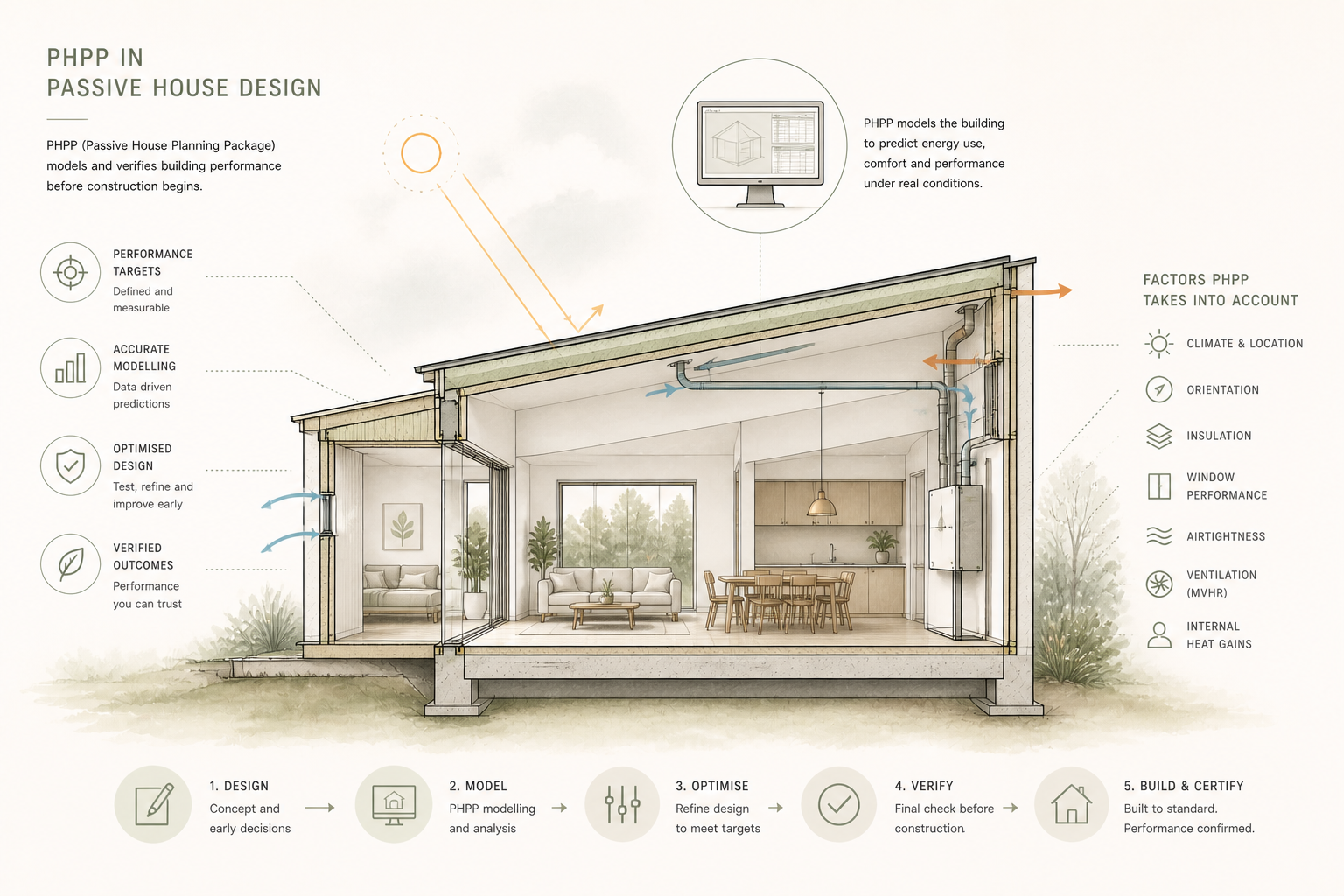
What is PHPP in Passive House design?


Behind every Passive House is a model.

Topics: NatHERS Energy Efficiency Energy Assessment 7 Star Homes Benefits of 7 Star Homes
3 min read

Passive House Cost Australia | How Much Does It Cost to Build?

By Team CE on May 5, 2026 12:21:04 PM

Building a Passive House in Australia typically costs more upfront than a standard home.

Topics: NatHERS Energy Efficiency Energy Assessment 7 Star Homes Benefits of 7 Star Homes
7 min read

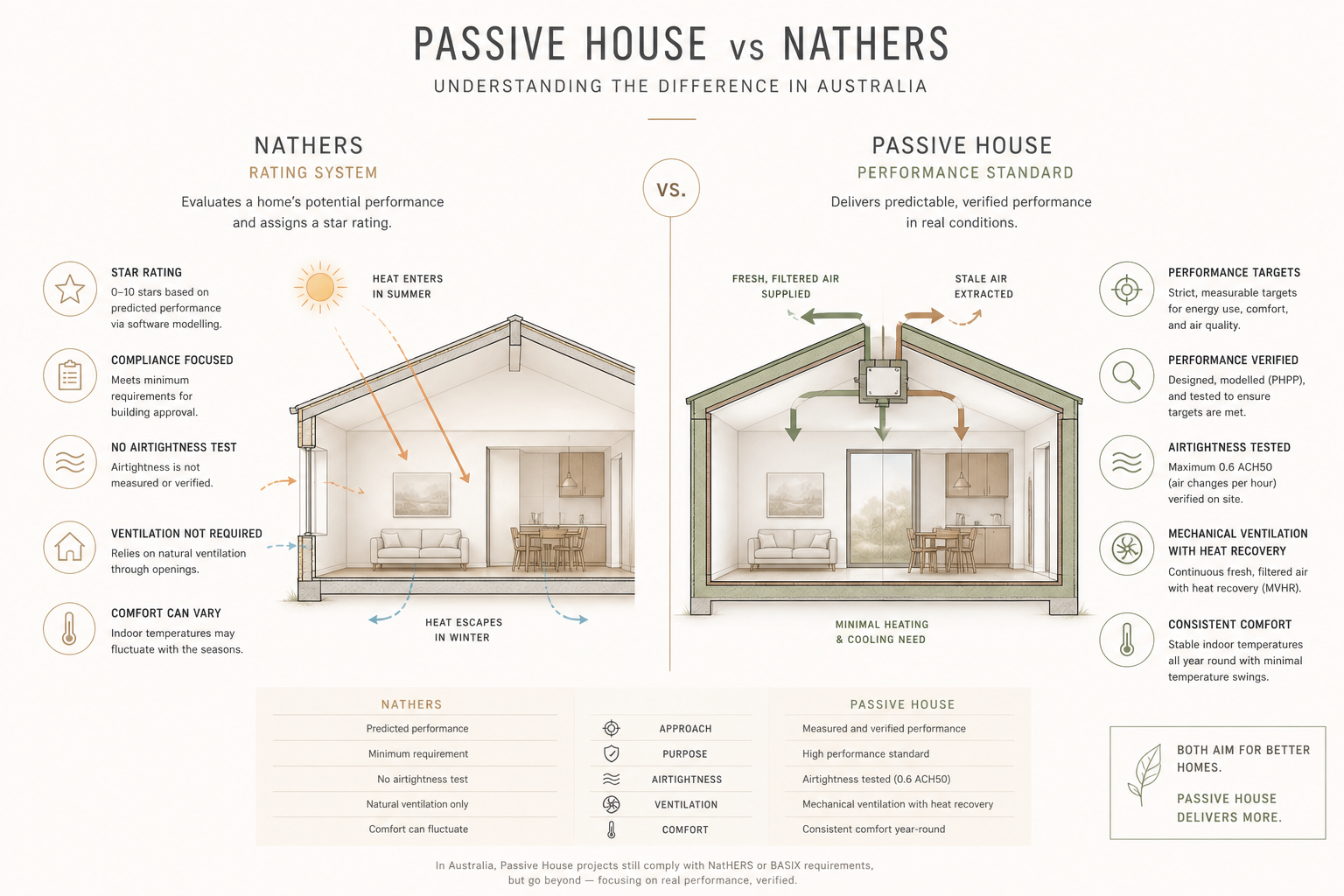
Passive House vs NatHERS Australia | Key Differences Explained

By Team CE on May 5, 2026 11:59:11 AM

Passive House

Passive House vs NatHERS Australia: Key Differences Explained

Passive House and NatHERS both relate to residential energy performance, but they are not the same system. One is commonly used for compliance. The other is a voluntary high-performance building standard.

Topics: NatHERS Energy Efficiency Energy Assessment 7 Star Homes Benefits of 7 Star Homes
4 min read

Why Energy Efficient Homes Make Economic Sense

By Jamie Bonnefin on Mar 27, 2026 8:23:15 AM

Part 2 — The Economics We Don’t Always See

I’ve been thinking about how much our built environment shapes daily life. Across Australia the rising cost of living has become a central concern for many households. Conversations often focus on interest rates, fuel prices, or inflation. Yet one of the most significant household expenses is rarely discussed in the same way. The cost of running the home itself.

Topics: Sustainability Energy Efficiency Residential 7 Star Homes
21 min read

How to Design a 7 Star NatHERS Home | Certified Energy

By Team CE on May 12, 2025 2:42:47 PM

7 Star Residential Design Guide

A 7 Star NatHERS home is usually created through coordinated decisions about climate, orientation, building form, glazing, shading, insulation and construction—not by adding one high-performance product at the end of design.


Designing towards a 7 Star NatHERS outcome begins with understanding how the proposed dwelling will respond to its site and climate. The same window, insulation level or shading strategy can perform differently when applied to another orientation, floor plan or climate zone.

NatHERS modelling considers the documented home as a complete thermal system. The result is therefore influenced by how building form, rooms, openings, construction and solar exposure interact rather than by compliance with a simple product checklist.

This guide focuses specifically on the design methodology used to work towards the target. For guidance on what the benchmark means, when it may apply and how it relates to residential compliance pathways, see the 7 Star NatHERS requirements guide.
Topics: 7 Star Homes Residential Energy Performance
6 min read

Certified Energy’s NatHERS Existing Homes Trial Participation

By Team CE on Mar 11, 2025 2:27:26 PM

Existing Homes

Certified Energy’s Participation in the NatHERS for Existing Homes Trial

Certified Energy participated in the NatHERS for Existing Homes Trial as part of the wider transition toward consistent home energy ratings for existing Australian homes.

Topics: ESD NatHERS Energy Efficiency Energy Assessment 7 Star Homes Announcement
27 min read

Does Double Glazing Help You Get a 7 Star Rating?

By Team CE on Jul 18, 2022 12:53:32 PM

NatHERS Window Performance Guide

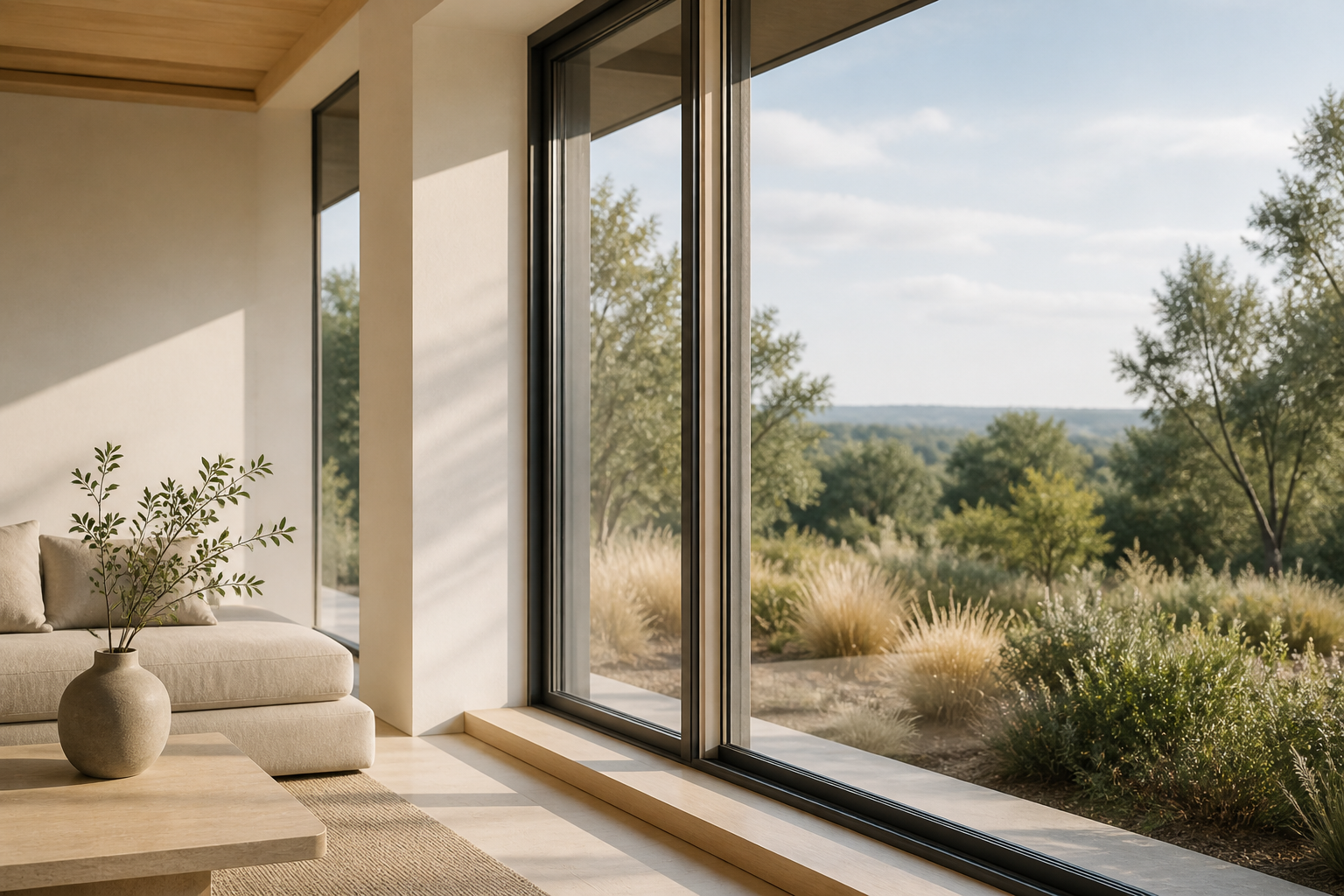
Double glazing can improve a NatHERS result, but the effect depends on the complete window system, local climate, orientation, solar exposure, window area and the wider dwelling design.


Double glazing is frequently presented as a direct route to a higher NatHERS star rating. It can be an effective improvement, particularly where heat transfer through the windows is limiting the dwelling’s thermal performance. It is not, however, a guaranteed or identical solution for every project.

NatHERS does not assess the number of glass panes in isolation. The model uses the thermal properties of the complete window system, including the glass, frame, seals and other relevant components. Window size, location, orientation and shading also influence how that system performs within the dwelling.

This guide focuses specifically on when double glazing may improve the model, what the window performance values mean and which information should be coordinated with the assessor and supplier.

For the broader relationship between climate, orientation, shading, insulation and building form, see How to Design a 7 Star NatHERS Home.

Topics: Double Glazing 7 Star Homes Residential Energy Performance
25 min read

7 Star NatHERS Without Unnecessary Cost | Certified Energy

By Team CE on Jul 11, 2022 11:39:00 AM

7 Star Cost-Prioritisation Guide

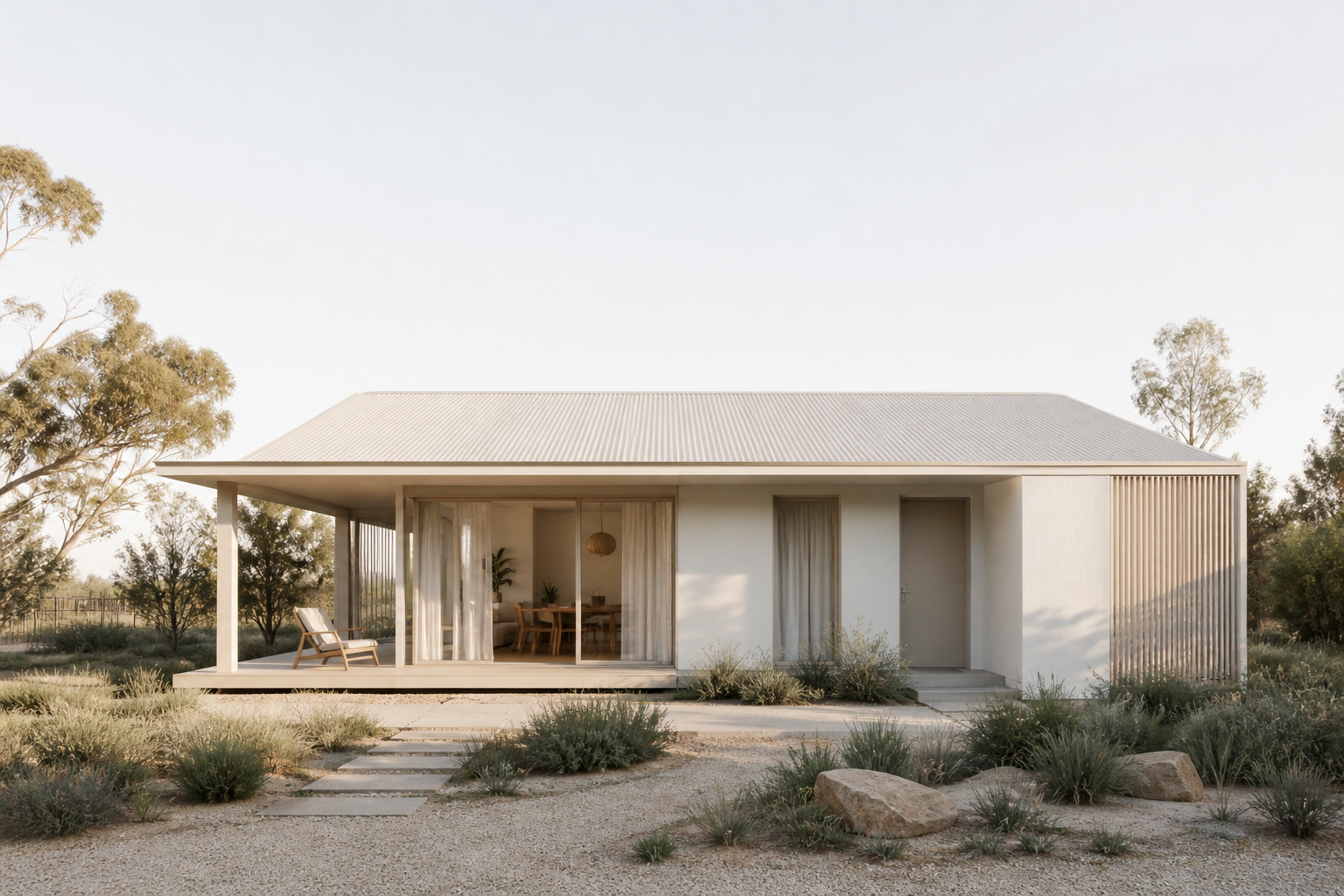
Working towards a 7 Star NatHERS result does not mean selecting the most expensive version of every building component. The more useful approach is to identify what is limiting the design and direct the project budget towards the changes that materially improve the model.


The cost of reaching a 7 Star NatHERS target varies between projects. Some designs may require only focused refinements, while others may need wider changes to glazing, shading, insulation, construction or building form.

The difference is rarely explained by one product alone. A high-cost upgrade may provide limited improvement when it does not address the part of the dwelling creating the dominant heating or cooling load. Conversely, several smaller changes may produce a stronger result without unnecessarily increasing the specification across the entire home.

This guide focuses specifically on how project teams can prioritise expenditure when working towards the target. For the broader relationship between climate, orientation, glazing, shading and construction, see How to Design a 7 Star NatHERS Home.

For guidance on what the 7 Star benchmark means and when it may apply, see the 7 Star NatHERS requirements guide.
Topics: 7 Star Homes Residential Energy Performance
20 min read

Green Home Loans and NatHERS Ratings | Certified Energy

By Team CE on Jun 21, 2022 3:34:02 PM

Sustainable Home Finance Guide

A NatHERS rating may help demonstrate the energy performance of a home for a green home loan application, but it does not create automatic eligibility. Each lender sets its own qualifying threshold, accepted evidence and credit requirements.


Green home loans are intended to support the purchase, construction or improvement of homes that satisfy defined environmental or energy-performance criteria. Depending on the product, the lender may offer a pricing benefit, additional finance for upgrades or another incentive.

NatHERS can provide recognised technical evidence about a new home. Its thermal star rating describes the modelled heating and cooling performance of the dwelling fabric, while a separate Whole of Home rating may record the broader modelled energy performance of household systems, solar generation and battery storage.

Whether either result is accepted for a particular green loan remains a lender decision. Applicants should confirm the lender’s current eligibility criteria before relying on a target rating, specification or certificate.

Topics: 7 Star Homes Residential Energy Performance