
12 min read

NatHERS Home Energy Rating Certificate for Existing Homes

By Team CE on Jul 2, 2026 6:21:13 PM

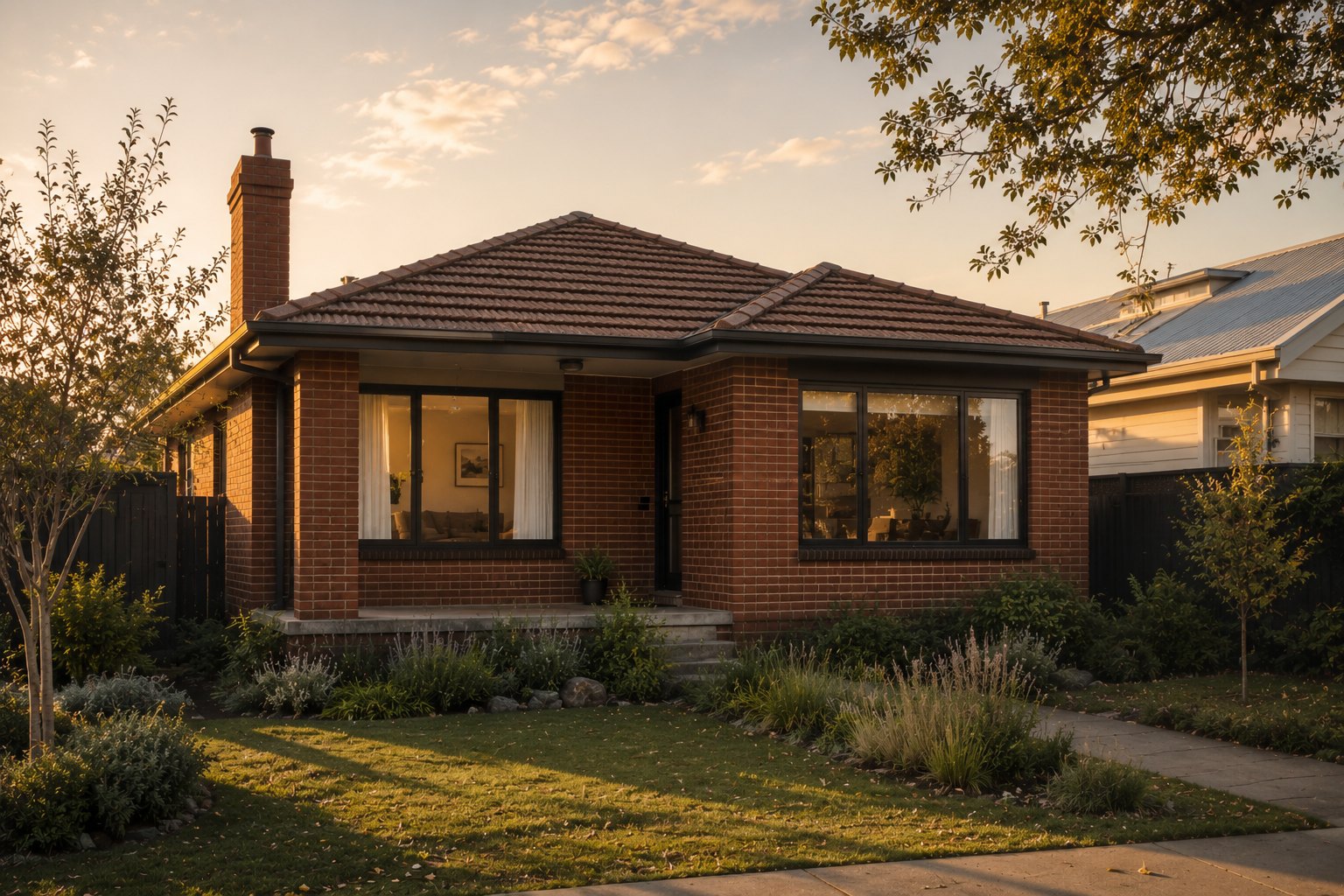
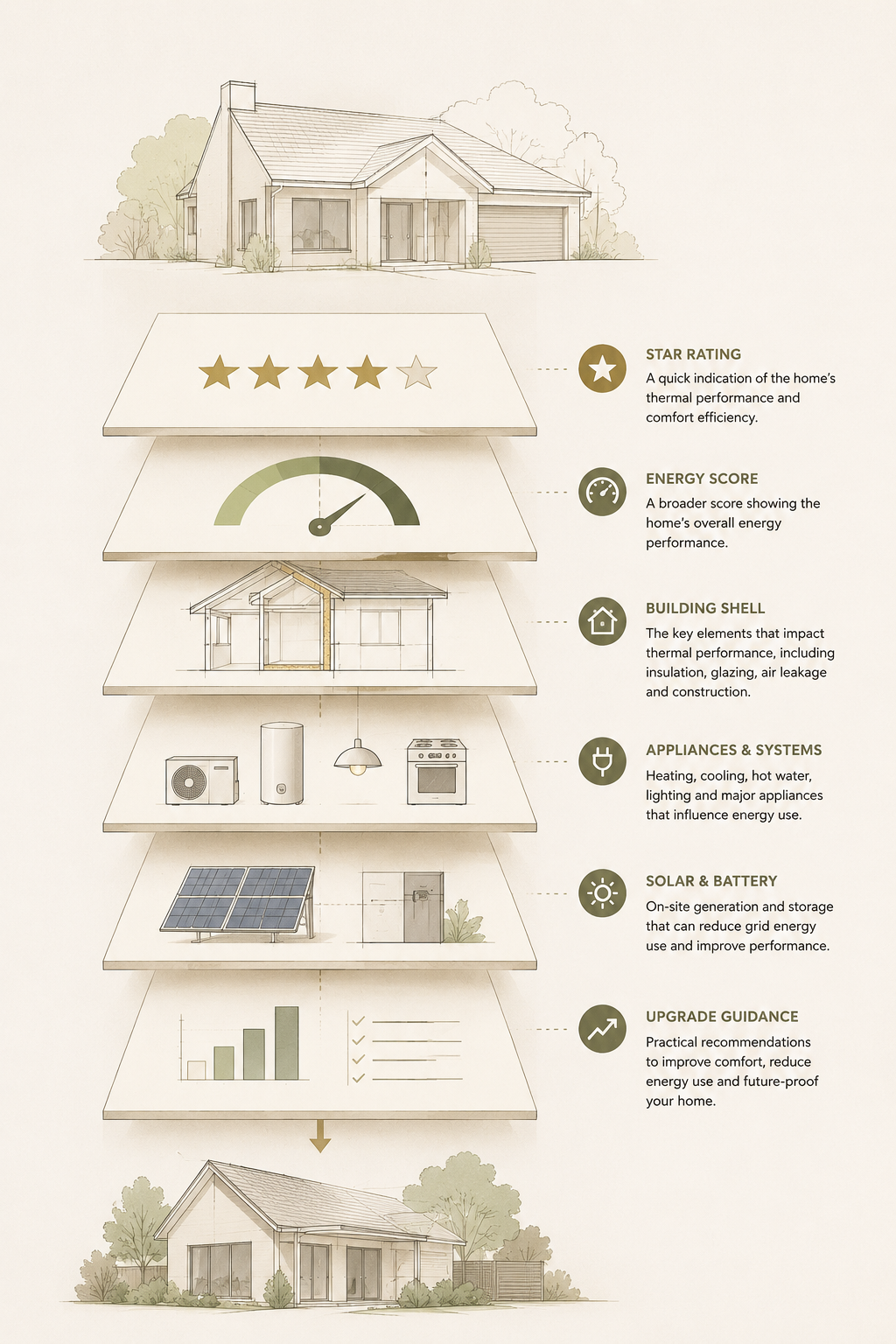
The NatHERS Home Energy Rating Certificate for existing homes is designed to explain how an established dwelling performs, how energy is used and where targeted upgrades may improve comfort and efficiency.

Unlike a new-home NatHERS certificate, which supports proposed construction and compliance, an existing-home certificate reflects the assessed condition of a completed dwelling. It considers the building shell, installed systems, onsite energy features and practical improvement opportunities.

This makes the certificate useful for homeowners, buyers, advisers and program teams who need a clearer performance language for Australia’s existing housing stock.

Topics: Home Energy Rating Residential Energy Performance
4 min read

What the 2026 NatHERS Existing Homes Trial Means for Australian Homes

By Team CE on Jul 1, 2026 8:30:00 AM


Residential Performance

Australia’s existing homes are beginning to enter a more visible era of energy performance. The 2026 NatHERS Existing Homes Trial Outcomes Report marks an important step toward helping established homes be understood with more clarity, not just as buildings, but as places people live, renovate, improve and prepare for the future.

Topics: Home Energy Rating Residential Energy Performance
7 min read

NatHERS Assessment and NSW Home Energy Saver Loan

By Team CE on Jun 24, 2026 1:47:56 PM

Home Energy Ratings

Topics: Home Energy Rating Residential Energy Performance
6 min read

NSW Existing Homes Real Estate Trial | Key Lessons

By Team CE on Jun 23, 2026 2:12:28 PM

Home Energy Ratings

Topics: Home Energy Rating Residential Energy Performance
21 min read

NatHERS vs Whole of Home: What Is the Difference?

By Team CE on Jun 11, 2026 12:43:38 PM

Two NatHERS Ratings Explained

The NatHERS thermal star rating and Whole of Home rating measure different parts of residential energy performance. One assesses the thermal response of the building shell. The other assesses major household energy uses, onsite generation and storage.


NatHERS and Whole of Home are sometimes described as competing assessment methods. This is no longer an accurate way to understand their relationship.

NatHERS is the wider residential energy-rating framework. Within that framework, a proposed home can receive a thermal star rating out of 10 and a separate Whole of Home rating out of 100. The two results answer different questions about the same dwelling.

The thermal star rating asks how much heating and cooling the home is likely to need because of its design and construction. The Whole of Home rating builds on those thermal loads and considers the energy performance of household systems, solar generation and battery storage.

Topics: NatHERS Whole-of-Home Residential Energy Performance
16 min read

Green Star Homes vs NatHERS Residential Pathways

By Team CE on Jun 8, 2026 1:35:15 PM

Victorian Stormwater Treatment Guide

Rainwater tanks, raingardens, permeable surfaces and other WSUD measures can improve stormwater treatment performance, but their contribution depends on more than simply including them in the design.


A stormwater treatment assessment considers how runoff from roofs, driveways, paving and other impervious areas is managed by the treatment measures connected to them. The presence of a tank, raingarden or permeable surface does not by itself establish that the required treatment outcome will be achieved.

Performance depends on the relationship between catchment area, treatment capacity, rainwater reuse, physical connections and any impervious surfaces that remain untreated. A measure that is appropriately sized and connected can contribute strongly to the assessment. The same measure may contribute much less where it receives only a small catchment or cannot operate as represented in the model.

This guide focuses specifically on how common WSUD measures can support quantitative stormwater treatment performance. For the wider difference between site strategy and modelling, see STORM vs WSUD.

Topics: NatHERS Residential Energy Performance Residential Sustainability Frameworks Green Star Homes
32 min read

BASIX and Whole of Home NSW: How They Work Together

By Team CE on Jun 6, 2026 3:52:40 PM

Residential energy assessment now considers more than the thermal performance of the building envelope. Heating and cooling systems, hot water, lighting, cooking, pool equipment and onsite renewable energy can all influence the wider performance of a new home.

NatHERS Whole of Home was developed nationally to represent this broader energy picture. In New South Wales, however, residential approval continues to operate through BASIX, which has its own Energy score, project commitments and Certificate.

The two systems are related, but they are not interchangeable. Understanding the boundary between the NatHERS thermal star rating, the Whole of Home rating and the BASIX Energy result helps prevent incorrect assumptions during design, documentation and certification.

Topics: BASIX Whole-of-Home Residential Energy Performance
24 min read

BASIX and 7 Star NatHERS in NSW | Certified Energy

By Team CE on Jun 6, 2026 3:45:37 PM

NSW Residential Compliance Guide

BASIX is the NSW residential sustainability framework. Where the BASIX Simulation method applies, NatHERS modelling can be used to demonstrate the dwelling’s thermal-performance outcome against the applicable BASIX targets.


BASIX and NatHERS are often discussed together on NSW residential projects, but they are not interchangeable systems. BASIX is the state-based assessment and submission framework. NatHERS is a national residential energy-rating framework that can be used within one of the BASIX thermal-performance methods.

Under the Simulation method, an accredited assessor models the proposed dwelling using approved NatHERS software. The resulting star rating and heating and cooling loads are then used to support completion of the BASIX thermal-performance section.

This guide focuses specifically on how the BASIX thermal pathway and the 7 Star NatHERS benchmark relate. For the complete NSW submission process, certificate requirements and wider water, energy and materials commitments, see the BASIX submission guide.

Topics: BASIX 7 Star Homes Residential Energy Performance
12 min read

Home Energy Rating vs Residential Efficiency Scorecard | Certified Energy

By Team CE on Jun 3, 2026 1:04:59 PM

Current and Former Existing-Home Pathways

Home Energy Rating and the Residential Efficiency Scorecard both relate to existing homes, but they are not interchangeable names for the same assessment.


The Residential Efficiency Scorecard was a separate government-supported assessment program for existing homes. It operated under its own methodology, assessor requirements and reporting arrangements before closing on 23 June 2026.

Home Energy Rating is Certified Energy’s current service name for assessments delivered through NatHERS for existing homes. It is now the relevant pathway where a new assessment of an established dwelling is required.

The comparison is therefore no longer about choosing between two available schemes. It is about distinguishing the current assessment pathway from a former program and understanding what an older Scorecard report still represents.

Topics: Residential Efficiency Scorecard Home Energy Rating Residential Energy Performance
24 min read

Passive House vs NatHERS Australia | Key Differences

By Team CE on May 5, 2026 11:59:11 AM

Residential Performance Comparison

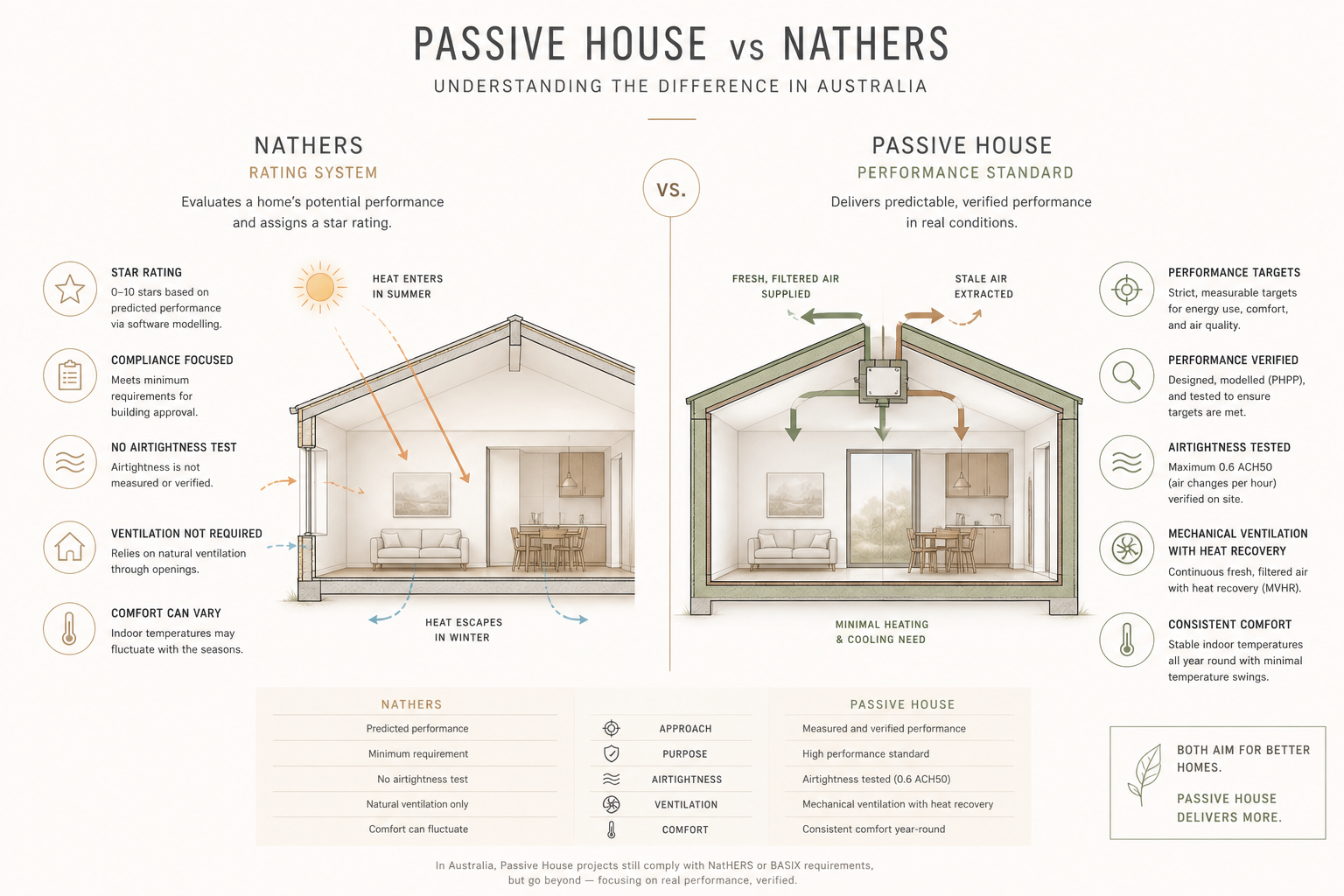
Passive House and NatHERS both examine residential energy performance, but they use different methodologies, produce different outcomes and serve different roles within an Australian building project.


NatHERS is Australia’s national home energy-rating framework. Its thermal assessment models the predicted heating and cooling needs of a dwelling and expresses the result as a star rating between zero and ten. NatHERS assessments are commonly used to help demonstrate residential energy-efficiency requirements under the National Construction Code, subject to the pathway adopted in the relevant state or territory.

Passive House is a separate voluntary building standard. It combines energy balancing through the Passive House Planning Package, known as PHPP, with defined requirements relating to the building envelope, airtightness, windows, thermal bridges, controlled ventilation and construction verification.

This comparison focuses on where the systems overlap and where their boundaries differ. For a complete explanation of each framework, see the NatHERS Knowledge Hub and the Passive House in Australia guide.

Topics: NatHERS Passive House Residential Energy Performance Residential Sustainability Frameworks