

21 min read

Green Star Homes vs Passive House | Key Differences

By Team CE on Jun 8, 2026 1:36:27 PM

Residential Sustainability Comparison

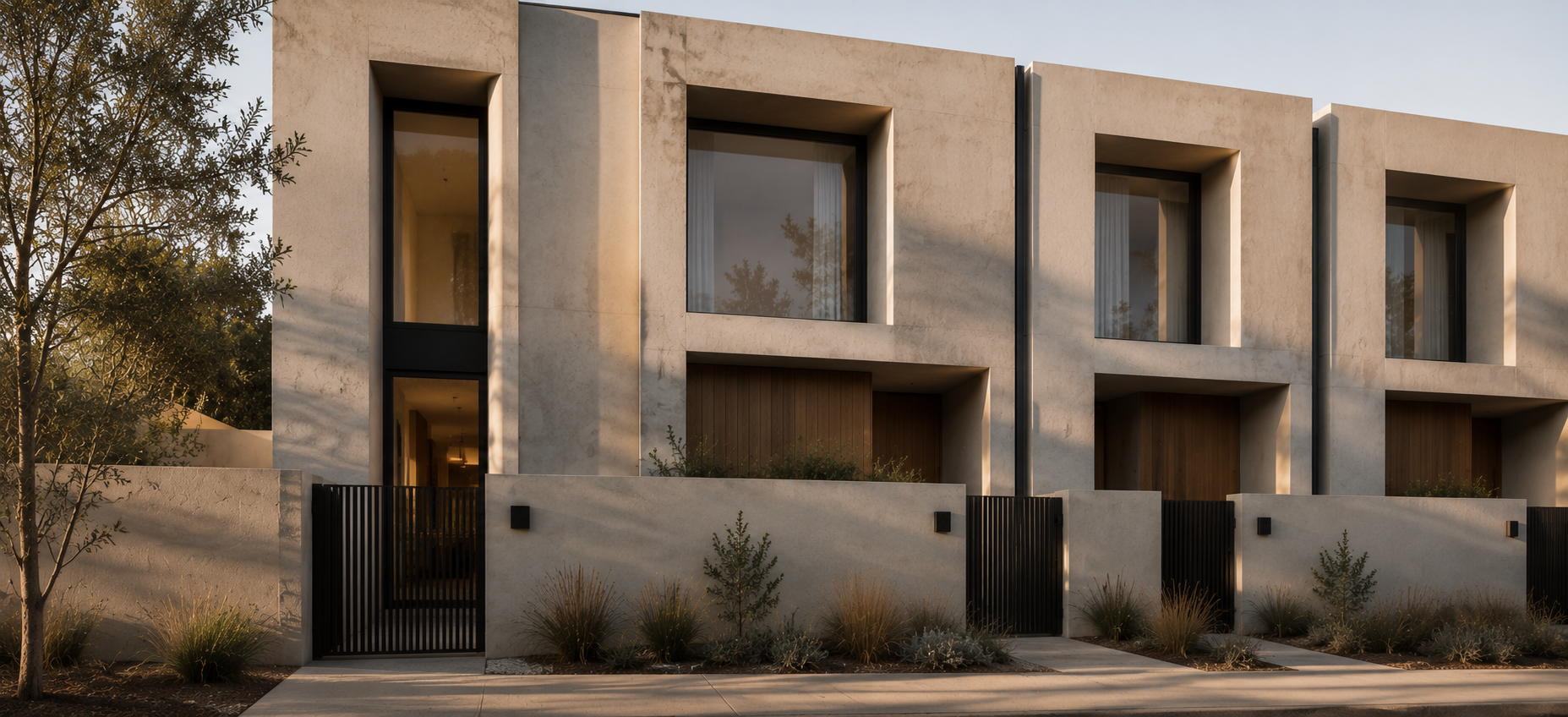
Green Star Homes and Passive House can both support higher-performing Australian homes, but they address different objectives, use different evidence pathways and apply to different project contexts.


Green Star Homes is a voluntary Australian residential certification pathway developed by the Green Building Council of Australia. It is structured for eligible volume home builders delivering repeatable new-home designs or product ranges and organises its requirements around Positive, Healthy and Resilient outcomes.

Passive House is a separate international building-performance standard. It uses the Passive House Planning Package, known as PHPP, together with detailed envelope design, airtightness, high-performance windows, thermal-bridge control, controlled ventilation and project verification.

This comparison explains where the two pathways differ, where they overlap and when each may be relevant. For complete framework guidance, visit the Green Star Homes Knowledge Hub and the Passive House in Australia guide.
Topics: Passive House Green Star Rating Residential Sustainability Frameworks
25 min read

What is PHPP? Passive House Modelling Explained

By Team CE on May 5, 2026 12:41:25 PM

Passive House Modelling Guide

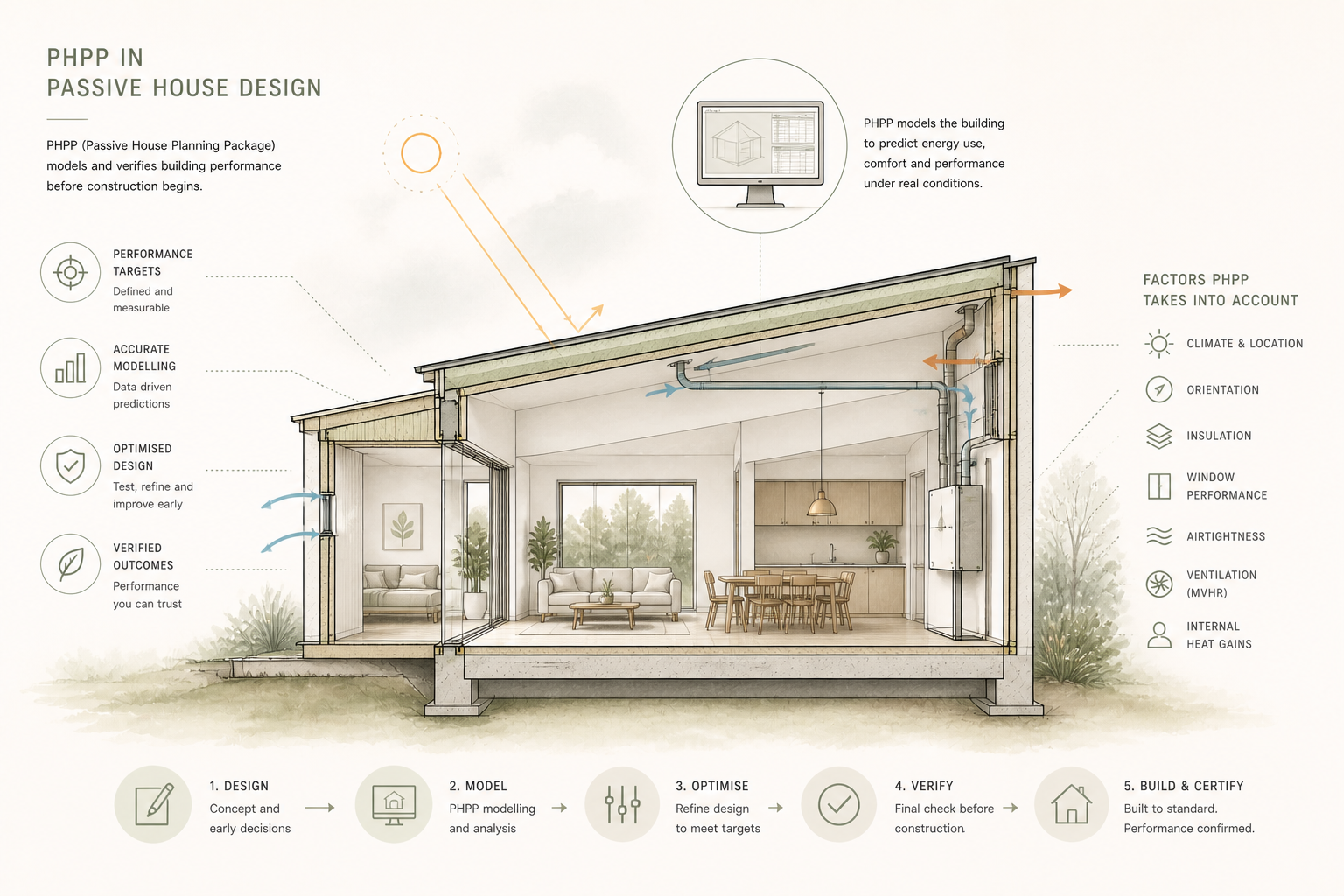
PHPP is the energy-balancing and planning tool used to develop Passive House, EnerPHit and PHI Low Energy Building projects. It connects the proposed building geometry, envelope, windows, airtightness, ventilation and services within one coordinated assessment.


Passive House performance cannot be established from a product checklist alone. Insulation, windows, shading, thermal bridges, airtightness, ventilation and building services affect one another and must be considered as part of the complete building energy balance.

The Passive House Planning Package, commonly referred to as PHPP, provides the calculation framework for bringing those elements together. It can be introduced during early design, refined as the documentation develops and updated to reflect the information required for the intended project pathway.

This article focuses specifically on PHPP and its modelling role. For the wider building standard, five principles, Australian climate application and delivery process, see the Passive House in Australia Knowledge Hub.

Topics: Passive House Residential Sustainability Frameworks
24 min read

Passive House Cost Australia | Building Cost Guide

By Team CE on May 5, 2026 12:21:04 PM

Passive House Cost Guide

There is no single square-metre rate or universal construction premium for a Passive House in Australia. Cost depends on the building, climate, design stage, procurement strategy, project team and whether formal certification is pursued.


Passive House costs are often described as though the standard adds a fixed percentage to an otherwise identical home. In practice, the comparison is rarely that simple. Building form, glazing, structural systems, finishes, site conditions and documentation quality may differ before the Passive House scope is considered.

The additional project scope may include PHPP modelling, more resolved envelope assemblies, higher-performance windows, airtightness detailing, thermal-bridge coordination, controlled ventilation, testing and independent certification. The cost effect of those items depends on how early they are integrated and whether the base project already represents a high-quality residential build.

This article focuses specifically on cost formation and cost control. For the wider standard, principles, climate application and project pathway, see the Passive House in Australia Knowledge Hub.

Topics: Passive House Residential Sustainability Frameworks
24 min read

Passive House vs NatHERS Australia | Key Differences

By Team CE on May 5, 2026 11:59:11 AM

Residential Performance Comparison

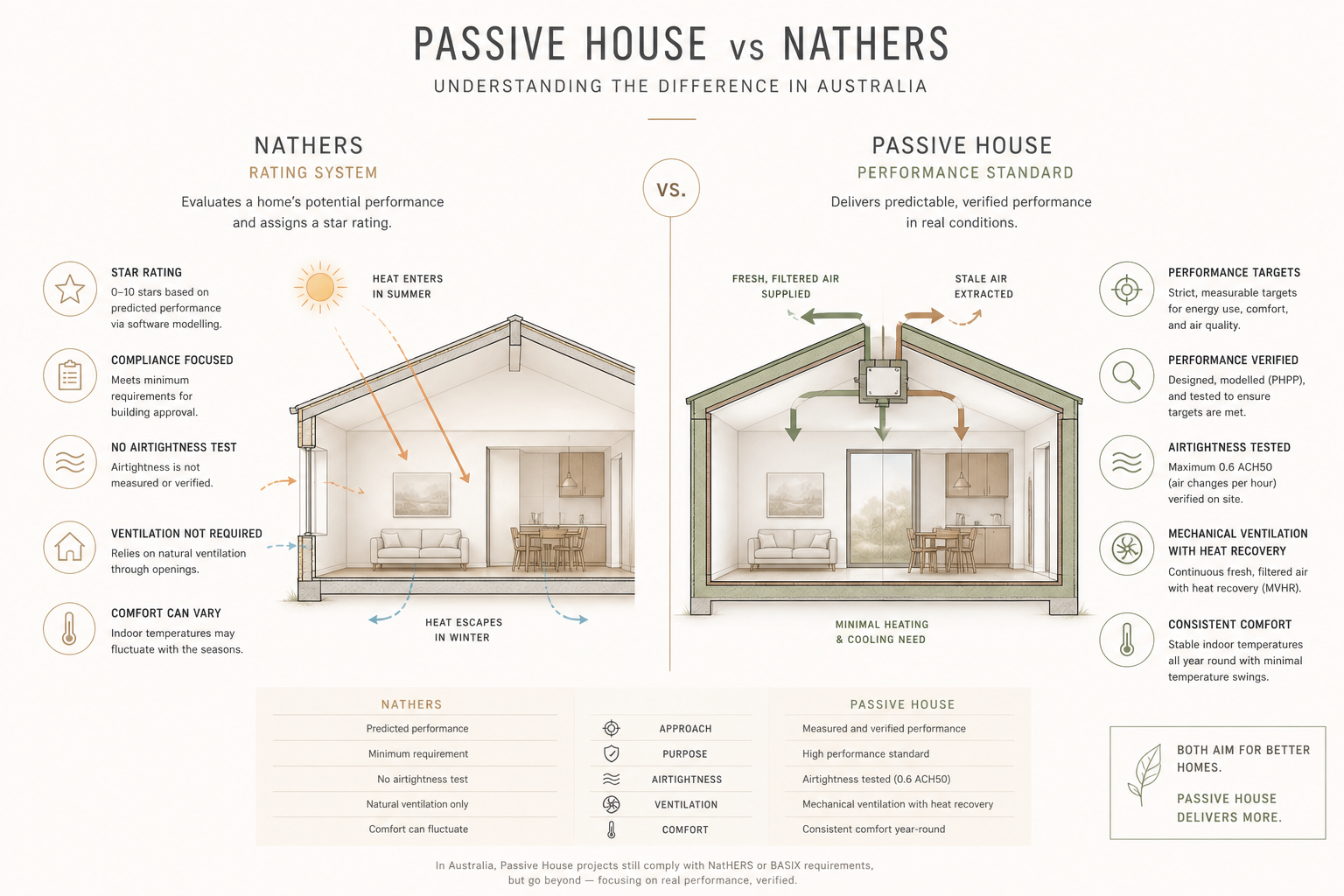
Passive House and NatHERS both examine residential energy performance, but they use different methodologies, produce different outcomes and serve different roles within an Australian building project.


NatHERS is Australia’s national home energy-rating framework. Its thermal assessment models the predicted heating and cooling needs of a dwelling and expresses the result as a star rating between zero and ten. NatHERS assessments are commonly used to help demonstrate residential energy-efficiency requirements under the National Construction Code, subject to the pathway adopted in the relevant state or territory.

Passive House is a separate voluntary building standard. It combines energy balancing through the Passive House Planning Package, known as PHPP, with defined requirements relating to the building envelope, airtightness, windows, thermal bridges, controlled ventilation and construction verification.

This comparison focuses on where the systems overlap and where their boundaries differ. For a complete explanation of each framework, see the NatHERS Knowledge Hub and the Passive House in Australia guide.
Topics: NatHERS Passive House Residential Energy Performance Residential Sustainability Frameworks
29 min read

Passive House Certification Australia | Process Guide

By Team CE on Oct 7, 2025 10:32:24 AM

Passive House Certification Guide

Passive House certification is an independent quality-assurance process. It connects PHPP modelling, coordinated design documentation, construction evidence, airtightness testing and building-services information to the completed project.


A building does not become a certified Passive House simply because it uses high-performance windows, additional insulation or mechanical ventilation. Certification considers whether the complete building has been modelled, designed, documented and delivered in accordance with the applicable Passive House Institute criteria.

The process is carried out through an appropriately accredited Passive House Building Certifier. The certifier independently reviews the project information and determines whether the building satisfies the requirements for the intended certification pathway.

This guide focuses specifically on how certification develops. For the wider standard, five principles and Australian climate application, see the Passive House in Australia Knowledge Hub.

Topics: Passive House Residential Sustainability Frameworks
31 min read

Passive House Airtightness | Building Envelope Guide

By Team CE on Oct 7, 2025 10:14:50 AM

Passive House Envelope Guide

Airtightness limits uncontrolled air movement through the building envelope. In a Passive House project, it must be designed as a continuous system, documented across every junction and verified through on-site pressure testing.


A building may contain substantial insulation and high-performance windows while still losing conditioned air through gaps between construction elements. Wall-to-floor junctions, window perimeters, roof connections and service penetrations can collectively undermine the intended performance of the envelope.

Passive House design addresses this by establishing a defined airtight layer around the conditioned building volume. The layer may be formed by membranes, boards, plaster, concrete or other suitable materials, but it must remain continuous across changes in construction.

This article focuses specifically on airtight-envelope design and testing. For the wider standard, five principles, PHPP and Australian climate application, see the Passive House in Australia Knowledge Hub.

Topics: Passive House Residential Sustainability Frameworks
19 min read

Passive House Certification Benefits | Long-Term Performance

By Team CE on Aug 18, 2025 4:22:57 PM

Passive House Performance Guide

Passive House certification does not create low energy demand by itself. It provides independent quality assurance that the model, design information, construction evidence and final test results remain aligned with the intended building-performance outcome.


A building can begin with a strong performance objective and still change substantially before completion. Window substitutions, revised insulation, modified junctions, altered shading and unrecorded service changes may all affect the final energy balance.

Passive House certification introduces an independent review pathway through those changes. The process connects PHPP modelling with design documentation, selected products, airtightness results, ventilation information and the building that was actually constructed.

This article focuses on how certification can protect long-term energy and operating-cost outcomes. For the complete certification sequence, see the Passive House Certification Process Guide.

Topics: Passive House Residential Sustainability Frameworks
4 min read

Passive Commercial Projects - A trend for a greener future

By Team CE on Feb 28, 2023 9:35:06 AM

What is a Passive House?

Topics: ESD Architecture Sustainability Passive House Commercial
24 min read

Passive House Retrofit Australia | EnerPHit Guide

By Team CE on Feb 6, 2023 12:47:37 PM

Existing Building Performance Guide

A Passive House retrofit applies the principles, modelling and quality-assurance methods of the Passive House framework to an existing building. Where formal retrofit certification is pursued, the relevant standard is commonly EnerPHit.


Existing homes present conditions that do not arise in the same way on new buildings. Orientation, structural junctions, floor levels, roof geometry, boundaries, heritage fabric and concealed construction may already be fixed before the retrofit begins.

EnerPHit accounts for these constraints while retaining a defined pathway for energy demand, envelope performance, airtightness, ventilation, documentation and construction verification. It should not be used as a general label for any renovation that adds insulation or improves windows.

This guide focuses specifically on the retrofit pathway. For the wider standard, five principles, Australian climate application and PHPP framework, see the Passive House in Australia Knowledge Hub.

Topics: Passive House Residential Sustainability Frameworks